Beyond Satellite Data: Why Indonesia’s 2026 Haze Crisis Demands Structural Reform
As of August 21, 2026, Indonesia is grappling with a severe environmental and public health crisis as over 1,800 hotspots across Borneo fuel a transboundary haze emergency. With 285,000 hectares already scorched, the government faces mounting pressure from civil society and lawmakers to shift from reactive firefighting to structural land-use reform.
The Anatomy of the 2026 Hotspot Surge
Satellite data provided by NASA-NOAA 20 confirms that the current fire season has reached a critical threshold. As of August 21, 2026, officials recorded 1,842 distinct hotspots across five provinces in Indonesian Borneo. According to Berton SP Panjaitan, the Acting Head of Disaster Data at the National Disaster Management Agency (BNPB), the majority of these sites—1,832 in total—are classified at medium confidence, while 10 represent high-confidence blazes.
The concentration of these fires is particularly intense in Central Kalimantan, which accounts for 976 of the recorded hotspots. West Kalimantan follows with 489, while East, South, and North Kalimantan report smaller, yet still significant, clusters. The total burned area for the 2026 season has surpassed 285,000 hectares, a figure driven largely by a destructive July that saw 182,000 hectares lost to flames.
Logistical Barriers in Peatland Suppression
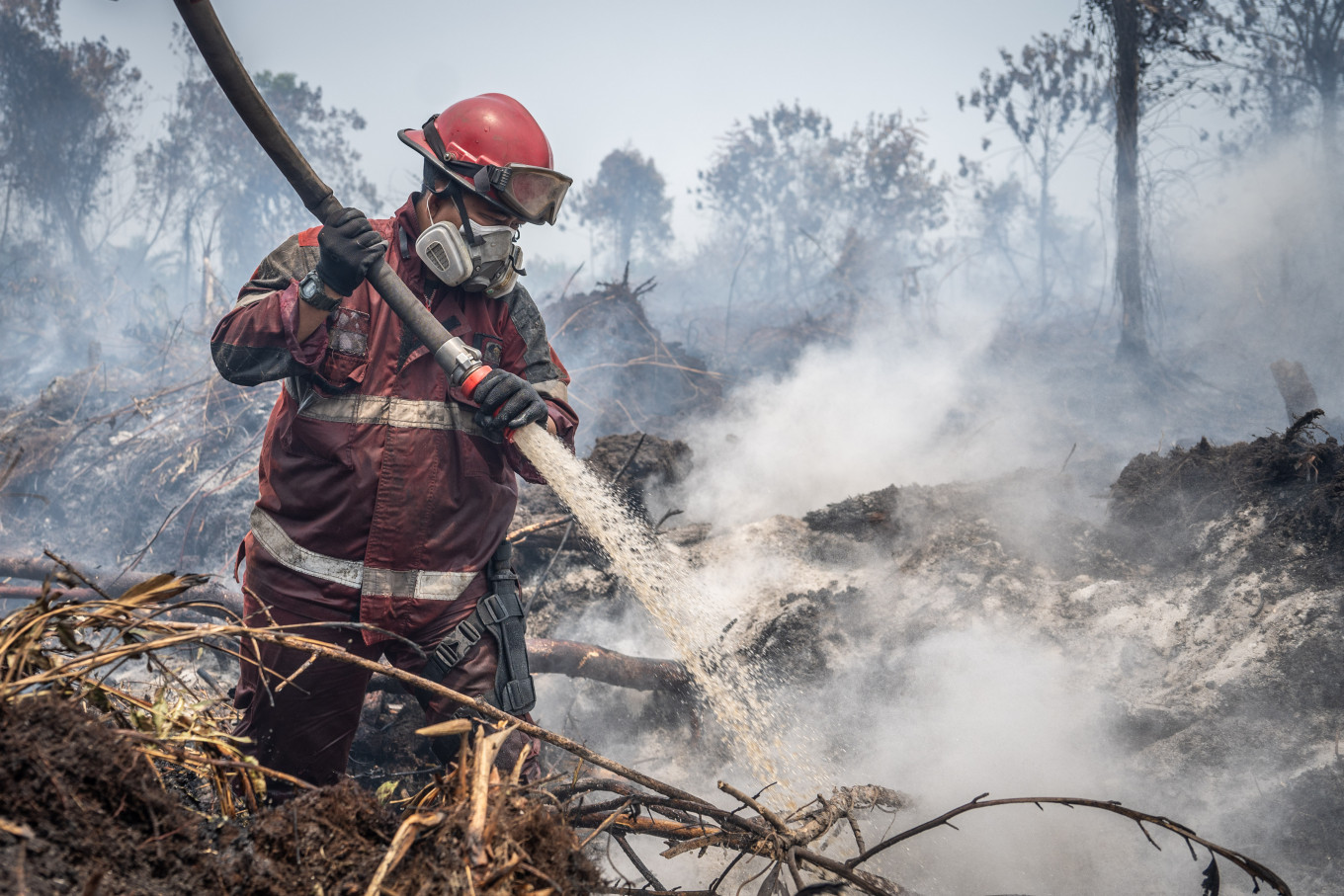
The challenge of containment is compounded by the geography of the terrain and the nature of the fuel. Unlike forest fires in other climates, these blazes often involve subterranean peat fires. Multazam, Head of BPBD Kotawaringin Timur, notes that current suppression efforts are hampered by extreme logistical isolation.
Ground crews frequently face areas devoid of water sources, forcing them to rely on foot travel or three-wheeled vehicles to reach the fire lines. Once on site, the work is grueling. While aerial water-bombing can suppress surface flames, the underground peat embers require manual excavation and continuous dousing—often taking nine hours or more per site to fully extinguish.
Public Health and Economic Fallout
The human cost of the haze is becoming increasingly visible in urban centers. In Banjarbaru, South Kalimantan, health authorities have logged over 23,646 cases of acute respiratory infections (ISPA) between January and August 2026. Experts warn that prolonged exposure to PM2.5 particulates creates long-term risks for cardiovascular and pulmonary health, particularly among vulnerable populations.
The economic impact extends to the agricultural sector, where smallholders are suffering direct losses. Airborne embers, locally known as kelelatu, have caused significant property damage, including the destruction of livestock facilities. The broader educational landscape has also been disrupted, with visibility dropping to as low as one meter in some regions, necessitating shifts to remote learning protocols.
Systemic Failures and Calls for Accountability
The discourse surrounding the fires has shifted from blaming natural phenomena to questioning state policy. Kisworo Dwi Cahyono, former Executive Director of WALHI South Kalimantan, characterizes the government’s current approach as “systemic negligence.” He argues that existing Disaster Management Laws mandate proactive mitigation and rehabilitation, yet resources remain disproportionately allocated to emergency response only after the smoke becomes visible.

Daniel Johan, a lawmaker with House Commission IV, points toward corporate land-clearing practices as a primary driver of the crisis. Parliament is currently awaiting data on the exact acreage of fires occurring within corporate concessions to determine liability.
The Path to Mitigation
While the Godzilla El Niño weather pattern has provided a challenging meteorological backdrop, environmental experts maintain that the cycle of burning is a man-made system failure. The reliance on monoculture plantation permits has altered the landscape, making it more susceptible to rapid fire spread. As student unions and civil society groups escalate their demands for reform, the government faces a narrow window to implement structural changes before the next dry season.
Whether this crisis results in a permanent shift in land management policy remains to be seen. However, the current data suggests that without a move toward systemic prevention and stricter corporate accountability, the cycle of haze will continue to threaten regional stability.
The haze does not respect provincial or national borders, and as the 2026 dry season continues, the pressure on the state to provide not just water-bombing helicopters, but a fundamental change in land-use governance, is only likely to intensify.