
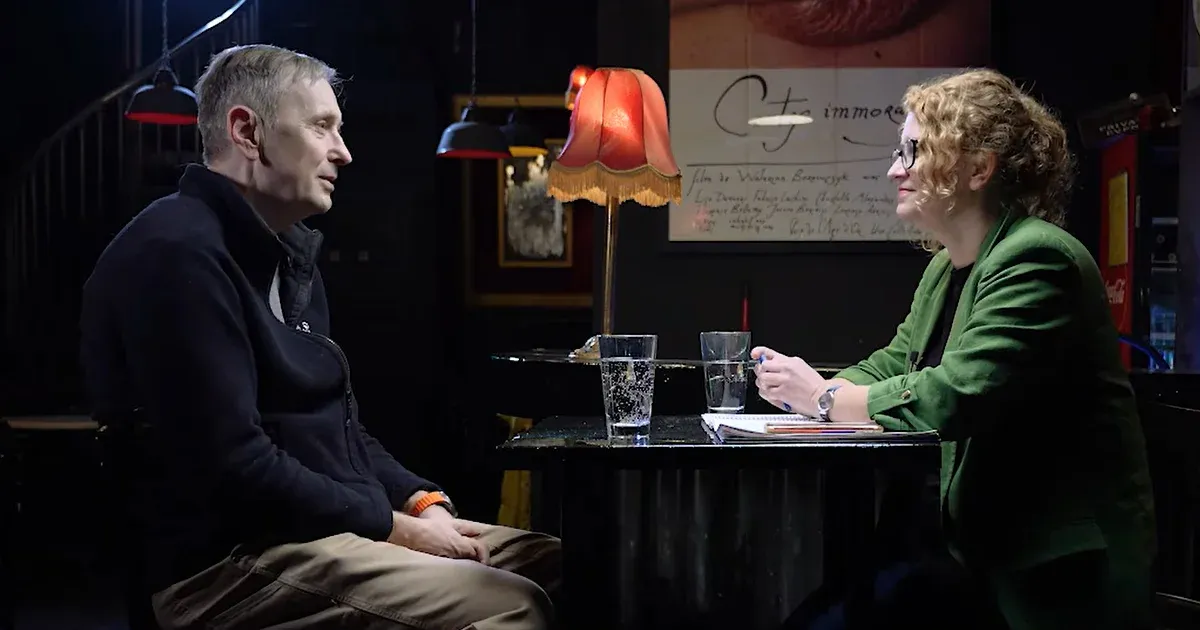
Stuttgart, Germany – Hungarian theatre and film director László Bagossy says his return to Hungary hinges on the outcome of the upcoming parliamentary elections, expressing a desire to return home if a “system change” takes hold. Currently the artistic director of Theater Tri-Bühne in Stuttgart, Bagossy voiced his views in a recent interview with Alinda Veiszer, as reported on February 28, 2026.
Bagossy stated he would cast his vote for the TISZA party, believing it represents a “transformative mass” capable of enacting real change. “My vote will be a vote for system change,” he said. While acknowledging the complexities of relocating his life from Germany, he directly linked his potential return to Hungary with the election results.
The director initially moved to Germany four years ago to facilitate opportunities for graduates of the Színház- és Filmművészeti Egyetem (SZFE – University of Theatre and Film Arts) who had received international diplomas after the university faced challenges. He explained that upon their graduation, these students lacked viable career paths within Hungary. He secured substantial funding for this project during its initial two years, but noted that budgetary constraints at the Stuttgart theatre now create replicating such initiatives difficult.
Bagossy criticized the current state of cultural policy, stating that recent funding cuts have created “insane tensions” and revealed a lack of competence among Hungarian cultural policymakers. He finds himself at the center of these debates as a theatre director in Stuttgart.
He lamented a lack of civic education in Hungary, arguing that the country “jumped into wild capitalism” following the complete of communist rule without adequately fostering democratic values. He pointed to the controversy surrounding the restructuring of SZFE as a missed opportunity for self-reflection on the meaning of university autonomy, noting a widespread lack of understanding of academic rights and independence.
Bagossy expressed hope that structural changes would be sufficient to address systemic issues, rather than requiring individual retribution. He characterized the situation as involving “major wrongdoers” and “crimes against the rule of law” that should be addressed through legal means.
Despite his time abroad, Bagossy emphasized his strong cultural connection to Hungary, stating he feels “100 percent Hungarian.” He acknowledged the difficulty of integrating into German society after years of living abroad, suggesting he may have been more adaptable had he emigrated at a younger age.
Bagossy has been directing in Stuttgart since September 2022, including adaptations of works by Hungarian playwright Béla Pintér. He praised Pintér’s work as a uniquely insightful reflection of contemporary Hungary, noting that the themes resonated with German audiences, particularly in light of the rise of the Alternative for Germany (AfD) party. He noted that Pintér’s work captures the essence of the last 20-25 years in Hungary.
He has also been experimenting with artificial intelligence in his work, using it for set design and costume visualization, though his brother, a traditional set designer, remains skeptical. Bagossy sees AI as opening new creative possibilities, allowing him to quickly test ideas and communicate his vision to collaborators.
