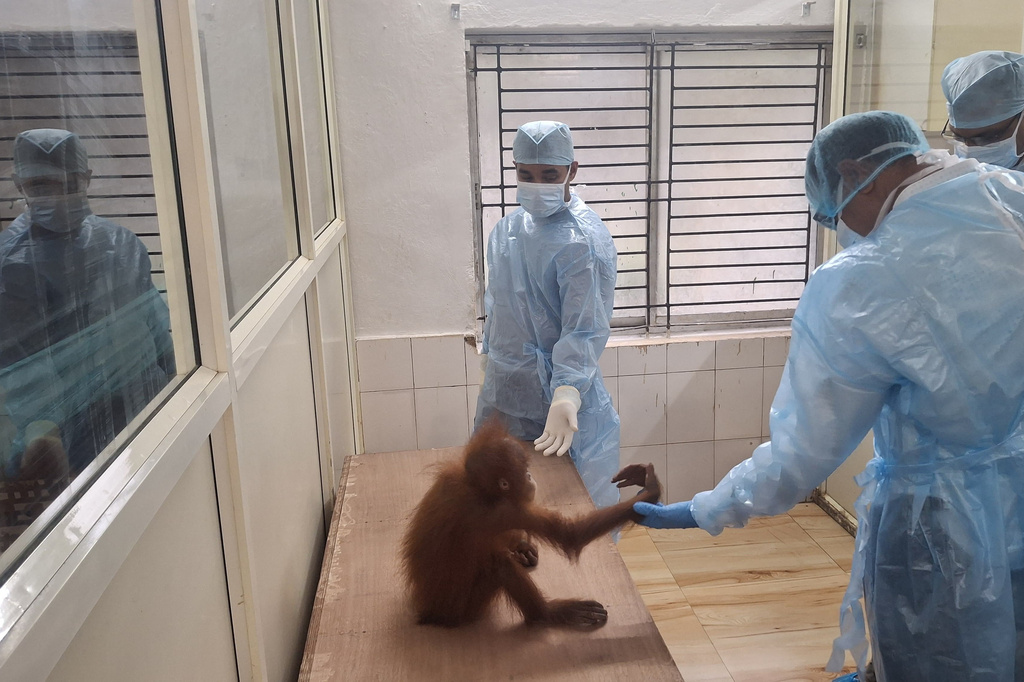
Baby Orangutans in India Expose Booming Illegal Wildlife Trade and Legal Loopholes
Five baby orangutans, aged 6 to 8 months, were discovered abandoned in a casuarina forest in eastern India’s Odisha in early September 2026, marking a stark indicator of a growing illicit trade in exotic primates smuggled over 2,700 kilometers from their native Sumatran and Bornean rainforests, Sentinel Colorado reported.
The Growing Scale of the Illegal Trade in Exotic Primates
The global illegal wildlife trade generates an estimated $34 billion annually, according to a 2026 study by National University of Singapore researchers cited by Sentinel Colorado. India has emerged as an increasingly significant market within this multi-billion-dollar network. The five infants found in Bhograi village—comprising three males and two females—were left on a plantation far from their natural habitats. Conservationists noted that their mothers were likely killed to capture the vulnerable young, which normally rely on maternal care for up to nine years.
Seizures by authorities reflect only a small fraction of a booming trade driven by wealthy collectors seeking exotic animals as status symbols, according to Uttara Mendiratta, a wildlife trafficking researcher in India. Expanding regional tourism has increased direct flight routes into Indian cities like Bangkok and Kuala Lumpur, supplying traffickers with faster transit options than traditional overland routes. “The profit margins are so high that they can afford to lose a few (animals) and still make a profit,” Mendiratta told Sentinel Colorado.
Loopholes in Legal Frameworks and Import Controls
India’s traditional wildlife protection laws were primarily drafted to safeguard native species like elephants, tigers, and rhinoceroses. Consequently, gaps in import controls complicate efforts to track the provenance of non-native wildlife. Between 2021 and 2024, India imported 41 orangutans under exceptions for captive-bred animals regulated by CITES, the international convention governing trade in endangered species.
Sinan Serhadli, a wildlife trafficking expert at the Orangutan Information Centre in Indonesia’s North Sumatra province, questioned the legitimacy of these captive-breeding declarations. “It just shows the loopholes. And … corruption as well,” Serhadli said, as reported by Sentinel Colorado. Wildlife researchers note that this online registry system lacks sufficient inspection staff, inadvertently enabling illegally imported wildlife to be laundered as legally registered pets.
Prior enforcement data illustrates a steady cadence of cross-border smuggling attempts. In 2022, two juvenile Sumatran orangutans were discovered inside transport boxes at a checkpoint situated between the northeastern states of Assam and Mizoram. Another individual was rescued in Mizoram in 2023, followed by a young orangutan found inside an apartment near Mumbai in November 2024. Non-profit analyses from the Wildlife Trust of India recorded at least 23 gibbons intercepted at Indian airports through 2025, while Egyptian authorities seized three sedated, India-bound baby chimpanzees in May 2026.

Repatriation Efforts and Scrutiny Over Private Facilities
Indonesia’s Ministry of Forestry announced active measures to return the five infants found in Odisha, deploying specialists to verify their origins and assess their health status. This diplomatic outreach follows the successful repatriation of a separate male Sumatran orangutan named Heera. The 3.5-year-old animal, trafficked illegally from Indonesia to India, was returned via Kualanamu International Airport in Deli Serdang, North Sumatra, and placed into rehabilitation at the Sumatran Rescue Alliance in Langkat regency, The Jakarta Post reported.
Indonesian Forestry Minister Raja Juli Antoni emphasized that such cross-border cooperation is vital for providing victims of wildlife trafficking with proper medical treatment and rehabilitation. However, previous transfers have drawn regulatory friction. When an earlier rescued orangutan was transferred to Vantara—a 3,500-acre private wildlife facility in western India managed by billionaire Mukesh Ambani’s family—federal wildlife officials and India’s CITES authority were reportedly omitted from the notification chain, according to a report filed by a federal wildlife official in New Delhi and cited by Sentinel Colorado.
The facility, which houses over 150,000 animals across more than 2,000 species, has faced persistent scrutiny regarding its animal acquisitions. CITES flagged shipments to Vantara in November 2025 that included non-native species such as snow leopards from Germany, a bonobo originating from Iraq, and a gorilla from Haiti. Although India’s Supreme Court cleared Vantara of wildlife trafficking and animal mistreatment allegations in 2025, a coalition of 27 conservation organizations issued a joint letter in September 2026 urging the institution to halt wild animal imports.
Among the acquisitions listed in Vantara’s inventory is a Tapanuli orangutan, recognized scientifically as a distinct species only in 2017 and restricted to a diminishing tract of Sumatra where an estimated 716 remain in the wild. Indonesia’s Ministry of Forestry said it was taking active steps to bring home the five baby orangutans found in Odisha, sending experts to verify their origins and assess their health.
Worth a look