
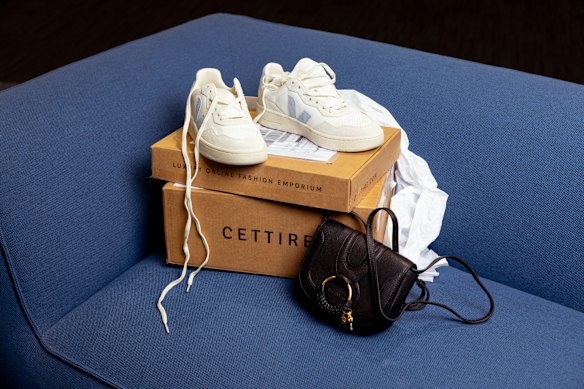
Cettire‘s Financials Hit hard by Tariffs and Demand Slump
Table of Contents
- Cettire’s Financials Hit hard by Tariffs and Demand Slump
Luxury online retailer Cettire (CTT) is grappling with significant financial challenges in 2025, triggered by United states tariff changes and a marked softening of consumer demand across key global markets. The company, known for offering discounted high-fashion items, has seen its cash reserves dwindle and faces potential funding concerns [[1]].
Cettire’s Financial performance Under Pressure
Cettire’s stock has plummeted 90% since October 2024, a stark indicator of investor concern regarding the impact of tariff threats, particularly those related to european Union goods sold in the U.S.market [[1]]. The company reported an operating loss for the March 2025 quarter, attributing it to the “primary impact” of U.S. tariff developments and softening demand across all regions, even for items not subject to duties [[1]].
Did You Know? Cettire’s business model involves holding no inventory, focusing instead on logistics and customer support, which makes it particularly vulnerable to tariff changes affecting cross-border sales [[1]].
Cash Reserves Dwindling
Cettire’s cash levels decreased by over $30 million in just three months, reaching $45 million by mid-June 2025 [[1]]. Analysts at RBC Capital have expressed concern over this deteriorating balance sheet, suggesting that the company may have limited surplus cash beyond what is needed to meet obligations to suppliers [[1]].
Potential Capital Raise on the Horizon?
The combination of accelerating losses and dwindling cash reserves has led RBC and Bell Potter analysts to flag the risk of a potential capital raise for Cettire [[1]]. This would involve the company issuing new shares, potentially diluting the value of existing shares, at a time when the stock is already trading at record lows [[1]].
Tariff Impact and Market Dynamics
In early April 2025, Cettire acknowledged the potential threat of tariffs, noting that 41% of its business relied on selling EU-based luxury goods to the U.S. [[1]]. While the average order value remained below the $800 de minimis exemption at that time, the risk of tariffs on low-value parcels from the EU, similar to those already imposed on goods from China, looms large [[1]].
Pro Tip: Monitoring trade policy changes and diversifying markets can help retailers mitigate risks associated with tariffs and fluctuating demand.
Cettire’s response and Future Outlook
Cettire maintains that it is focused on delivering profitability for the June 2025 quarter and remains “relentlessly focused” on its strategy to grow profitably while self-funding [[1]]. Though, the company’s recent struggles have raised questions about whether its challenges stem from cyclical industry trends or deeper structural issues, such as luxury brands tightening control over their retail channels [[1]].
| Metric | Value |
|---|---|
| Stock plunge Since October 2024 | 90% |
| Cash Decrease (3 Months) | Over $30 Million |
| Cash Balance (Mid-June 2025) | $45 Million |
| EU-Based Sales to US | 41% of Business |
What strategies can Cettire implement to navigate the current economic headwinds and regain investor confidence? How might changes in global trade policies further impact Cettire’s business model?
Evergreen Insights: The Evolving Landscape of Online Luxury Retail
The online luxury retail market is characterized by intense competition, evolving consumer preferences, and the increasing influence of brand control. Companies like Cettire, which operate on a model of offering discounted luxury goods, face challenges from established luxury brands seeking to maintain exclusivity and pricing power. Furthermore, global trade policies and economic fluctuations can significantly impact cross-border sales and profitability. The rise of e-commerce has also led to increased scrutiny regarding duties and taxes, requiring retailers to ensure compliance with international regulations.
Frequently Asked Questions About Cettire’s Financial Situation
- Why is Cettire’s stock price declining?
- Cettire’s stock price is declining due to concerns about the impact of U.S. tariffs on EU goods, softening consumer demand, and a decrease in the company’s cash reserves.
- What impact do United States tariffs have on Cettire’s business?
- United States tariffs, particularly those affecting EU-based luxury goods, negatively impact Cettire’s business by increasing costs and potentially reducing demand.
- Is Cettire considering a capital raise?
- Analysts have suggested that Cettire may need to consider a capital raise due to its dwindling cash reserves and ongoing operating losses.
- How is Cettire addressing its financial challenges?
- Cettire states that it remains focused on improving profitability and growing sustainably through self-funding.
- What are the long-term challenges for Cettire?
- Long-term challenges for Cettire include navigating evolving trade policies, maintaining competitiveness in the online luxury market, and managing relationships with luxury brands.
- What percentage of Cettire’s business relies on EU-based luxury goods sold to the U.S.?
- Approximately 41% of Cettire’s business relies on selling EU-based luxury goods to the U.S.
- What is Cettire’s strategy for dealing with softening consumer demand?
- Cettire’s immediate focus is on improving profitability in response to the rapidly evolving market habitat and softening consumer demand.
Disclaimer: This article provides details about Cettire’s financial situation and should not be considered financial advice. Consult with a qualified financial advisor before making any investment decisions.
Share this article and let us know your thoughts on Cettire’s future!
