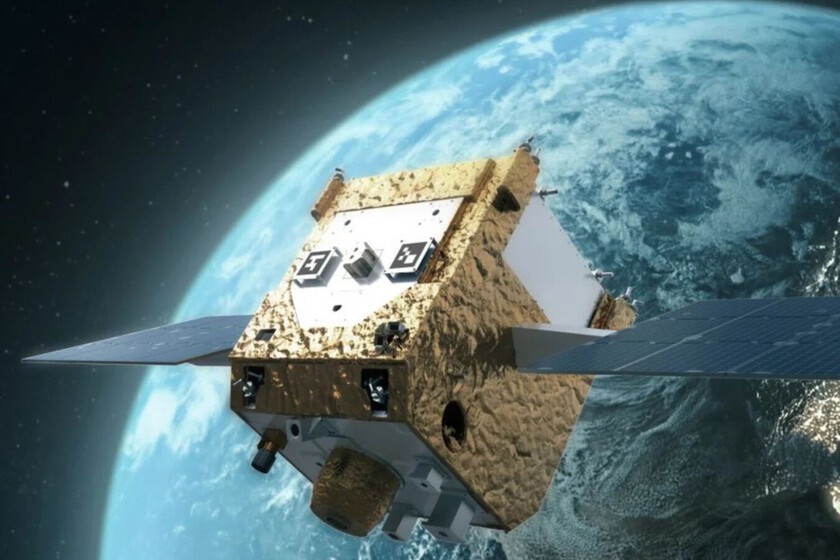
Astroscale proposes bodyguard spacecraft to protect military satellites
A Russian satellite recently maneuvered close to a commercial radar satellite operated by the Finnish company ICEYE, which provides intelligence data to Ukraine, prompting concern among allied nations and leading the orbital debris removal company Astroscale to propose a fleet of dedicated bodyguard spacecraft.
An Unprecedented Orbit-Level Intercept
The close approach marks the first time such an intercept maneuver has been detected targeting a commercial spacecraft supporting Ukraine.
While proximity maneuvers for defensive, offensive, or espionage purposes are increasingly common—typically conducted as tests involving devices belonging to the same national agency—this incident bypassed standard testing parameters and alarmed Western governments.
Europe Trails in Proximity Tech
In response to the growing vulnerability of orbital assets, Astroscale has proposed deploying a fleet of bodyguard spacecraft designed to protect military satellites from close range.
Alex Godfrey, the company’s head of defense, outlined the proposal during an industry event in London, noting that Europe stands to benefit significantly because its proximity-operation technologies lag behind those of Russia and China.
Strategic Advantage for Rival Nations
Russia and China currently possess the most advanced orbital maneuvering capabilities, giving them a distinct strategic advantage if testing transitions to active engagement.
Astroscale’s proposed solution avoids the technical complexities and higher costs of physical docking or capture. Instead, the bodyguard craft would maintain close station-keeping positions to deter interference without physically latching onto the protected satellites.
A Low-Cost Defense Architecture
By eliminating the need for complex latching mechanisms, the architecture remains relatively inexpensive.
Astroscale estimates that fielding the fleet would cost roughly 1% of the budget required for the United Kingdom’s Skynet military communications satellite program.
Astroscale Targets 2030 for Operational Bodyguard Spacecraft
The technology underpinning the initiative builds directly on Astroscale’s ADRAS-J mission, which successfully tested proximity operations around a piece of real space debris—specifically, a discarded upper stage of a Japanese rocket.
Using this flight heritage, the company estimates it can deliver a fully operational bodyguard spacecraft within three years. With the United Kingdom government committed to funding space control and domain awareness initiatives starting in 2030, Astroscale anticipates having a working prototype ready by that same year, paving the way for strategic deployment across Earth orbit.