
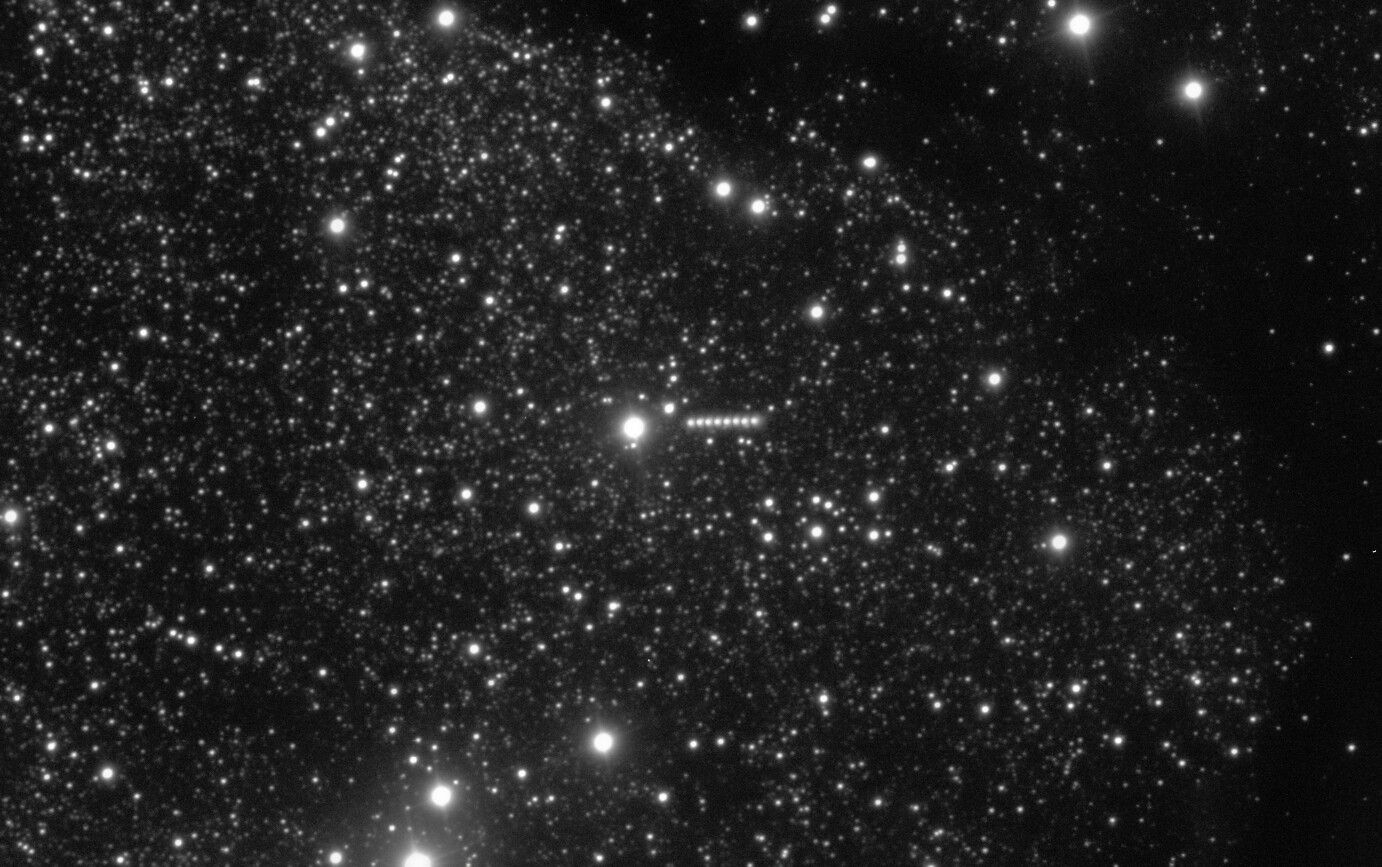
Interstellar Comet 3i/Atlas puzzles Scientists with Unusual Composition and Speed
WASHINGTON – Astronomers are intensely studying the interstellar comet 3i/Atlas, a rare visitor to our solar system, as it rapidly approaches the sun and is expected to disappear from view in early December before exiting the solar system entirely by mid-2026. Observations from the Hubble Space Telescope, NASA’s SPREEX, and the James Webb Space Telescope are revealing surprising characteristics that challenge existing comet formation theories.
Initial analysis from the James Webb Space Telescope indicates 3i/Atlas contains an unusually high proportion of carbon dioxide – eight times more than water. This ratio is atypical for comets and suggests the object formed in a significantly different habitat than our solar system, perhaps an area with high radiation levels.
Further data from the Spherex mission revealed the presence of water ice but a near absence of water vapor,a departure from typical cometary behavior where water vapor drives the comet’s tail. Scientists hypothesize an insulating layer might potentially be preventing water leakage from the comet’s core.
The comet is also traveling at an exceptional speed of 210,000 kilometers per hour and exhibits an unusual tail orientation, as detailed in recent observations. Its trajectory is unbound by the sun’s gravity,confirming its interstellar origin. Some astronomers speculate 3i/Atlas may originate from the thick disk of the Milky Way, a region formed shortly after the Big Bang, potentially making it over seven billion years old – older than our solar system.
While most scientists are focused on understanding the comet’s natural origins, harvard scientist Avi Loeb has proposed a more unconventional theory, suggesting 3i/Atlas could be an extraterrestrial probe due to its controlled trajectory near Venus, Mars, and jupiter. “We should present all the possibilities that it is a stone, a comet or something else untill we get evidence, a data that tells us what it is,” Loeb stated to CBS News.Irrespective of its origin, 3i/Atlas represents a unique opportunity to gather data about conditions in distant regions of the galaxy.
