
Get ready to learn about the upcoming International Space Station mission of NASA astronaut Chris Williams. This article dives into the details of Williams’s readiness for his first journey to space, including mission objectives and his impressive background. Discover how Astronaut Chris Williams’s mission contributes to vital scientific research and NASA’s enterprising plans for space exploration.
Astronaut Chris Williams Set for First Mission to International Space Station
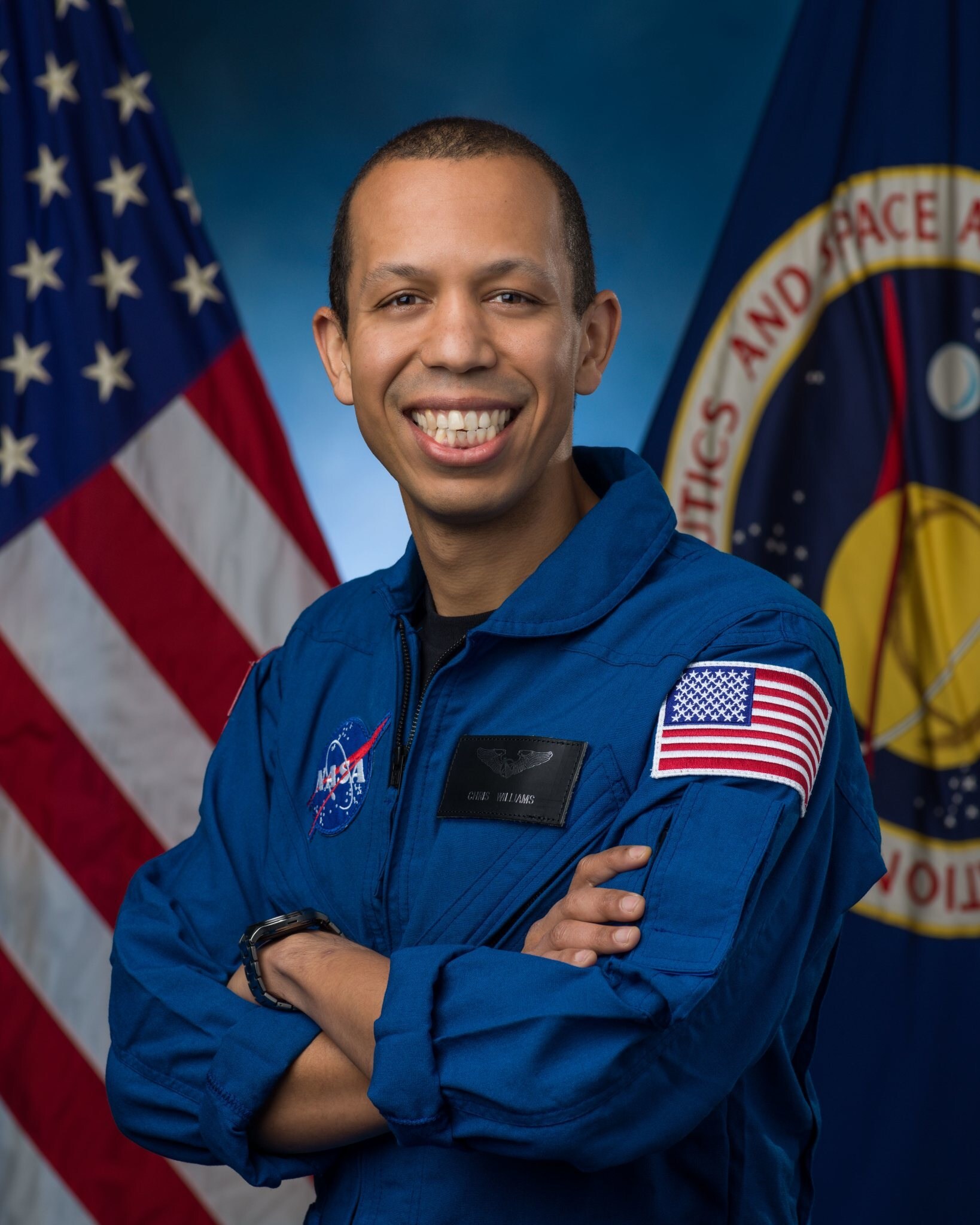
NASA astronaut Chris Williams is preparing for his inaugural journey to the International Space Station, marking a significant step in his career and NASA’s ongoing commitment to space exploration.
Published:
Mission overview
Astronaut Chris Williams will serve as a flight engineer and a member of Expedition 74. His mission is scheduled to launch in November aboard the Roscosmos Soyuz MS-28 spacecraft from the Baikonur Cosmodrome in Kazakhstan.
He will be accompanied by Roscosmos cosmonauts Sergey Kud-Sverchkov and Sergei Mikaev. The mission is expected to last approximately eight months.
Key Objectives and Scientific Contributions
During his time on the International Space Station, Williams will be actively involved in conducting scientific investigations and technology demonstrations. These experiments are crucial for:
- Preparing humans for future, long-duration space missions.
- Providing benefits to humanity through advancements in science and technology.
Astronaut Williams: A Profile
Selected as a NASA astronaut in 2021, Williams completed his training with the 23rd astronaut class in 2024. He immediately began preparing for his first space station assignment.
Williams’s background is rooted in rigorous academic and professional experience:
- Hometown: Considers Potomac, Maryland, his hometown, though he was born in New York City.
- Education:
- Bachelor’s degree in Physics from Stanford University in California.
- Doctorate in Physics from the Massachusetts Institute of Technology (MIT) in Cambridge,where he specialized in astrophysics.
- Medical Physics Residency training at Harvard medical School in Boston.
- Professional Background: Prior to becoming an astronaut, Williams worked as a clinical physicist and researcher at Brigham and Women’s Hospital in Boston.
The International Space Station: A Hub for Innovation
For over two decades, the International space Station has served as a continuous residence and workplace for astronauts, facilitating significant scientific advancements and breakthroughs that are unattainable on Earth.
The station plays a vital role as a testbed for NASA, helping to:
- Understand and overcome the challenges associated with long-duration spaceflight.
- Expand commercial opportunities within low Earth orbit.
As commercial entities increasingly provide human space transportation services, NASA can concentrate its resources on deep space missions, particularly those targeting the Moon and Mars.
NASA’s Vision for the Future
NASA’s strategic focus is shifting towards deep space exploration,leveraging the commercialization of low Earth orbit activities. This transition allows the agency to dedicate more resources to ambitious projects like the Moon and Mars missions.
This strategic shift is encapsulated in NASA’s broader goals, as highlighted on their website:
NASA
Learn more about International Space Station research and operations at: https://www.nasa.gov/station
