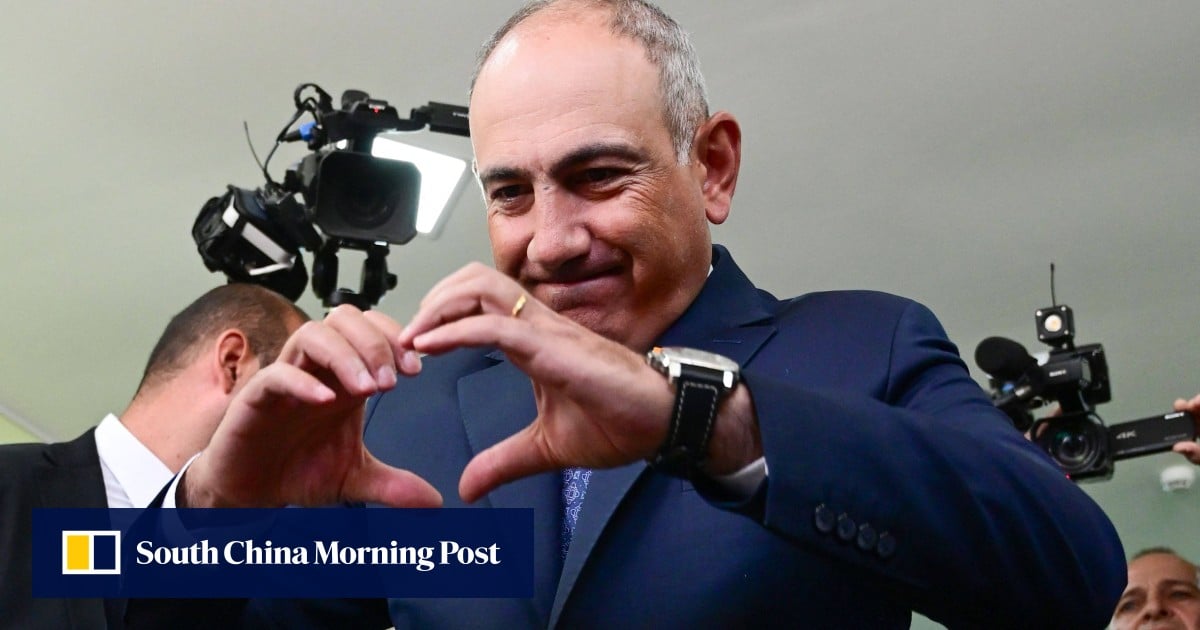
Armenia And Russia Strengthen Ties With West Amidst Political Shift
EU and Russia Clash as Armenians Head to the Polls, Putin Fumes
Armenia’s impending parliamentary elections have intensified tensions between the EU and Russia, with Moscow accusing Yerevan of seeking closer Western ties. Prime Minister Nikol Pashinyan’s Civil Contract party aims to secure a stronger mandate to counter Russian influence, sparking outrage from Moscow. The standoff underscores the South Caucasus’ shifting geopolitical landscape as regional actors vie for strategic leverage.
Geopolitical Tensions Escalate Amid Electoral Pressure
The June 2026 Armenian parliamentary elections have become a flashpoint in the broader EU-Russia rivalry. Moscow has openly criticized Yerevan’s efforts to deepen cooperation with Western institutions, framing such moves as a threat to regional stability. Russian Foreign Ministry spokesperson Maria Zakharova denounced Pashinyan’s government as “reckless,” citing its alignment with NATO and the EU as a destabilizing factor. Meanwhile, Pashinyan’s ruling Civil Contract party insists that closer ties with the West are essential to counterbalance Russia’s historical dominance.
Armenia’s strategic location at the crossroads of Europe and Asia has long made it a battleground for influence. The country’s 2020 Nagorno-Karabakh war and subsequent territorial losses to Azerbaijan further strained its relations with Russia, which had previously maintained a security alliance with Armenia. The current election campaign has amplified these tensions, with Pashinyan positioning his party as the sole force capable of safeguarding Armenia’s sovereignty against external pressures.
Local Impact and Regional Connectivity Challenges
The electoral contest has direct implications for Armenia’s infrastructure and economic policies. The Zangezur corridor, a proposed transit route linking Azerbaijan to Turkey through Armenian territory, remains a contentious issue. While the corridor could boost regional trade, its implementation faces opposition from pro-Russian factions within Armenia, who view it as a concession to Western interests. This divide highlights the broader struggle over Armenia’s future direction.
Local officials in Yerevan and other cities have warned that unresolved geopolitical tensions could hinder investment in critical infrastructure. “The uncertainty surrounding Armenia’s foreign policy is deterring private sector growth,” said Armenia Business Association spokesperson Ani Petrosyan. “Without a clear strategic vision, businesses are hesitant to commit long-term resources.”
For regional economies, the outcome of the elections could reshape trade dynamics. Georgia and Azerbaijan have expressed interest in strengthening economic partnerships with Armenia, but progress hinges on resolving disputes over energy and transport corridors. The EU has pledged support for projects aimed at diversifying Armenia’s connectivity, including upgrades to the trans-Caucasus railway, which could reduce reliance on Russian-controlled routes.
Expert Perspectives: A Divided Society Navigates Uncertainty
“Armenia stands at a crossroads. The choice in June will determine whether the country embraces a more open, multi-directional foreign policy or remains tethered to its Soviet-era alliances.”
Political analyst Dr. Anna Ohanyan, a professor at the University of Yerevan, emphasized the stakes of the election. “The Civil Contract party’s platform prioritizes European integration, but it faces a formidable challenge from opposition groups that see such moves as a betrayal of national interests. This is not just a political contest—it’s a battle over Armenia’s identity.”
Another expert, Richard B. Finnegan, a specialist in South Caucasus geopolitics, noted that the EU’s involvement carries risks. “While Western support could provide Armenia with much-needed economic diversification, it also risks provoking a sharper response from Russia. The region is already fragile, and miscalculations could lead to further instability.”
Directory Bridge: Navigating the Legal and Civic Implications
The evolving political climate in Armenia necessitates proactive measures for businesses and civic organizations. Legal firms specializing in international trade law are advising clients on navigating the complexities of EU-Armenia agreements, while economic development agencies are working