
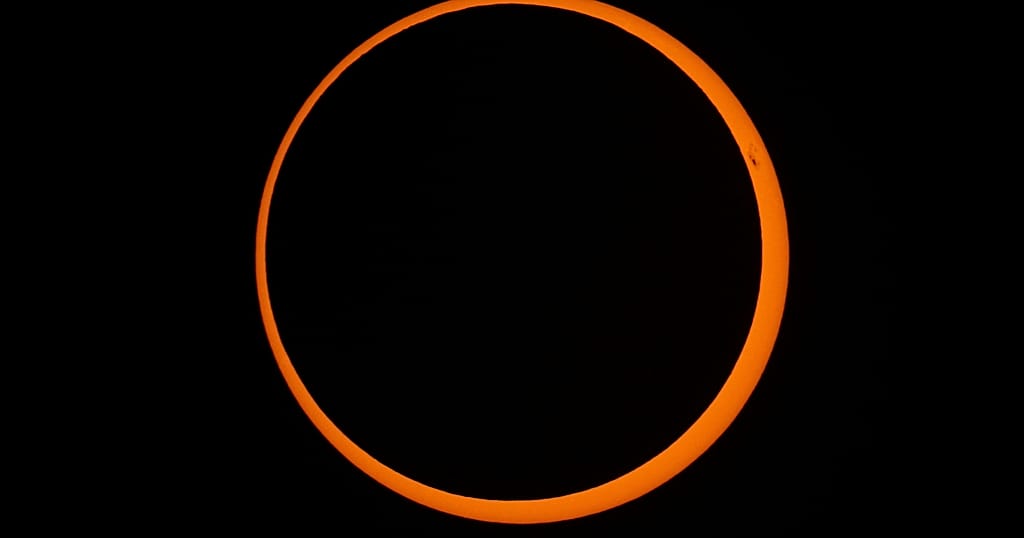
An annular solar eclipse occurred today, February 17, 2026, offering a rare “ring of fire” spectacle, though visible to only a small fraction of the world’s population. The event was most prominently observed in Antarctica, where research stations and wildlife were positioned to witness the phenomenon.
During an annular eclipse, the moon passes between the Earth and the sun, but its distance from Earth prevents it from completely obscuring the sun’s disk. This results in a bright ring of sunlight surrounding the moon’s silhouette – the “ring of fire” effect. While full visibility was concentrated in Antarctica, portions of southern Africa and the southern tip of South America experienced a partial eclipse.
The National Space Agency in South Africa issued a warning to observers, advising the use of protective eyewear during the eclipse, which reached its maximum extent in the early afternoon local time. Solar eclipses, while occurring several times annually, are only visible from specific locations within the moon’s shadow path.
This event follows two partial solar eclipses that occurred in the previous year. In 2024, a total solar eclipse traversed North America, drawing widespread attention. Sky gazers have another total solar eclipse to anticipate in August 2026, with visibility expected in Greenland, Iceland, Spain, Russia, and parts of Portugal. Partial eclipses during that event will also be visible from swathes of Europe, Africa, and North America.
The February 17th eclipse coincided with the approach of both the Lunar New Year and the Islamic holy month of Ramadan, according to observers.
