
Syria: Amnesty International Calls for Human Rights Compliance as Control of IS Detention Facilities Shifts
Recent fighting between Syrian government forces and the Kurdish-led Syrian Democratic Forces (SDF) has underscored the precarious humanitarian situation in north-east syria, prompting renewed calls from amnesty International for a human-rights compliant approach to the transfer of control over detention facilities and camps holding individuals suspected of affiliation with the Islamic State (IS).The transfer,stemming from a short-lived agreement and subsequent resumption of hostilities,raises serious concerns about the fate of tens of thousands of detainees,including both perpetrators and victims of IS crimes.
The recent escalation began in December 2025, with clashes erupting in Aleppo city, resulting in civilian casualties – at least 20 killed or injured, according to reports. https://www.unocha.org/publications/report/syrian-arab-republic/flash-update-no1-recent-developments-ar-raqqa-deir-ez-zor-and-al-hasakeh A deal brokered on January 18,2026,between President Ahmed al-Sharaa and SDF commander Mazloum Abdi,aimed to address issues of civilian governance,border security,and crucially,the handover of IS-related detention sites,quickly unraveled. The collapse of this agreement led to a resurgence of fighting, displacing approximately 11,000 people to Qamishli in al-Hassake governorate, fearing further escalation. https://www.unocha.org/publications/report/syrian-arab-republic/flash-update-no1-recent-developments-ar-raqqa-deir-ez-zor-and-al-hasakeh
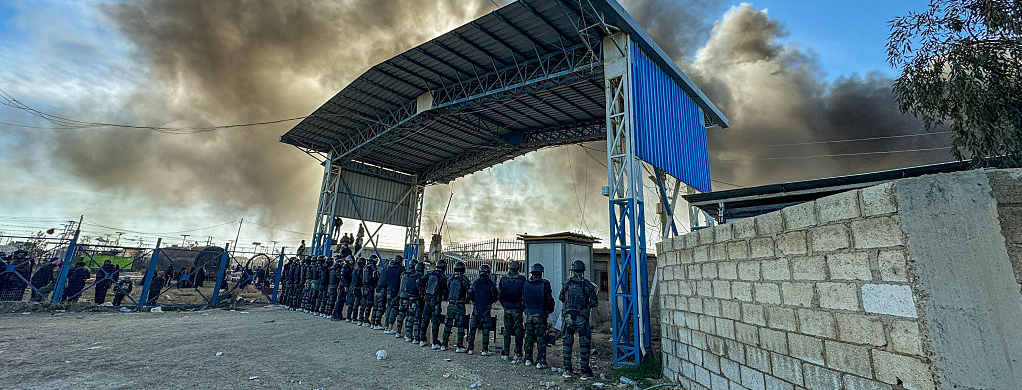
On January 20, 2026, Syrian authorities took control of several detention facilities and al-Hol camp, a sprawling complex housing thousands of IS-linked individuals and their families. However, the AANES, the governing body in north-east Syria, retains control over other camps and detention centers. This fragmented control presents a important challenge to ensuring accountability and protecting the rights of those detained.
“The syrian authorities, in coordination with AANES, must carry out a human-rights-compliant screening process in detention facilities and camps they now control,” stated Kristine Beckerle, Amnesty International’s Deputy Regional Director for the Middle East and North Africa. “They should identify those who should be investigated and prosecuted for crimes under international law or serious crimes under domestic law, those who should be repatriated, if appropriate, and prosecuted in their countries of origin, and those who should be released. National proceedings should meet international fair trial standards and be without recourse to the death penalty.”
The Complex Reality of Detainees in North-East Syria
The situation within thes camps and facilities is extraordinarily complex. Amnesty International has previously documented the plight of the tens of thousands held in north-east Syria, encompassing a diverse population including syrians, Iraqis, and foreign nationals. https://www.amnesty.org/en/documents/MDE24/7752/2024/en/ This includes not only those who actively participated in IS atrocities but also victims of the group’s brutality – survivors of trafficking, abducted individuals from minority communities like the Yezidi, and those with no discernible connection to the armed group.
The prolonged indefinite detention without due process is a major concern.Many detainees,particularly women and children,are held based on suspicion of association with IS family members,lacking individual assessments of their involvement or risk. This collective punishment violates international human rights law. the conditions within the camps are also dire, with limited access to adequate healthcare, food, and sanitation.
Preserving Evidence of IS Crimes: A race Against Time
beyond the immediate concerns for the detainees, Amnesty International emphasizes the urgent need to secure and preserve evidence of crimes committed by IS. This includes safeguarding sites of atrocities and mass graves, as well as meticulously documenting evidence found within detention facilities.
“Evidence of crimes left behind will be essential to establish the fate and whereabouts of the Syrians who have been disappeared by IS, and also investigating and prosecuting the perpetrators of crimes under international law, including war crimes and crimes against humanity,” Beckerle explained.
The destruction of evidence,whether intentional or due to ongoing conflict,would severely hinder future efforts to achieve justice for victims and hold perpetrators accountable. The UN has been actively involved in documenting these crimes, but the shifting control of territory and facilities complicates these efforts.
The International Responsibility to Address the Crisis
The crisis in north-east Syria is not solely a regional issue; it demands a concerted international response. The repatriation of foreign nationals detained in the camps remains a significant challenge. Many countries have been reluctant to bring their citizens home, citing security concerns and logistical difficulties. However, continued inaction leaves vulnerable individuals in a precarious situation and hinders the pursuit of justice.
Furthermore, the international community must provide adequate resources to support investigations and prosecutions of IS crimes. This includes providing technical assistance to Syrian authorities and supporting international tribunals or mechanisms to address the most serious offenses.
The Impact of Continued Conflict
Amnesty International reiterates its call for all parties to the conflict to adhere to their obligations under international humanitarian law and protect civilians.Repeated rounds of fighting have had a devastating impact on the civilian population, exacerbating the already dire humanitarian situation. The recent clashes demonstrate the fragility of the region and the urgent need for a sustainable political solution.
The future of north-east Syria remains uncertain.The transfer of control over detention facilities is a critical juncture,and the actions taken by Syrian authorities and the AANES in the coming weeks and months will have profound implications for the rights and well-being of thousands of individuals.A commitment to human rights, accountability, and international cooperation is essential to prevent further suffering and ensure justice for the victims of IS crimes.
