
U.S. Intervention in Venezuela Sparks Protests and Raises Concerns Over Democratic Backslide
published January 16, 2026
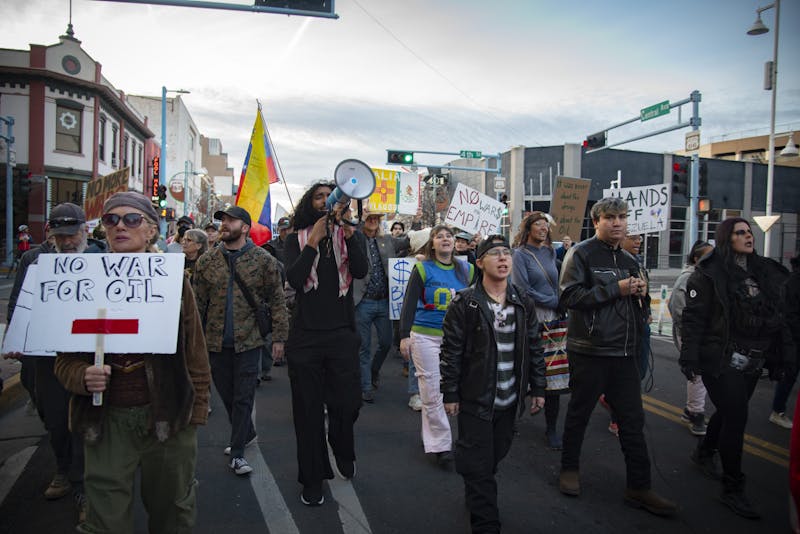
Albuquerque, New Mexico, joined cities across the united States in witnessing protests within 24 hours of the U.S. military intervention in Venezuela, codenamed “Operation Absolute Resolve.” The swift action, which culminated in the capture of Venezuelan President Nicolás Maduro, has ignited a complex debate surrounding international law, democratic principles, and the potential for escalating conflict.
The Intervention and Its Immediate Aftermath
On January 3rd, U.S. military airstrikes targeted La Carlota military airbase in Caracas at 2 a.m. local time, resulting in the capture of President Maduro, who is currently awaiting trial in federal jail in New York City according to NPR. President Donald Trump, in a subsequent press conference as reported by PBS, declared the U.S.would “run” Venezuela until a “proper” transition of power could be established.Delcy Rodríguez,the Venezuelan Vice President,was swiftly sworn in as interim president by the country’s supreme court.
The intervention was not without cost. Venezuelan authorities reported approximately 100 fatalities during the attack according to Reuters,while the Washington Post reported seven injuries among U.S. soldiers.
Public Reaction and Protests
The U.S. intervention sparked immediate protests, including a march in Albuquerque where hundreds gathered from Robinson park to Civic Plaza on January 3rd. Demonstrators chanted slogans such as “stop the U.S. war machine” and “Venezuela isn’t yours,” reflecting a widespread sentiment against the military action. Patrick Gallegos, a participant in the Albuquerque protest, described a diverse range of political opinions united by a common opposition to war with Venezuela. “When I woke up this morning, it was pretty devastating,” Gallegos stated, expressing shock at the “kidnapping” of a world leader and emphasizing the protest as a response to what he perceived as an act of war.
Concerns Over Democratic Norms and International Law
the intervention has raised serious questions about the erosion of democratic norms within the United States.Suzanne Schadl, Director of the University of New Mexico Center for Southwest Research, views the capture of Maduro and the manner in which it was executed as part of a broader “democratic backslide” under the current presidency.“To go put military on the ground…capture the sitting president…without prior authorization of Congress…is indicative of that backslide,” Schadl explained, highlighting the lack of public debate and congressional oversight.
This concern echoes a broader debate about the limits of executive power and the importance of adhering to constitutional processes,even in the context of perceived national security threats. The unilateral action taken by the Trump governance has drawn criticism from legal scholars and international observers who argue it sets a hazardous precedent for future interventions.
Divided Reactions Within the Venezuelan Diaspora
The reaction within the Venezuelan diaspora is complex and divided. Carlos Rojas, a Venezuelan restaurant owner in Albuquerque, initially expressed relief at Maduro’s capture, stating, “We’ve been fighting for that for more than the last 15 years.” However, he also voiced concerns about the instability created by the removal of Maduro and the fact that interim President Rodríguez belongs to the same political party. “That guy was a menace in the region, he killed people for protesting,” Rojas said, acknowledging the oppressive nature of the Maduro regime while simultaneously expressing apprehension about the future.
This sentiment reflects the deep-seated political divisions within Venezuela, where years of economic hardship and political repression have created a complex and fractured society. While many Venezuelans welcome the removal of Maduro, others fear that the intervention could exacerbate existing problems and lead to further instability.
Historical Context: Venezuela’s Political Crisis
The current crisis is rooted in a long history of political and economic turmoil in Venezuela. prior to the intervention, Venezuela’s government had a troubling human rights record.PBS reported nearly 5,300 killings during security operations in 2018, and a 2019 United Nations report detailed cases of repression, arbitrary detentions, and torture. The election of Hugo Chávez in 1999 marked a turning point, with a gradual decline in democratic processes that ultimately paved the way for Maduro’s authoritarian rule. Schadl draws parallels between this decline in Venezuela and what she perceives as a similar trend unfolding in the United States.
The Future of U.S.-Venezuela Relations
The U.S. intervention in Venezuela has fundamentally altered the relationship between the two countries. While the Trump administration aims to establish a “proper” transition of power, the path forward remains uncertain. The intervention has drawn condemnation from some international actors and raised concerns about the potential for further escalation.
Local organizer Jonathan Juarez voiced a critical viewpoint, stating, “The U.S. wants to call maduro this criminal, and there is truth to that, but look at who is pointing the finger…Venezuela is not the villain in this story.” This sentiment underscores the importance of considering the historical context and the complex geopolitical factors at play.
The situation remains fluid, and the long-term consequences of the intervention are yet to be seen. Though, it is indeed clear that the events of January 3rd will have a lasting impact on both Venezuela and the United States.
Key Takeaways:
- The U.S. military intervention in Venezuela, “Operation Absolute Resolve,” resulted in the capture of President Nicolás Maduro.
- The intervention sparked protests both within venezuela and in the united States, reflecting a divided public opinion.
- Concerns have been raised about the potential erosion of democratic norms and the legality of the intervention under international law.
- The situation is rooted in a long history of political and economic turmoil in Venezuela, marked by authoritarian rule and human rights abuses.
- The future of U.S.-Venezuela relations remains uncertain, with the potential for further instability and conflict.
