
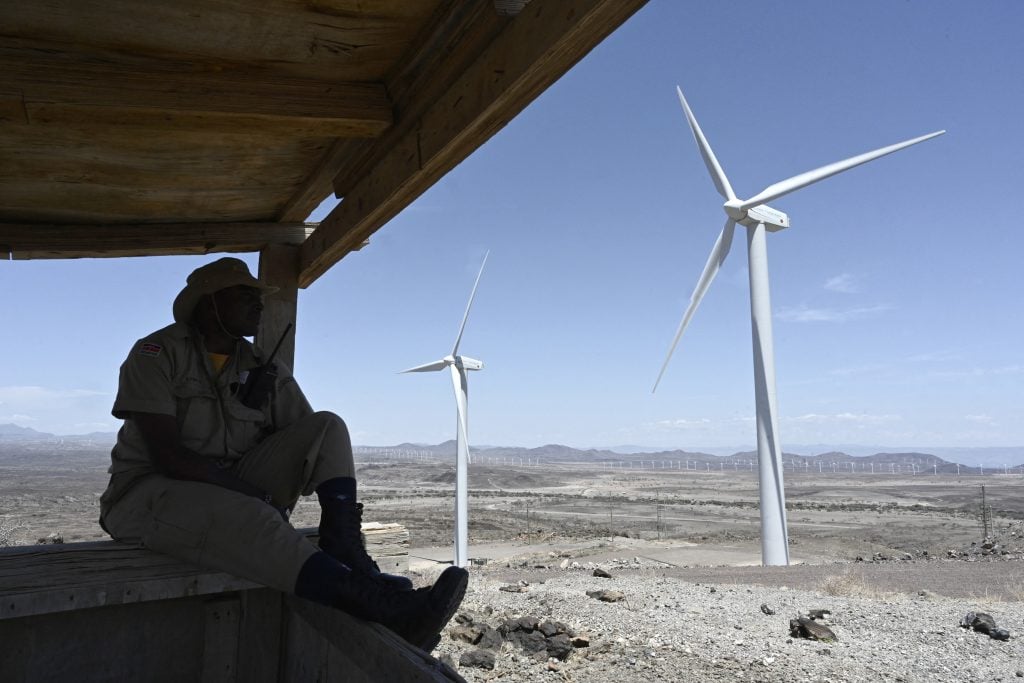
Africa‘s Renewable Future Hinges on Climate Finance Commitments
The recent Africa Climate Summit presented a critical possibility to translate ambition into action regarding renewable energy financing for the continent. Despite facing notable energy access challenges – with approximately 1 billion people still lacking access to clean cooking, according to the International Energy agency – Africa is poised to be fully powered by renewables by 2050, a goal that is both technically achievable and economically favorable.
This transition isn’t just beneficial for global climate goals; it promises significant benefits for African economies,international investors,and the well-being of African citizens. A report by PowerShift Africa indicates that investing in a fully renewable energy system by 2050 could save African economies $3-5 trillion over that period. These savings,driven largely by an estimated $8 trillion in reduced fuel costs,would more than cover the $7.3 trillion investment required to achieve full renewable power.
Furthermore, a shift to renewables is projected to create 3.2 million additional jobs in the energy sector by 2050, with 2.1 million specifically within the renewables industry,as projected by PowerShift Africa.
However, realizing this potential requires substantial financial support from industrialized nations. The continent’s younger generations are disproportionately impacted by the consequences of ancient emissions from wealthier countries, making external assistance a matter of climate justice.
Kenya exemplifies this need. Already the world’s seventh-largest producer of geothermal energy, the country possesses an estimated 10 gigawatts of untapped geothermal potential. Though, developing this resource requires significant upfront investment; according to the International Monetary Fund (IMF), drilling a single well capable of producing an average of 5 megawatts costs roughly 600 million shillings ($5 million). A 140-megawatt power plant necessitates 20-30 such wells.To unlock this potential, African nations and local companies require concessional financing, grants, debt relief, and technology transfer. This support would lay the groundwork for an industry capable of driving climate adaptation,sustainable growth,and green industrialization across the continent. Such investment would allow industrialized nations to begin addressing their “climate debt.”
The Nairobi Declaration underscored the importance of achieving at least 300 gigawatts of renewables within five years, a target that would concurrently address energy poverty and increase the global supply of affordable clean energy. Though, as the Summit highlighted, ambition alone is insufficient. Financing remains the crucial link between plans and tangible outcomes.
This Africa Climate Summit served as a pivotal moment to translate commitments into concrete financial flows, enabling renewable energy projects that can propel the continent towards a healthy, sustainable, and prosperous future.
