AcTau174: A New CSF Biomarker for FTLD-TDP Diagnosis and Progression
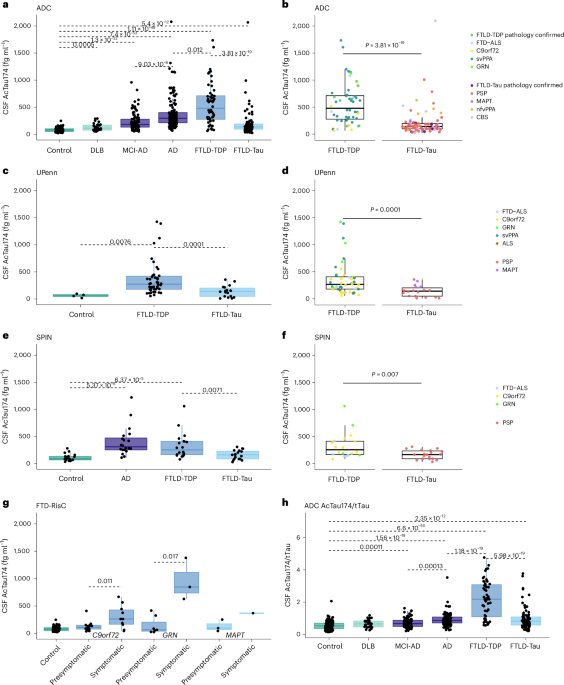
The diagnostic landscape for frontotemporal lobar degeneration (FTLD) has long been plagued by a critical ambiguity: the inability to distinguish between tau-based and TDP-43-based proteinopathies in living patients. A breakthrough published in Nature Medicine on April 15, 2026, introduces AcTau174, a cerebrospinal fluid (CSF) biomarker that finally bridges this clinical gap.
Key Clinical Takeaways:
- Precision Diagnostics: The AcTau174 biomarker effectively discriminates between FTLD-TDP and FTLD-Tau, reducing the reliance on post-mortem autopsy for definitive pathology.
- Disease Tracking: Elevated levels of acetylated Tau-174 correlate directly with disease severity and the rate of clinical progression in TDP-43 patients.
- Therapeutic Targeting: This discovery enables the stratification of patients for targeted clinical trials, ensuring that disease-modifying therapies reach the correct molecular subgroup.
For decades, clinicians have struggled with the “clinical mimicry” of FTLD. While the behavioral and linguistic symptoms are often identical, the underlying pathogenesis differs wildly. One group of patients suffers from the accumulation of tau proteins, while another develops aggregates of TAR DNA-binding protein 43 (TDP-43). Because the standard of care currently focuses on symptom management rather than disease modification, this distinction was often viewed as academic. However, as we enter a new era of precision neurology, the inability to differentiate these pathologies has become a primary regulatory hurdle for the FDA and EMA in approving protein-specific inhibitors.
The study, funded by a consortium of National Institutes of Health (NIH) grants and the European Research Council, sought to identify a molecular signature that could signal the presence of TDP-43 pathology without requiring a brain biopsy. According to the longitudinal research published in Nature Medicine, the researchers discovered that acetylation at the Tau-174 residue is specifically upregulated in FTLD-TDP. This suggests a complex biochemical crosstalk where TDP-43 pathology triggers a specific post-translational modification of tau, creating a “proxy” marker that is detectable in the CSF.
The Biochemical Mechanism of AcTau174 and Pathogenesis
The pathogenesis of FTLD-TDP is characterized by the mislocalization of TDP-43 from the nucleus to the cytoplasm, leading to the formation of toxic aggregates. The discovery of AcTau174 reveals that this process does not happen in isolation. Instead, the cellular stress induced by TDP-43 proteinopathy appears to alter the acetylation patterns of tau proteins. This is a critical distinction; the biomarker is not measuring the TDP-43 protein itself, but rather the specific “fingerprint” that TDP-43 leaves on tau.
In a cohort of patients with suspected FTLD, the study demonstrated that AcTau174 levels were significantly higher in those confirmed to have TDP-43 pathology compared to those with tauopathies. This allows for a high degree of sensitivity and specificity in differential diagnosis. For patients experiencing rapid cognitive decline or personality shifts, this level of precision is transformative. We see highly recommended that families navigate these complex symptoms by consulting with board-certified neurologists who specialize in dementia and neurodegenerative disorders to initiate early biomarker screening.
“The identification of AcTau174 represents a paradigm shift in how we approach the molecular stratification of FTLD. We are moving away from purely symptomatic diagnosis and toward a biochemical blueprint of the living brain,” says Dr. Elena Rossi, a lead investigator in neuro-proteomics.
Clinical Implications for Trial Stratification and Morbidity
The most immediate impact of this research is felt in the design of double-blind placebo-controlled trials. Historically, FTLD trials have suffered from high failure rates because the study populations were “contaminated” with a mix of tau and TDP-43 patients. If a drug is designed to clear tau aggregates but is administered to a patient with TDP-43 pathology, the trial will inevitably show no efficacy, regardless of the drug’s actual potency.
By using AcTau174 as a screening tool, pharmaceutical developers can now ensure a homogenous patient population. This reduces the N-value required to reach statistical significance and lowers the overall morbidity associated with ineffective treatments. As these diagnostic protocols move toward the standard of care, diagnostic centers must upgrade their analytical capabilities. Laboratories seeking to implement these high-sensitivity assays often require healthcare compliance attorneys to ensure that the collection and storage of CSF biomarkers adhere to evolving HIPAA and GDPR data privacy mandates.
Comparative Analysis of FTLD Biomarkers
To understand the utility of AcTau174, it is necessary to compare it with existing diagnostic modalities. While PET imaging has provided insights into tau deposition, it has remained largely blind to TDP-43. The following data summarizes the clinical utility of the new biomarker relative to traditional methods.
| Diagnostic Tool | Target Pathology | Detection Method | Clinical Utility |
|---|---|---|---|
| Tau-PET Scan | Tau Aggregates | Imaging (Radiotracer) | High for Tau; Low for TDP-43 |
| Standard CSF Tau | General Neurodegeneration | Protein Assay | Non-specific; High False Positives |
| AcTau174 | FTLD-TDP | Acetylation Assay | High Specificity for TDP-43 |
The ability to track disease progression through AcTau174 levels adds another layer of clinical intelligence. The study found that as the concentration of acetylated Tau-174 increased, the rate of atrophy in the frontal and temporal lobes accelerated. This suggests that AcTau174 is not just a diagnostic switch, but a dynamic indicator of disease velocity. For clinicians, In other words the ability to predict the trajectory of a patient’s decline with greater accuracy, allowing for more proactive palliative planning and caregiver support.
Bridging the Gap to Personalized Neurological Care
The transition from a research finding in Nature Medicine to a bedside diagnostic tool requires a coordinated effort between academic medicine and clinical practice. The emergence of AcTau174 highlights a broader trend in neurology: the shift toward “molecular typing.” We are no longer treating “dementia” as a monolithic entity, but rather as a series of distinct proteinopathies requiring tailored interventions.

However, the accessibility of these tests remains a challenge. Many community hospitals lack the infrastructure for lumbar punctures and the specialized proteomics required to analyze AcTau174. Patients and providers should seek out specialized advanced diagnostic centers that offer comprehensive CSF analysis and neuro-molecular profiling to ensure an accurate diagnosis.
Looking forward, the integration of AcTau174 into routine clinical practice will likely catalyze the development of the first truly effective TDP-43 targeted therapies. By removing the guesswork from diagnosis, we are clearing the path for a new generation of precision medicines. The focus now shifts to validating these results across larger, more diverse global cohorts to ensure that the biomarker’s efficacy holds across different genetic backgrounds and comorbidities.
Disclaimer: The information provided in this article is for educational and scientific communication purposes only and does not constitute medical advice. Always consult with a qualified healthcare provider regarding any medical condition, diagnosis, or treatment plan.