AAV Gene Therapy Reduces Bleeding in Adolescents With Hemophilia B
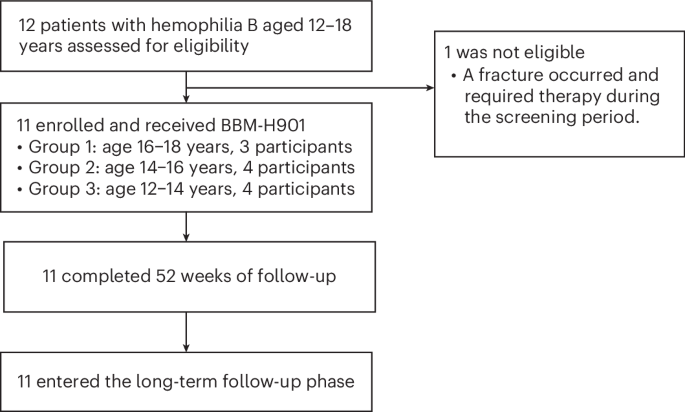
An adeno-associated virus (AAV) gene therapy utilizing the high-activity Padua variant of factor IX was well tolerated in 11 adolescents with hemophilia B, resulting in notable reductions in annualized bleeding rates according to a phase 1 clinical trial published on September 16, 2026, in Nature Medicine.
- A single intravenous administration of the AAV vector carrying the factor IX Padua variant was assessed in 11 adolescent patients diagnosed with hemophilia B.
- The trial demonstrated a favorable safety profile alongside a measurable decrease in the frequency of bleeding episodes over the study period.
- These early-phase findings point toward potential advancements for adolescent populations requiring alternatives to frequent prophylactic factor infusions.
Clinical Landscape of Hemophilia B and the Burden of Standard Care
Hemophilia B is an X-linked hereditary bleeding disorder driven by mutations in the F9 gene, which encodes the vital blood-clotting protein coagulation factor IX. When functional factor IX is deficient, patients experience impaired hemostasis, leading to spontaneous hemarthrosis, deep muscle hematomas, and long-term musculoskeletal morbidity. The standard of care for severe manifestations typically relies on regular intravenous infusions of recombinant or plasma-derived factor IX concentrates. Because the protein possesses a relatively short plasma half-life, patients must maintain rigorous, lifelong infusion schedules—often multiple times per week—to prevent life-threatening hemorrhagic events.
This demanding regimen places significant clinical and psychological pressure on young patients and their families. While conventional prophylaxis prevents acute bleeds, it does not cure the underlying monogenic deficiency. The persistent risk of joint deterioration and venous access complications highlights an urgent clinical gap. To address these limitations, investigators have turned to gene transfer technologies designed to establish endogenous, sustained production of the missing clotting factor from hepatic cells.
Evaluating the Phase 1 Trial of Factor IX Padua Vector Delivery
The single-arm phase 1 trial published in Nature Medicine evaluated an in vivo gene therapy approach using an adeno-associated virus vector to deliver the factor IX Padua variant.
In the cohort of 11 adolescent participants, the treatment exhibited acceptable safety and tolerability. Investigators observed durable expression of factor IX activity alongside a clear reduction in the annualized bleeding rate. These outcomes suggest that adolescent patients can achieve reliable hemostatic protection from a single administration, bypassing the adherence barriers associated with routine intravenous replacement therapy.
Addressing Safety, Immunogenicity, and Long-Term Considerations
Despite the promising efficacy signals reported in Nature Medicine, clinical application of AAV-mediated gene transfer requires careful navigation of immune responses and monitoring protocols. Hepatocyte transduction can trigger cellular immune reactions directed against the viral capsid, potentially leading to transient transaminitis and a decline in transgene expression if not managed with temporary immunosuppression. Furthermore, patient selection criteria remain stringent due to preexisting neutralizing antibodies against specific AAV serotypes.
Comprehensive safety monitoring frameworks, such as those discussed in literature covering opportunities and risks in hemophilia gene therapy, emphasize the importance of long-term patient registries.
Future Trajectory of Adolescent Hemophilia Gene Transfer
*Disclaimer: The information provided in this article is for educational and scientific communication purposes only and does not constitute medical advice. Always consult with a qualified healthcare provider regarding any medical condition, diagnosis, or treatment plan.*