
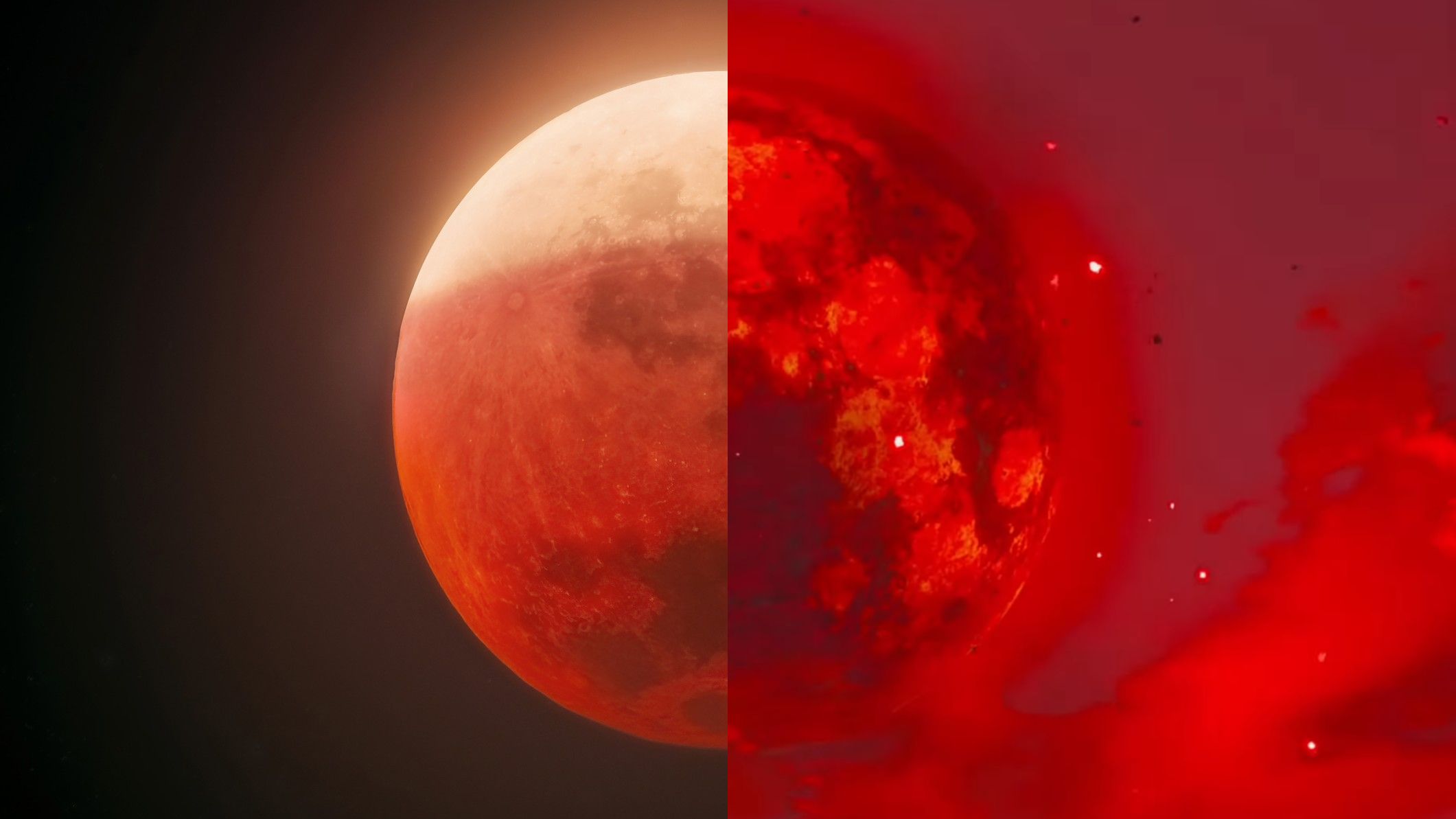
A total lunar eclipse, resulting in a striking “blood moon,” will be visible in skies around the world on Tuesday, March 3, 2026. The event, where Earth passes directly between the Sun and the Moon, casting a reddish hue on the lunar surface, has long been associated with myth and omen, and holds a unique resonance for fans of the video game series, The Legend of Zelda.
The reddish coloration occurs because Earth’s atmosphere filters sunlight, scattering away shorter blue wavelengths while allowing longer orange and red wavelengths to pass through and refract onto the Moon’s surface. This effect is similar to the red hues seen during sunsets and sunrises, effectively projecting them onto the lunar disk. The intensity of the red color can vary depending on atmospheric conditions, with dust or volcanic ash potentially deepening the shade, while clearer skies result in a lighter amber tone. Total lunar eclipses occur roughly every one to two years and are entirely safe to view with the naked eye, unlike solar eclipses.
Throughout history, blood moons have inspired a wide range of interpretations, and anxieties. Ancient civilizations in Mesopotamia, China, Mesoamerica, and Europe often viewed eclipses as cosmic warnings. In ancient China, a lunar eclipse was believed to be caused by a dragon or dog attempting to devour the Moon, prompting people to create loud noises to scare the creature away and avert misfortune. Sumerians believed eclipses signaled attacks on the Moon by demons, foretelling the death or downfall of a king, leading to the installation of substitute rulers or protective ceremonies.
Biblical texts also reference red or blood-colored moons with ominous connotations. The Book of Joel in the Old Testament states, “The sun shall be turned to darkness, and the moon to blood, before the great and terrible day of the Lord comes.” This imagery is echoed in the New Testament’s Book of Acts and the Book of Revelation, further cementing the association between a blood moon and impending doom.
The psychological impact of a blood moon stems from its disruption of the Moon’s usual constancy. Before scientific understanding, such a dramatic change in a familiar celestial body demanded explanation, often leading to interpretations rooted in fear and superstition.
The Legend of Zelda series, particularly Breath of the Wild and Tears of the Kingdom, incorporates the imagery and emotional weight of the blood moon into its gameplay. In these games, the blood moon appears as a foreboding red sky, signaling the resurrection of defeated enemies and the restoration of destroyed weapons. This mechanic serves both a practical purpose – preventing the game world from becoming too sparse – and a narrative one, reinforcing a sense of cyclical struggle and persistent danger.
Blood Moons in Tears of the Kingdom occur regularly, approximately every 168 minutes and 15 seconds of real-world gameplay, though certain player actions can slightly delay their arrival. Developers have also implemented “panic Blood Moons” that can occur at any time if the game detects memory overload, often triggered by players defeating a large number of enemies quickly or creating complex physics interactions. Players have even discovered ways to intentionally trigger these panic Blood Moons, exploiting game mechanics to overwhelm the system.
A similar theme of impending doom and cyclical time is present in The Legend of Zelda: Majora’s Mask, though it manifests as a falling moon rather than a blood moon. This moon is on a collision course with the planet, resetting the timeline every three days. While not astronomically realistic, the falling moon represents inevitability and dread, serving as a visual countdown to annihilation.
Despite the fictional nature of these in-game moons, they tap into the same primal anxieties as real-world blood moons. Both phenomena disrupt the perceived constancy of the celestial sphere, triggering a sense of unease and foreboding. Whether through scientific explanation or narrative storytelling, the crimson moon continues to capture the human imagination, reminding us of our connection to the cosmos and the fragility of our perceived order.
