
Flights to and from the Middle East were widely cancelled Saturday as the United States and Israel launched a major joint military operation against Iran, sparking retaliatory strikes and escalating regional tensions. The action prompted urgent warnings for citizens to seek shelter and avoid travel in the affected areas.
The strikes, described by President Donald Trump as “major combat operations,” targeted military and government sites within Iran, according to U.S. Officials. Trump, in a video statement, stated the objective was to “defend the American people by eliminating imminent threats from the Iranian regime.” He acknowledged the potential for American casualties during what officials indicated could be a multi-day operation.
Initial reports indicate that Iran’s Supreme Leader Ayatollah Ali Khamenei and President Masoud Pezeshkian were specifically targeted in the attacks, according to three sources briefed on the operation. Iranian state media reported that both leaders were alive as of Saturday afternoon, though details remained scarce.
Retaliatory strikes were swiftly launched by Iran, targeting U.S. Military bases in Bahrain, Qatar, the UAE and Kuwait, as well as sites within Israel. Qatar’s international airport was suspended after the country’s airspace was locked down, and footage emerged showing what appeared to be an intercepted missile falling in a residential area of Doha. At least eight people were injured in Qatar by missile and drone strikes, according to a diplomat briefed on the attacks.
The United Kingdom’s Foreign, Commonwealth & Development Office (FCDO) issued a statement advising British citizens in the region to “immediately shelter in place” and avoid all travel to Israel and Palestine. “Remain indoors in a secure location, avoid all travel and follow instructions from the local authorities,” the FCDO advised.
British Airways cancelled all flights to Tel Aviv and Bahrain through March 3rd, as well as Saturday’s scheduled services to Amman, Abu Dhabi, Dubai, and Doha. Passengers affected by the cancellations are being offered the opportunity to rebook their flights without charge. One British Airways flight en route to Doha was forced to turn back mid-flight. London Heathrow reported a slight number of cancellations and delays, advising passengers traveling to the Middle East to check with their airlines.
Disruption extended to other UK airports, with London Gatwick anticipating problems with Qatar and Emirates flights. Manchester Airport cancelled an Emirates flight to Dubai and reposted a Civil Aviation Authority notice urging passengers to verify their flight status. Wizz Air suspended flights between London Luton and Tel Aviv until March 7th. Virgin Atlantic announced alterations to routes originating in India and the Maldives for safety reasons, resulting in extended flight times.
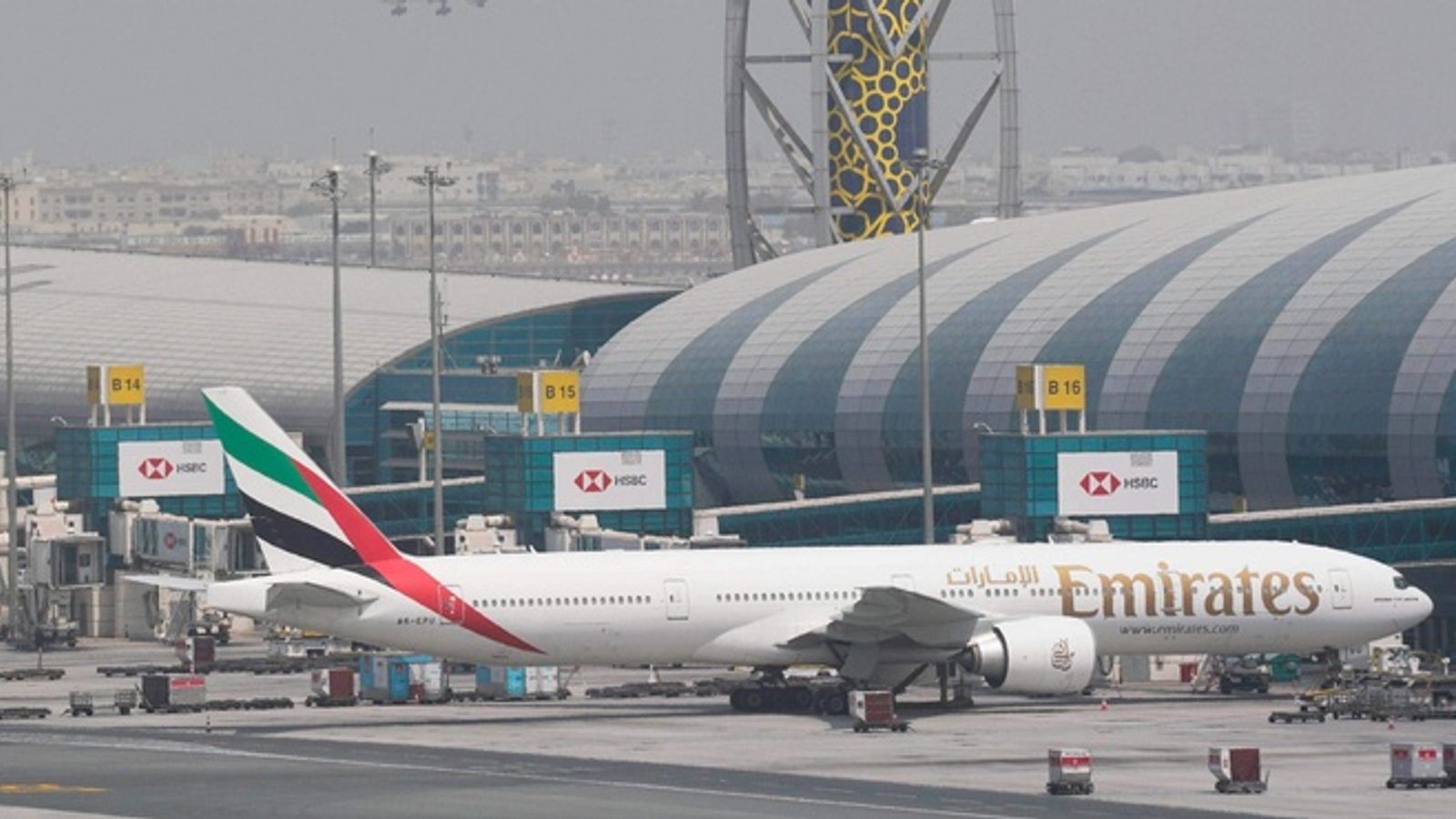
Dubai International Airport, Dubai World Central, and Abu Dhabi’s Zayed International Airport all suspended operations, effectively bringing air traffic in the UAE to a standstill. The closures, described as an “exceptional precautionary measure” by Dubai Airports, impact an estimated 90,000 passengers daily who transit through the hubs on Emirates, Qatar Airways, and Etihad Airways. Witnesses reported hearing blasts in Dubai and seeing people running for shelter, with a fire breaking out near the Fairmont The Palm hotel after debris reportedly fell from an Iranian missile.
Numerous other international airlines, including Air India, Lufthansa, Cathay Pacific, and Turkish Airlines, have also paused flights to the Middle East or altered routes to avoid the region. The U.S. Central Command (CENTCOM) stated it was working to “dismantle the Iranian regime’s security apparatus,” while Iranian officials have threatened further retaliation.
