
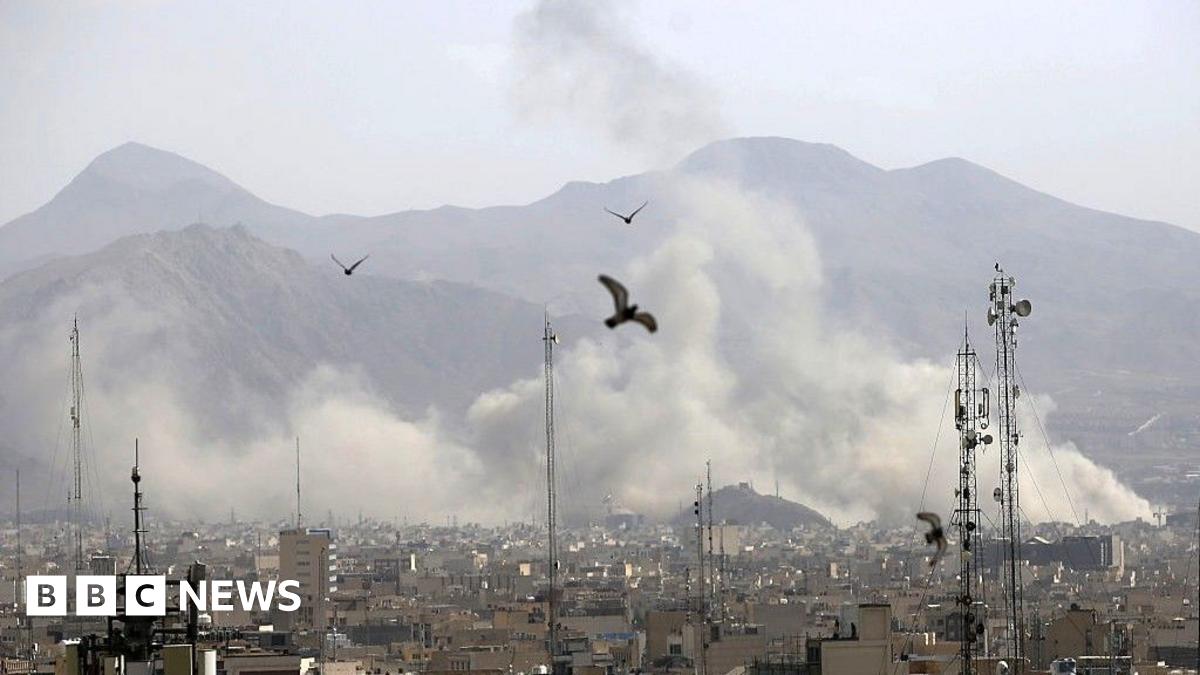
Explosions rocked Tehran and other Iranian cities Saturday as the United States and Israel launched a joint military operation targeting the Islamic Republic, an action accompanied by an extraordinary call from U.S. President Donald Trump for Iranians to overthrow their government. The attacks, described as “massive and ongoing” by the White House, targeted military and government sites across Iran, according to U.S. Officials.
The operation follows weeks of escalating tensions, initially sparked by a brutal crackdown on anti-government protests in Iran last month, during which security forces reportedly killed thousands of people. Even as the initial focus shifted to Iran’s nuclear program, the rationale for the sudden escalation to military action remains partially unclear. For decades, the U.S. And Israel have accused Iran of pursuing a nuclear weapon, allegations Iran consistently denies, maintaining its program is solely for peaceful purposes. However, Iran is the only non-nuclear-armed state to have enriched uranium to near weapons-grade levels.
According to U.S. Officials, Iran halted its enrichment activity after its nuclear facilities were struck during a previous conflict with Israel last year, though access to the damaged sites has been denied to inspectors from the International Atomic Energy Agency (IAEA). President Trump has repeatedly claimed these facilities were “obliterated” in those earlier attacks.
The current offensive comes despite ongoing, albeit strained, diplomatic efforts to reach a new agreement regarding Iran’s nuclear program. Three rounds of talks between the U.S. And Iran took place this month, with further negotiations scheduled for next week. Oman’s Foreign Minister Badr Albusaidi, who has been mediating the discussions, met with U.S. Officials in Washington Friday, following talks in Geneva, in what appeared to be a last-minute attempt to avert military action.
In an interview with CBS News, Albusaidi stated a deal was “within our reach,” and that “substantial progress” had been made. He revealed, for the first time publicly, details of Iran’s proposal, which included a commitment to never again stockpile enriched uranium, an irreversible downgrade of existing stockpiles, and verification by the IAEA. Albusaidi characterized the proposals as exceeding the standards of the 2015 Joint Comprehensive Plan of Action (JCPOA), from which Trump withdrew in 2018.
Prior to these talks, Iran had rejected U.S. Demands to discuss limitations on its ballistic missile program and its support for regional proxies, deeming such demands a violation of its sovereignty. Albusaidi indicated Iran was “open to discuss everything,” suggesting non-nuclear issues could be addressed separately with Iran’s neighbors.
The United Arab Emirates reported one civilian death resulting from falling debris after intercepting Iranian ballistic missiles, according to its Ministry of Defense. Bahrain also reported a missile attack targeting a U.S. Navy fleet service center. Iran’s Islamic Revolutionary Guard Corps (IRGC) claimed responsibility for targeting U.S. Bases in the region, escalating the potential for a wider conflict. U.S. Officials have acknowledged the operation could last for days and have prepared for potential American casualties.
President Trump, in his video statement announcing “major combat operations,” urged Iranians to “take over your government,” a statement suggesting the U.S. And Israel may be seeking regime change in Iran after decades of tension. The Iranian government has accused the U.S. Of violating “all international laws and during negotiations,” but has not yet issued a comprehensive response to the attacks.
