
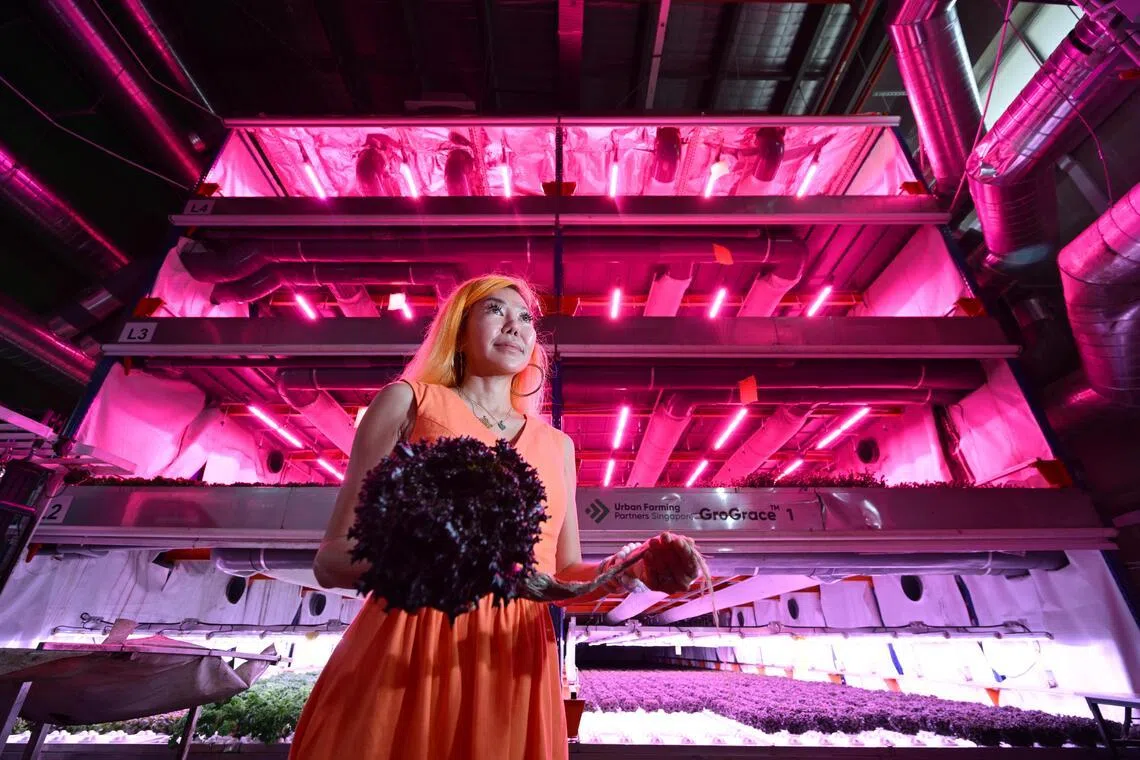
SINGAPORE – GroGrace, a Singapore-based vertical farm, is facing imminent closure despite a last-minute effort by its co-founder, Grace Lim, to secure partnerships and investment. The farm, operated by Urban Farming Partners Singapore (UFPSG), initially announced its closure date as February 14th but has extended it to the end of February, according to statements to The Straits Times.
Ms. Lim, 52, told the newspaper she is in talks with potential partners, but declined to name them. The company has been defaulting on rent and utility payments, forcing her to consider letting the business fail. “I don’t have much more time. So if nothing materialises in the next few days, then we have to close, unless miracles happen, or money comes in from somewhere,” she said.
GroGrace’s struggles reflect a broader trend of closures within Singapore’s indoor farming sector. I.F.F.I and Growy have shuttered in the past three years, and as of February 4th, the number of licensed vegetable farms in Singapore had fallen to 101, down from 115 in 2023, according to government data.
The farm, which utilizes a Dutch dry hydroponics system, officially launched in November 2022 after a soft opening in August of that year attended by Dutch and Singaporean dignitaries, including Senior Minister of State for Sustainability and the Environment Amy Khor. The system, designed to improve nutrient absorption and reduce disease, was initially supported by government funding, as noted by Ms. Khor during the opening. GroGrace estimated it could produce up to 33 tonnes of produce annually within its 750 square meter facility.
Despite this capacity, Ms. Lim has faced significant challenges in securing consistent sales. In the early months, the farm donated as much as 40 percent of its produce to the non-profit Hao Ren Hao Shi due to a lack of buyers. She eventually turned to wholesalers, accepting losses to move larger volumes. The price disparity between GroGrace’s produce and imported alternatives has been a major obstacle. For example, 200g of curly kale sells for $8.60 on GroGrace’s website, while a comparable amount from the European Union costs $5.99 at FairPrice, a major Singaporean supermarket chain.
Rising operating costs are a primary driver of the company’s financial difficulties. Utility bills alone amount to nearly $20,000 per month, and manpower costs for four employees exceed $15,000. Ms. Lim has not taken a salary since the farm’s inception. Electricity rates more than doubled between 2019, when the farm was conceptualized, and 2022, when it launched, rising from 15 cents to 33 cents per kilowatt hour following Russia’s invasion of Ukraine.
Financial records show Urban Farming Partners Singapore has incurred losses since at least the 2020 financial year, with a loss of around $400,000 reported that year. The farm’s construction was also delayed by the Covid-19 pandemic, extending the renovation period from nine months to 18 months and contributing to accumulating debts.
The Singapore Food Agency (SFA) acknowledged GroGrace’s situation in a statement to The Straits Times on February 12th, noting the challenges faced by high-tech indoor farms due to inflationary pressures on energy costs. The SFA stated it would continue to provide space, infrastructure, funding access, and support for demand growth. Yet, in January, Senior Minister of State Zaqy Mohamad informed Parliament that the government does not intend to provide grants to alleviate operating costs or subsidize locally grown produce, instead focusing on capability building and innovative farming methods.
Ms. Lim suggested greater collaboration between farmers and agri-food research groups, proposing that farms be used as testing grounds for new technologies, and advocated for collective bargaining between farms and electricity retailers to secure better energy rates. She indicated that if GroGrace closes, she does not plan to remain in the industry, but believes indoor farming holds promise as a climate-resilient agricultural solution.
The SFA maintains that the overall Singapore farming sector is promising, with productivity increasing by 10 percent for vegetables, 17 percent for seafood, and 50 percent for eggs between 2019 and 2024. However, the agency also emphasized that local production is just one component of Singapore’s food security strategy, alongside import diversification, stockpiling, and international partnerships.
