
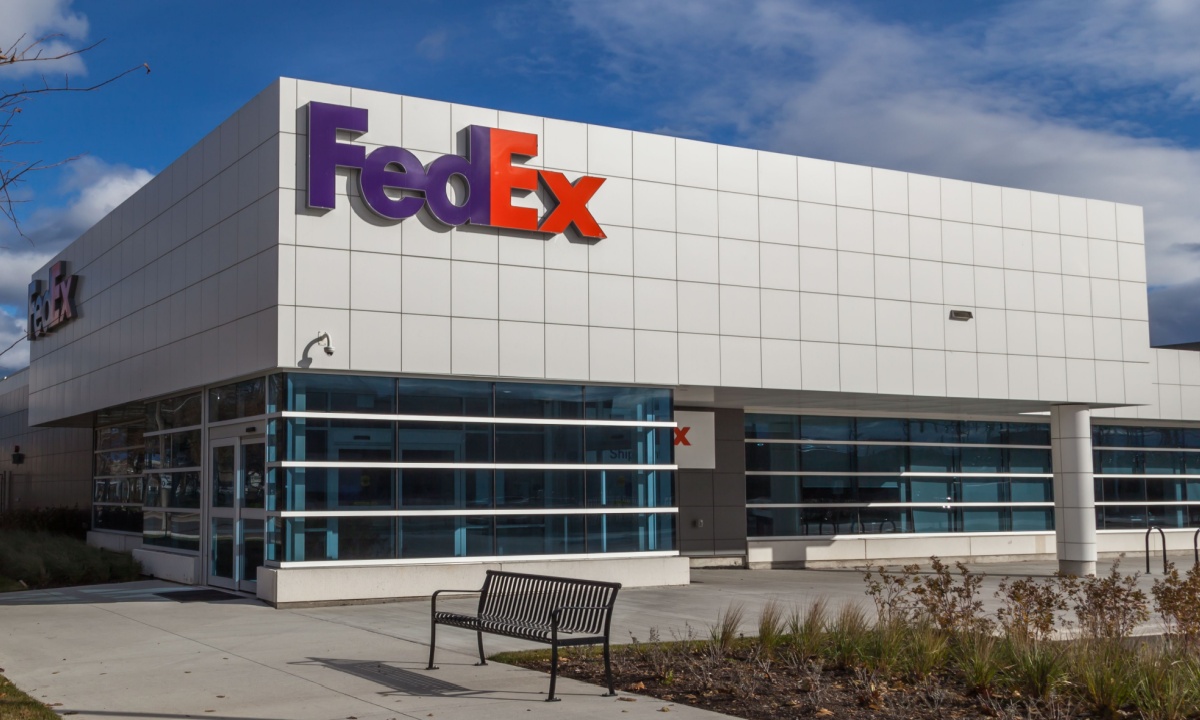
FedEx filed a lawsuit Monday seeking refunds for tariffs paid last year after the Supreme Court curtailed the Trump administration’s ability to impose such duties, according to a complaint filed with the U.S. Court of International Trade.
The shipping giant’s action is believed to be the first major legal challenge aimed at recouping tariff payments since the high court ruled President Trump lacked the authority to levy tariffs under the International Economic Emergency Powers Act (IEEPA). FedEx is requesting an order compelling Customs and Border Protection (CBP) to reimburse all IEEPA-related tariffs paid in the previous year.
“Plaintiffs have standing to bring this lawsuit as they are the importers of goods imported into the United States from countries subject to the IEEPA duties as implemented and collected by CBP that have been held by the Supreme Court to be unlawful,” the lawsuit states. “As a result of the executive orders identified in this lawsuit, Plaintiffs have paid IEEPA duties to the United States and thus have suffered injury caused by those orders.”
The Supreme Court’s 6-3 decision, delivered earlier this month, found that Congress—not the executive branch—holds the constitutional authority to impose tariffs. The ruling did not, however, address the fate of duties already collected. This omission has created uncertainty for businesses, as recovering those funds requires navigating complex transactions, according to a report published Monday by PYMNTS.
FedEx had previously warned of a potential $1 billion financial impact in its current fiscal year due to the global trade environment, anticipating headwinds from the tariffs. Several other companies, including Costco, Revlon, Kawasaki, and Bumble Bee Foods, had also initiated legal challenges prior to the Supreme Court’s ruling.
Following the court’s decision, former President Trump reportedly threatened to enact a fresh 15% global tariff under a different trade law, one that allows the executive branch to impose tariffs for up to 150 days in response to significant balance-of-payment deficits.
The legal path to recovering paid tariffs remains unclear. The PYMNTS report noted that many industries had already factored the tariffs into customer pricing, supplier contracts, or long-term inventory strategies, making the process of untangling those transactions particularly challenging.
