
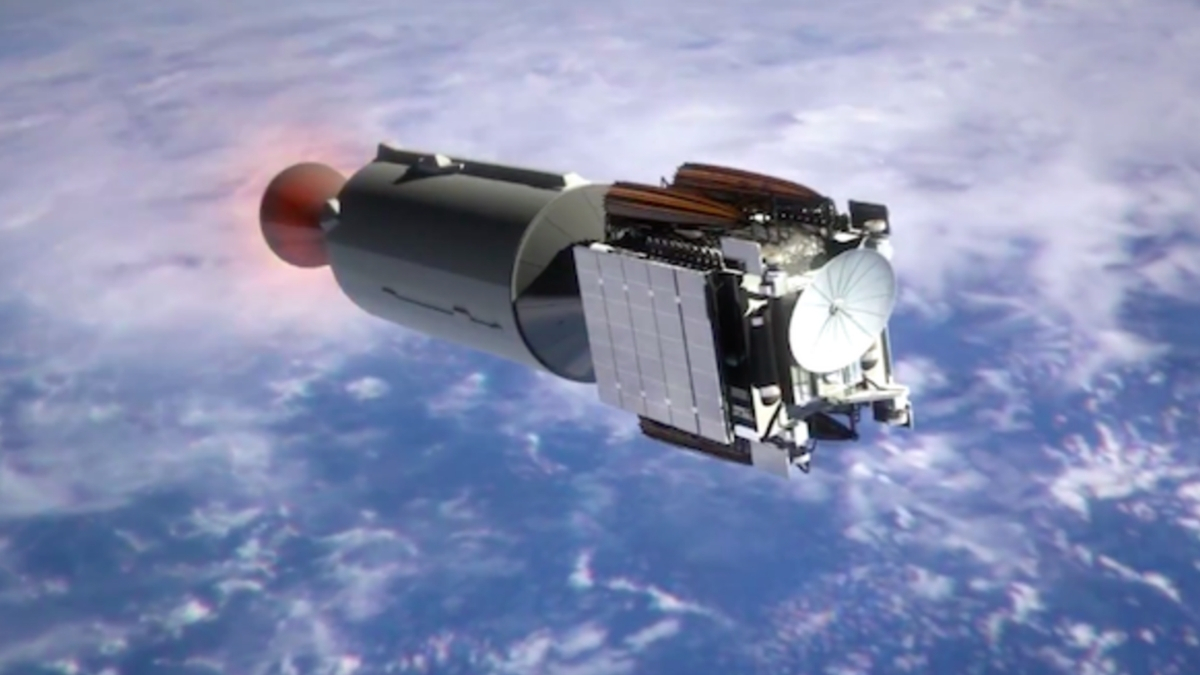
A plume of lithium detected in the upper atmosphere has been directly linked to the uncontrolled re-entry of a SpaceX Falcon 9 rocket in February 2025, marking the first time human-caused chemical pollution from space debris has been definitively measured and traced to its source.
Researchers at the Leibniz Institute of Atmospheric Physics in Germany, led by Professor Robin Wing, used highly sensitive laser technology to detect a tenfold increase in lithium concentrations approximately 100 kilometers above Earth. The surge coincided with the atmospheric burn-up of a discarded Falcon 9 upper stage, following a launch failure, according to a study published today in the journal Communications Earth & Environment.
The team fired a laser that detected metal atoms released from the rocket body, which is constructed from aluminum-lithium alloys. “We saw the news that this rocket had crashed into Poland. It had flown almost directly over us, and we thought, ‘oh, this is a great chance’,” explained Professor Wing, as reported by the BBC. The debris from the rocket ultimately landed in Komorniki, Poland, with a fragment measuring approximately 1.5 meters by 1 meter discovered behind a warehouse.
While the atmosphere naturally receives between 50 and 80 grams of metal daily from meteoroids, the Falcon 9 re-entry released an estimated 30 kilograms of lithium, a significantly larger contribution. This finding highlights a growing concern as the number of satellite launches and subsequent re-entries increases dramatically.
The upper stratosphere, mesosphere, and lower thermosphere – the region where the lithium plume was detected – remains a relatively unstudied part of the Earth’s atmosphere. It is critical for radio and GPS communications, upper atmospheric weather patterns, and the stratospheric ozone layer. The increasing injection of metals and other pollutants from space debris into this region is raising concerns about potential, yet currently unquantified, impacts.
According to a report by ScienceAlert, SpaceX has applied to launch a megaconstellation of up to one million satellites. Each satellite, and the rockets used to deploy them, will eventually re-enter the atmosphere, contributing to the growing problem of space debris pollution. Current estimates suggest that by 2030, several tonnes of spacecraft material will burn up in the upper atmosphere every day.
Researchers are also investigating the potential impact of aluminum and chlorine emissions from rocket launches and re-entries on the ozone layer, with preliminary research suggesting they may slow its recovery. Soot from rocket launches is also expected to contribute to warming in the upper atmosphere.
The detection of the lithium plume demonstrates the feasibility of monitoring and tracing pollutants from re-entering space debris to specific events. This capability could be crucial for holding companies accountable for their contributions to atmospheric pollution. However, there is currently no regulatory framework governing these emissions, and limited scientific understanding of their long-term consequences.
The Leibniz Institute of Atmospheric Physics is continuing to monitor the upper atmosphere for signs of pollution from space debris, and international regulatory bodies are being urged to establish monitoring networks and instruments to track changes to the atmosphere from this emerging threat.
