
Four years after launching a full-scale invasion of Ukraine, Russia’s economy is showing signs of systemic strain, with some analysts warning it has entered a “death zone” characterized by stagnation and a reliance on military spending that destroys future growth potential. The assessment comes as Western sanctions continue to bite and as Moscow faces increasing challenges in sustaining its war effort.
Alexandra Prokopenko, a fellow at the Carnegie Russia Eurasia Center, described the situation as “negative equilibrium,” where the Russian economy is “holding itself together whereas steadily destroying its own future capacity.” She likened the predicament to the dangers faced by mountain climbers at high altitude, where the body consumes itself faster than it can repair.
While an immediate economic collapse is not predicted, Russia’s GDP has stagnated, and revenue from oil – a critical source of income – has been halved since the imposition of Western sanctions, according to Prokopenko’s analysis. The government’s budget deficit is rapidly depleting its reserves. A two-tiered economic system has emerged, prioritizing the military and related industries while neglecting other sectors.
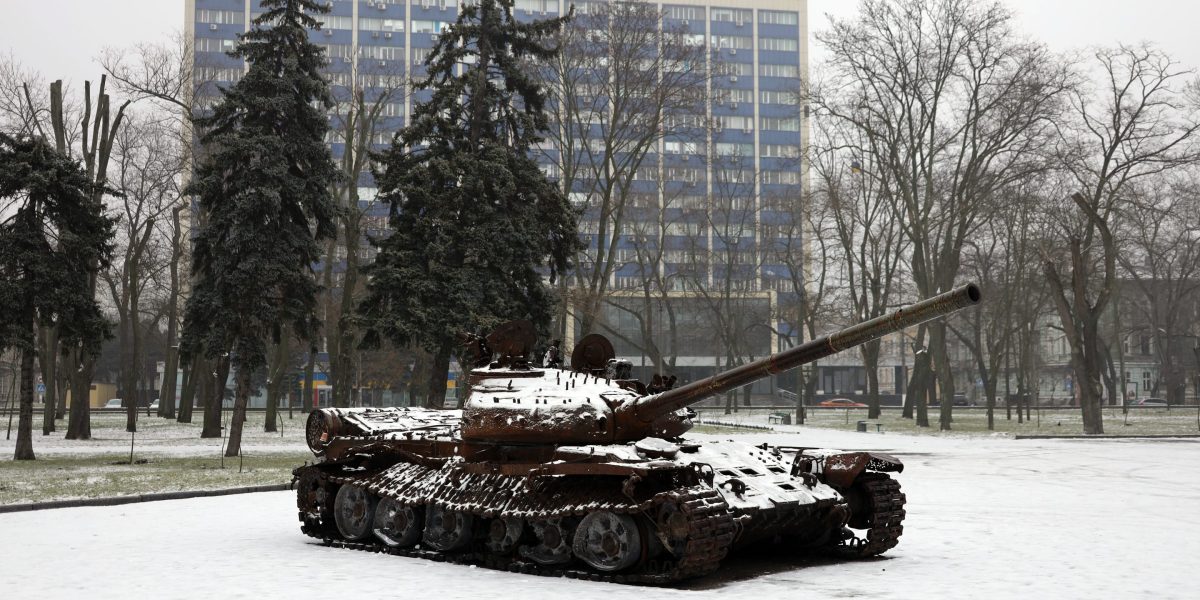
“The most dangerous feature of this new structure is the fuel it burns,” Prokopenko wrote. “Russia’s economy now runs on what might be called ‘military rent’: budget transfers to defense enterprises that generate wages and economic activity.” However, she points out that these funds are directed towards assets – tanks, armored vehicles, and other weaponry – that are ultimately destroyed or damaged, offering no long-term economic benefit.
The human cost of the war further exacerbates the economic issues. The Center for Strategic and International Studies estimates Russian military casualties at 1.2 million, including 325,000 killed. Money spent on recruitment doesn’t create a more productive workforce, but instead funds a cycle of death and injury, further depleting the nation’s human capital.
Despite attempts by the central bank to stimulate growth through interest rate cuts and Kremlin efforts to control the budget deficit, Prokopenko argues that monetary and fiscal policies alone cannot resolve Russia’s economic woes. Interest payments on government debt are already exceeding combined spending on education and healthcare.
The situation is akin to “altitude sickness,” Prokopenko contends, “the longer you stay, the worse it gets, regardless of rest.” A withdrawal from the current economic path is difficult for President Putin, as the economy has develop into increasingly dependent on the defense sector. A demobilization of the military could trigger an economic crisis, and Putin appears to be waiting for Ukraine or its Western allies to falter.
Alarm bells are sounding within Russia itself. Sources told the Washington Post earlier this month that Russian officials warned Putin of a potential financial crisis by summer, citing weak oil revenue – which fell 50% in January compared to the previous year – and a widening budget deficit despite recent tax increases. A Moscow business executive told the Post a crisis could arrive in “three or four months” due to spiraling inflation, with restaurants closing and thousands of workers being laid off.
The economic pressures stem directly from the invasion of Ukraine four years ago. Sanctions, coupled with the mobilization of the economy for a prolonged war, led to a tight labor market and high inflation. Recent easing of interest rates has failed to prevent declines in consumer spending. Companies are struggling with high rates and weaker consumption, leading to unpaid wages, furloughs, and reduced working hours. This, in turn, is raising concerns about a potential crash in the financial sector, with one Russian official telling the Post in December that a banking crisis and nonpayments crisis are possible.
Western officials continue to challenge the narrative of Russian success in Ukraine. Ukraine has launched counterattacks in recent weeks, taking advantage of disruptions to Russian troops’ access to SpaceX’s Starlink internet service. The Institute for the Study of War estimates that Ukraine has liberated at least 168.9 square kilometers of territory in the southern part of the country since January 1.
According to Christina Harward, deputy Russia team lead at the Institute for the Study of War, Russia’s military is now suffering more casualties than it can recruit. She wrote in the New York Post that Putin may require to implement a limited, rolling military call-up to sustain the war, suggesting his confidence in negotiations is a bluff. “With recruitment rates declining, inflation rates rising and his troops’ ability to actually seize the territory he so desires in question, it won’t be long before Putin has to force his population to suffer economic hardship—and death,” Harward said.
On February 21, 2026, President Vladimir Putin backed a US plan for ending the war in Ukraine, stating it could “form the basis of a final peace settlement.” This came after President Volodymyr Zelenskyy described the pressure to agree to the 28-point US peace plan as one of the most difficult moments in Ukraine’s history, stating Ukraine faces a choice between “losing its dignity or losing a key partner.” The plan, proposed by the Trump administration, includes ceding territory, holding elections within 100 days, and reducing Ukraine’s military size, while abandoning aspirations to join NATO.
