
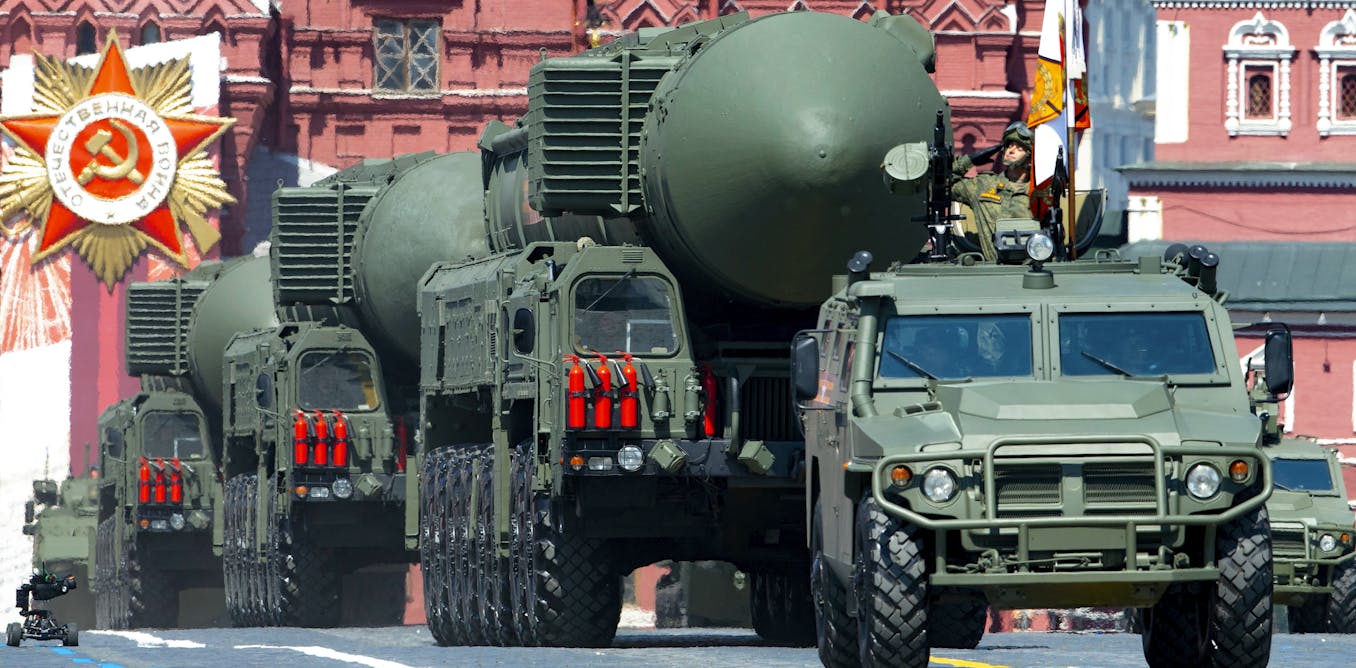
For the first time in more than half a century, the world lacks binding restraints on the buildup of the largest nuclear forces. The New START treaty expired on February 5, 2026, ending the last agreed limits on U.S. And Russian nuclear forces, according to NPR.
New START, signed in 2010 by then-President Barack Obama and Russian President Dmitry Medvedev and entering into force in February 2011, limited each country to 1,550 deployed strategic nuclear weapons. The treaty, as detailed by Business Standard, also limited the missiles and bombers those warheads were loaded on, mandated on-site inspections and data exchanges, prohibited interference with satellite monitoring, and established a joint commission to resolve disputes. It did not, though, limit the number of nuclear weapons each side could hold in reserve.
The expiration coincides with a period of escalating geopolitical tension, including Russia’s ongoing war in Ukraine and the rapid expansion of China’s nuclear arsenal. This confluence of factors raises the potential for an unpredictable three-way nuclear arms competition, a scenario experts warn could significantly increase the risk of nuclear conflict.
Nuclear agreements, while not necessarily dictating specific numbers of warheads, offer crucial advantages, including predictability, transparency, reduced first-strike incentives, and improved relations. “There are no more guardrails on the sizes of the United States and Russian strategic nuclear arsenals,” said Christine Wormuth, president of the Nuclear Threat Initiative, as reported by NPR. “That has not been the case for decades.”
The historical precedent for arms control dates back to the aftermath of the 1962 Cuban missile crisis. President John F. Kennedy recognized the inherent dangers of relying solely on nuclear deterrence and swiftly negotiated the Limited Test Ban Treaty in 1963, establishing a U.S.-Soviet hotline for crisis communication. Subsequent presidents have continued to pursue nuclear arms control accords, recognizing their importance in managing the risks associated with these weapons.
The expiration of New START also impacts the broader nuclear nonproliferation regime. Countries that have pledged not to acquire nuclear weapons under the Nuclear Nonproliferation Treaty expect nuclear-armed nations to demonstrate a commitment to disarmament. Maintaining the integrity of this regime and securing support for stronger nuclear safeguards may require the nuclear powers to accept some constraints on their own arsenals.
While past violations of arms control agreements by Russia have been cited by critics, and the Trump administration accused Russia and China of illicit nuclear tests, key elements of these agreements were implemented, resulting in the dismantling of more than four-fifths of the world’s nuclear weapons, according to reporting by NPR, citing Secretary of State Marco Rubio.
President Trump, following the treaty’s expiration, expressed a desire to negotiate a “better” deal that would encompass not only U.S. And Russian strategic forces but also China’s growing nuclear capabilities and Russia’s nonstrategic nuclear weapons. However, no negotiations are currently underway, and the administration has not offered to discuss U.S. Weapons systems that concern Russia and China.
Simultaneously, there is increasing pressure within Washington to expand U.S. Nuclear forces as a deterrent to both Russia and China, as well as North Korea. The U.S. Possesses hundreds of stored nuclear weapons that could be redeployed, and is developing new weapons systems, such as a nuclear-armed, sea-launched cruise missile, as reported by CBS News.
Despite these pressures, the United States, Russia, and China share a fundamental interest in avoiding an unrestrained nuclear race. The U.S. Faces challenges with delays and cost overruns in its nuclear modernization program, and its industrial base is not currently equipped for a large-scale expansion. Russia, while building a war economy, recognizes the limitations of its economy relative to the U.S. And its focus on conventional forces in Ukraine. China, despite its economic strength, would also be negatively impacted by a destabilizing buildup.
Finding a path forward will require navigating complex political dynamics and addressing non-nuclear technologies that affect nuclear balances, such as cyber weapons and artificial intelligence. U.S. Political polarization also presents a challenge to securing Senate ratification of any future treaty. As of February 19, 2026, President Trump has not reversed course, and Russia continues to observe the limits set under the lapsed New START treaty if the United States does the same, according to CBS News, citing Russian Foreign Minister Sergey Lavrov.
