
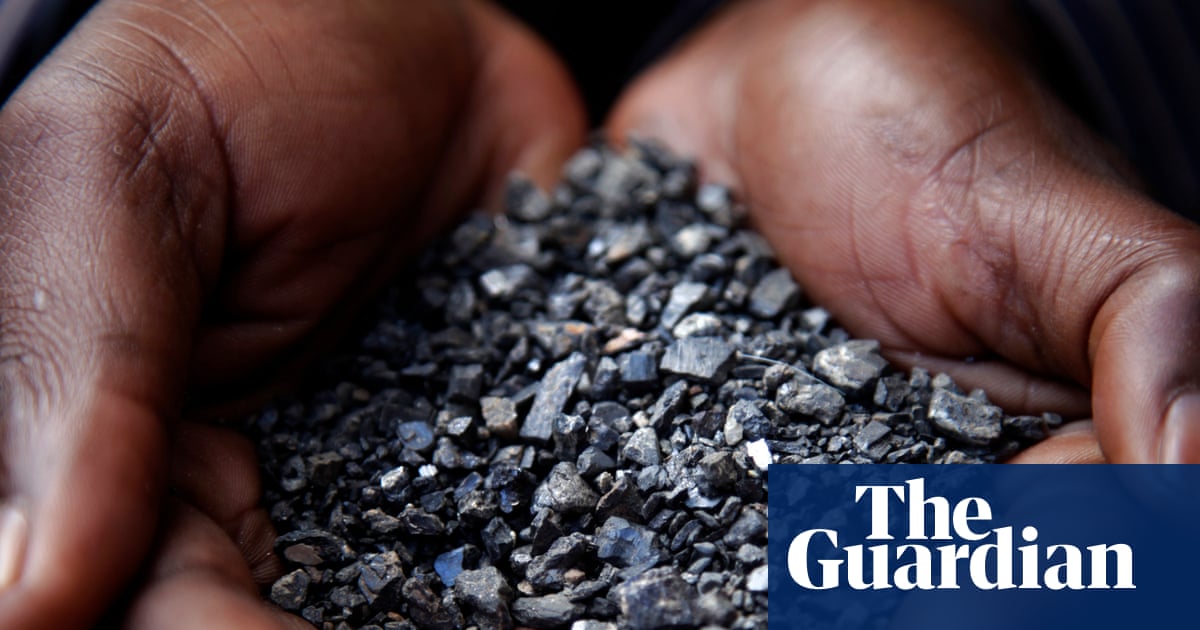
The United States will establish a price floor system for critical minerals and is actively seeking to create a new “trading bloc” with allies, Vice President JD Vance announced, signaling a significant shift in Washington’s approach to global resource competition. The move, detailed in remarks at the opening of the Critical Minerals Ministerial on Monday, comes as concerns mount over China’s dominance in the supply chain of essential materials.
Vance’s announcement represents what analysts are calling a final break from the era of “neoliberalism” and unfettered free trade, ushering in a new period of strategic competition for scarce resources. “The era of mass abundance…is over,” according to James Meadway, writing in The Guardian. “We live in a new world of strategic competition between states over scarce but essential resources.”
The impetus for this shift is twofold: a surge in global electricity demand and the increasing impact of climate change. After a period of stagnation in developed nations, electricity demand is rising sharply, fueled by electrification of transport, the expansion of data centers supporting artificial intelligence, and continued industrial growth in developing countries. Simultaneously, extreme weather events, such as the 2023 heatwave in China and the 2024 heatwaves in India, are straining electricity grids and exacerbating resource pressures.
This increased demand is driving a need for minerals like copper, lithium, cobalt, and rare earth elements – all vital components in batteries, electric vehicles, and renewable energy technologies. World Bank projections indicate that lithium production must increase by 450% by 2050 to meet anticipated demand. Copper prices surged 20% in 2025, creating a 200,000-tonne deficit, a situation S&P Global forecasts will worsen to a 10 million tonne deficit by 2040.
China currently holds a dominant position in the critical minerals supply chain, controlling more than 50% of global refined copper production and possessing four of the world’s largest smelters. The country is similarly projected to control 46% of the world’s cobalt supply by the end of the decade, largely through investments in the Democratic Republic of Congo. According to the International Energy Agency, China is the dominant supplier of 19 out of 20 critical minerals, commanding up to 90% of global refining capacity in some cases.
In response, the US government is taking direct action. Last summer, the US took equity stakes in five mining and refining companies focused on critical minerals and is arranging a government-backed buyout of 40% of Glencore’s cobalt-copper mines in the DRC. The administration also announced a $12 billion investment in building a “strategic minerals reserve,” with the first depot planned for Hawthorne army base in Nevada. Vance’s proposed “trading bloc” aims to secure reliable access to these vital resources through agreements with allied nations.
Other nations are also building up their stockpiles. Japan, which relies on China for over 90% of its rare earth imports, established a rare metal stockpiling system in 1983 and now targets 60-180 days’ supply of most metals. India approved plans in January 2025 to establish its own strategic reserve, and the European Union is urging member states to develop coordinated stockpiles. China itself has been increasing its reserves of industrial metals, with estimates suggesting holdings of several million metric tonnes.
The vulnerability of supply chains was highlighted in the summer of 2024 when Storm Helene disrupted operations at the Spruce Pine mining town in North Carolina, the world’s primary source of ultra-high quality quartz for semiconductor production. PwC estimates that 70% of the world’s production of copper, cobalt, and lithium will be at risk of drought in the coming decades, further complicating supply chains.
