
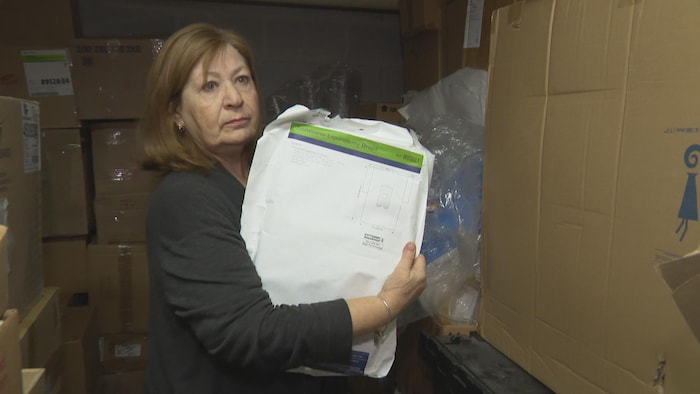
A Montreal-based aid organization is preparing to send a shipment of medical supplies to Cuba as the United Nations expresses growing concern over a deteriorating humanitarian situation on the island. Colette Lavergne, spokesperson for the Table de concertation de solidarité Québec-Cuba, is currently inventorying the supplies destined for Cuba, where access to essential goods and services is becoming increasingly limited.
The Table de concertation de solidarité Québec-Cuba, a coalition of organizations, focuses on delivering aid – primarily medical supplies including medications, medical clothing, and surgical equipment – to Cuba, often in coordination with the Cuban Ministry of Health. A container of such materials was delivered in December, according to Lavergne.
The escalating crisis stems, in part, from the curtailment of Venezuelan oil shipments to Cuba, coupled with threats from the United States to impose tariffs on countries continuing to supply Cuba with petroleum. The UN has warned that the situation could worsen if the U.S. Maintains its stance. Cuba’s government accuses the Trump administration of attempting to “asphyxiate” the island’s economy, and has implemented emergency measures including gasoline rationing, a four-day work week for government employees, and a shift to remote learning at universities.
François Audet, a professor at the École des sciences de la gestion at UQAM and director of the Canadian Observatory on Crises and Humanitarian Action, stated that millions of Cubans are facing a potential humanitarian and food crisis. However, Audet cautioned that international aid would only be a temporary solution, suggesting that a fundamental shift in Cuba’s economic policies – specifically, opening its market to foreign investment – would be necessary to address the underlying issues.
Despite these concerns, aid is being welcomed on the island. Mélissa Curbelo Cruz, from the Cuban Institute of Friendship with the Peoples, expressed gratitude for the support from Canada and Quebec, stating, “Cuba is not alone. Canada and Quebec occupy a very special place in our hearts.” Curbelo Cruz’s organization collaborates with the Table de concertation de solidarité Québec-Cuba in the distribution of aid.
Lavergne emphasized the strong connection between Quebec and Cuba, noting the cultural affinity and sympathy felt by many Quebecers towards the Cuban people. She appealed to Canadian Prime Minister Mark Carney to provide humanitarian assistance, including oil shipments.
Federal Minister responsible for Canada–U.S. Relations, Dominic LeBlanc, indicated this week that Ottawa is “prepared” to send humanitarian aid to Cuba. Aid has likewise arrived from Mexico, with promises of assistance from Russia and Chile. However, Audet warned that Canada must exercise caution in its aid delivery, citing concerns that the Cuban government has historically used humanitarian aid for political purposes, directing resources to populations sympathetic to the regime.
Lavergne, who has personally distributed aid in Cuba for many years, asserted that the materials sent by the Table de concertation de solidarité Québec-Cuba reach their intended recipients. The Table de concertation de Solidarité Québec-Cuba, along with Christine Dandenault, Manuel Johnson, Sean O’Donoghue, recently published a statement criticizing a series of articles in the Journal de Montréal, titled “Cuba in Peril,” alleging they present a “falsification of the facts” and echo U.S. Government rhetoric regarding the island’s economic situation and the ongoing U.S. Embargo.
