
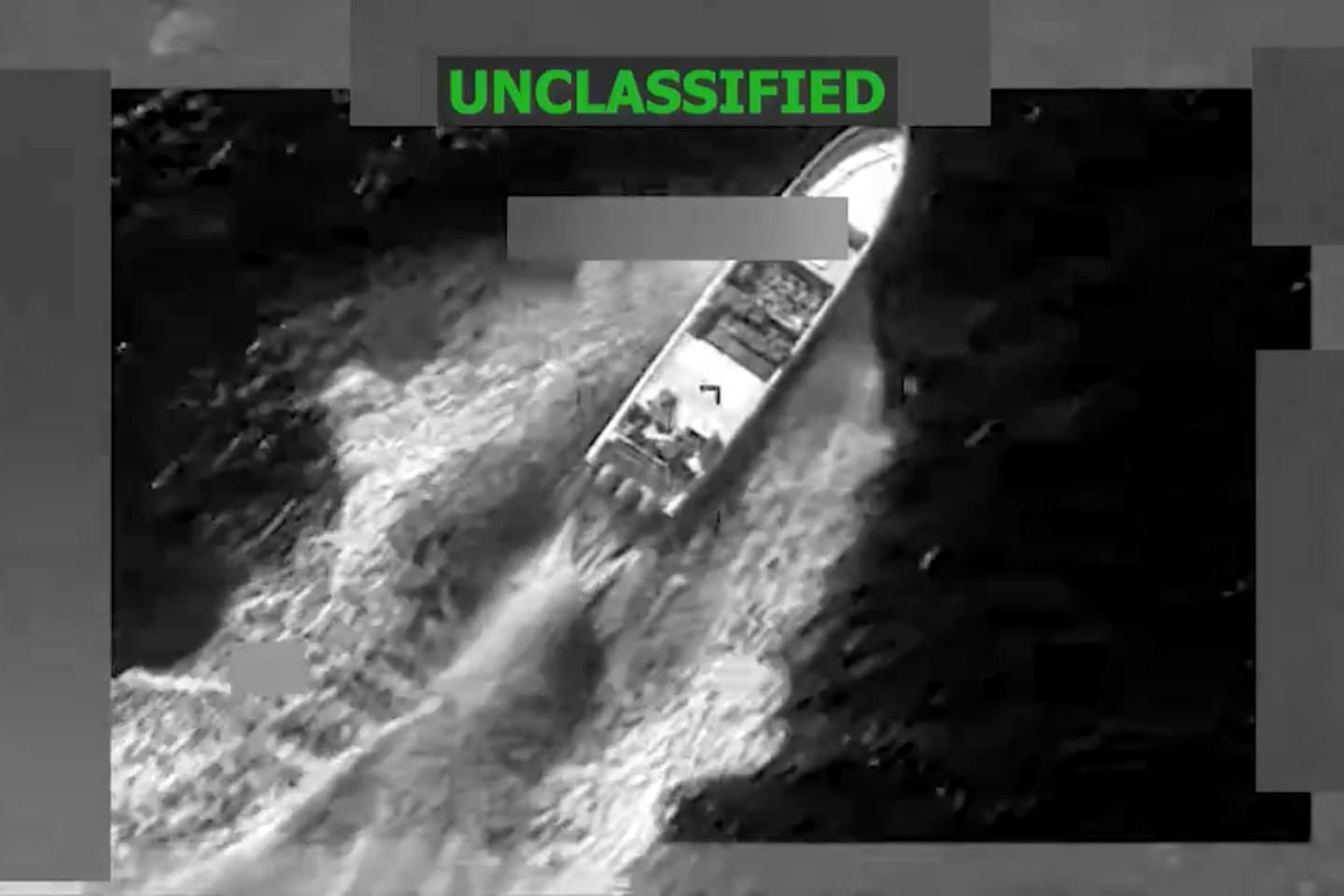
The U.S. Military conducted a lethal strike on a vessel in the eastern Pacific Ocean on Monday, February 9, 2026, resulting in two fatalities, according to a statement released by the U.S. Southern Command (SOUTHCOM). The operation, directed by Gen. Francis L. Donovan, the newly appointed commander of SOUTHCOM, targeted a boat suspected of involvement in narco-trafficking.
SOUTHCOM reported that the U.S. Coast Guard is currently searching for a lone survivor who escaped the attack. Video footage of the incident was released via the military’s X account. The vessel was reportedly traveling along known narco-trafficking routes when it was struck, according to the Pentagon.
This latest strike brings the total number of individuals killed in similar operations to at least 130 across 38 strikes since September 2025, according to a tally by The Intercept. The operations have drawn scrutiny from legal experts, who have characterized them as a series of extrajudicial killings. Concerns have also been raised by officials at the United Nations regarding potential violations of international law.
The announcement follows the recent retirement of U.S. Navy Admiral Alvin Holsey, reportedly due to disagreements over the policy of striking vessels suspected of drug smuggling. Gen. Donovan was sworn in as the new commander of SOUTHCOM last Thursday.
The U.S. Military has characterized the vessels targeted as being operated by “Designated Terrorist Organizations,” including Venezuela’s Tren de Aragua and Colombia’s Ejército de Liberación Nacional, according to a statement from SOUTHCOM. The February 9 strike marks the third such operation this year, following incidents on January 23 and February 5.
Alongside the Pacific operation, U.S. Military forces on Monday boarded a sanctioned tanker in the Indian Ocean, having tracked it from the Caribbean Sea as part of an effort to disrupt Venezuelan oil shipments, Defense Secretary Pete Hegseth stated. The U.S. Has imposed sanctions on Venezuela’s oil industry, leading to the use of a “shadow fleet” of tankers to circumvent these restrictions.
The legal basis for the strikes remains contested. While the U.S. Government asserts the operations are aimed at dismantling cartels fueling drug trafficking to the United States, critics question the lack of conclusive evidence linking the targeted vessels directly to illicit activities. Experts suggest that disrupting the flow of drugs, even temporarily, may have limited long-term impact. Phil Gunson, a consultant on Latin America, argued that focusing on the apprehension and interrogation of suspects would be a more effective approach to understanding and dismantling the organizations involved.
Separately, U.S. Authorities have accused Venezuelan President Nicolás Maduro and his wife of “narcoterrorism” and importing “tonnes of cocaine.” The couple were arrested in Caracas on January 3 and transported to the United States, where they have pleaded not guilty and are scheduled to appear in court again on March 17.
