
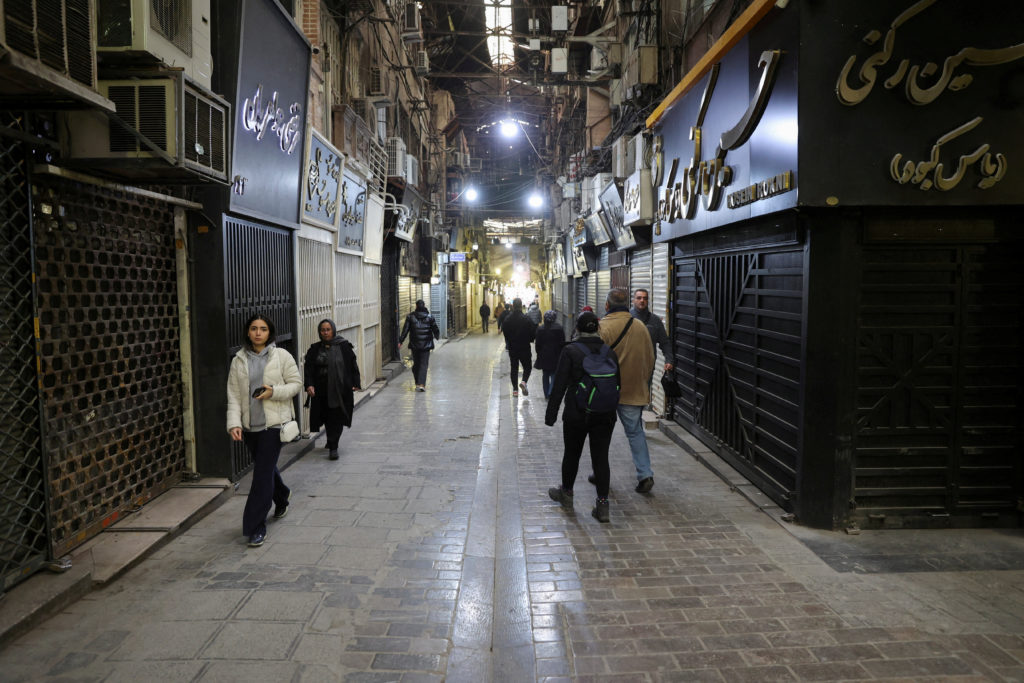
Iran Protests: A Nation Silenced Amidst Crackdown and International Pressure
Dubai, United Arab Emirates – Nationwide protests in Iran, sparked by economic hardship and a collapsing currency, appear to be subsiding under the weight of a brutal government crackdown. Authorities have severed the country’s connection to the outside world, intensifying a campaign of repression that activists report has resulted in at least 2,637 deaths [[1]]. the situation remains volatile, with the threat of escalation and international repercussions looming large.
The Escalation of Violence and Suppression
The protests, which began late last month, were initially fueled by Iran’s deteriorating economic conditions.A plummeting currency and widespread economic frustration provided the catalyst for citizens to voice their discontent with the ruling theocracy. Though, the government’s response has been swift and severe. A week ago, Iran effectively shut itself off from the global internet, hindering the flow of details and making it increasingly tough to verify reports from within the country. This digital blackout coincided with a marked increase in violence against protesters.
The U.S.-based Human Rights Activists News Agency (HRANA), a long-standing and reliable source of information on Iranian protests [[1]], reports that at least 2,637 individuals have been killed in the crackdown as of Thursday, an increase of 22 from the previous day. This death toll surpasses any previous instance of unrest in Iran in decades,evoking memories of the chaos surrounding the 1979 Islamic Revolution.While the Associated Press has been unable to independently verify these figures due to restricted access and communication limitations, the HRANA’s established track record lends credibility to their reporting.
Iranian state media portrays the demonstrations as a “terrorist operation,” claiming widespread damage to public and private property, including stores, public buildings, cars, ambulances, and even religious sites. Together, authorities are conducting mass arrests, labeling protesters as “criminals” and actively seeking to confiscate Starlink satellite internet dishes – the primary means for citizens to bypass government censorship and share information with the outside world.
International Response and Sanctions
The international community has responded to the escalating crisis with a mix of condemnation and cautious diplomacy. The United States has announced new sanctions targeting Iranian officials accused of suppressing the protests [[3]], and the White House maintains that “all options remain on the table” regarding further action. President Trump initially threatened retaliation for the deaths of protesters, but later signaled a potential de-escalation, claiming the “killing appeared to be ending” [[1]].
The Group of Seven industrialized democracies and the European Union are also considering additional sanctions to increase pressure on the Iranian government. EU chief Ursula von der Leyen stated the bloc is exploring ways to strengthen sanctions “to push forward that this regime comes to an end and that there is change.”
The United Nations Security Council convened an emergency meeting on Iran at the request of the United States, highlighting the gravity of the situation and the need for international dialog.
Heightened Tensions and Regional Implications
The crisis is unfolding against a backdrop of heightened regional tensions. Iran briefly shut down its airspace on Thursday, a move reminiscent of previous confrontations with Israel and the 12-day war in June.This closure prompted the U.S. to relocate personnel from Qatar’s Al Udeid Air Base and advise diplomats in Kuwait to avoid military installations. Britain responded by closing its Tehran embassy and withdrawing its staff.
Israel raised its military readiness in anticipation of potential missile attacks, although civilian guidelines remained unchanged. The airspace closure, lasting over four hours, disrupted international flight routes, with carriers diverting north and south around Iran. The incident underscores the risk of misidentification of civilian aircraft, a concern heightened by Iran’s accidental downing of ukraine International Airlines Flight PS752 in 2020, which resulted in the deaths of all 176 people on board.
China has urged de-escalation, with iranian Foreign Minister Abbas Araghchi informing his Chinese counterpart that the situation in Iran is now “stable.” However, the U.S. continues to warn of “grave consequences” if further protesters are killed, and President Trump has left the door open to military intervention.
Diplomacy as a Path Forward?
Despite the escalating tensions, there are glimmers of hope for a diplomatic resolution. Iranian Foreign Minister Araghchi has appealed to the U.S. to pursue a negotiated solution, stating that “diplomacy is a better way” even acknowledging a lack of positive past experiences with the United States. This call for dialogue followed lobbying efforts by middle Eastern governments, who fear that a military strike coudl ignite a wider regional conflict.
However, activists remain concerned about the potential for mass executions of detainees. While Araghchi claims there are no plans for hangings, reports suggest that 800 executions were scheduled to take place, according to White House press secretary Karoline leavitt.
The Future of the Protests and Iran’s Internal Stability
As of Thursday, reports indicate a slowdown in the pace of protests in Tehran, likely due to the heavy security presence. However, the underlying grievances that fueled the demonstrations – economic hardship, political repression, and a lack of basic freedoms – remain unresolved. The long-term stability of Iran’s theocratic government will depend on its ability to address these issues and engage in meaningful dialogue with its citizens.
Publication Date: 2026/01/20 16:13:12
