
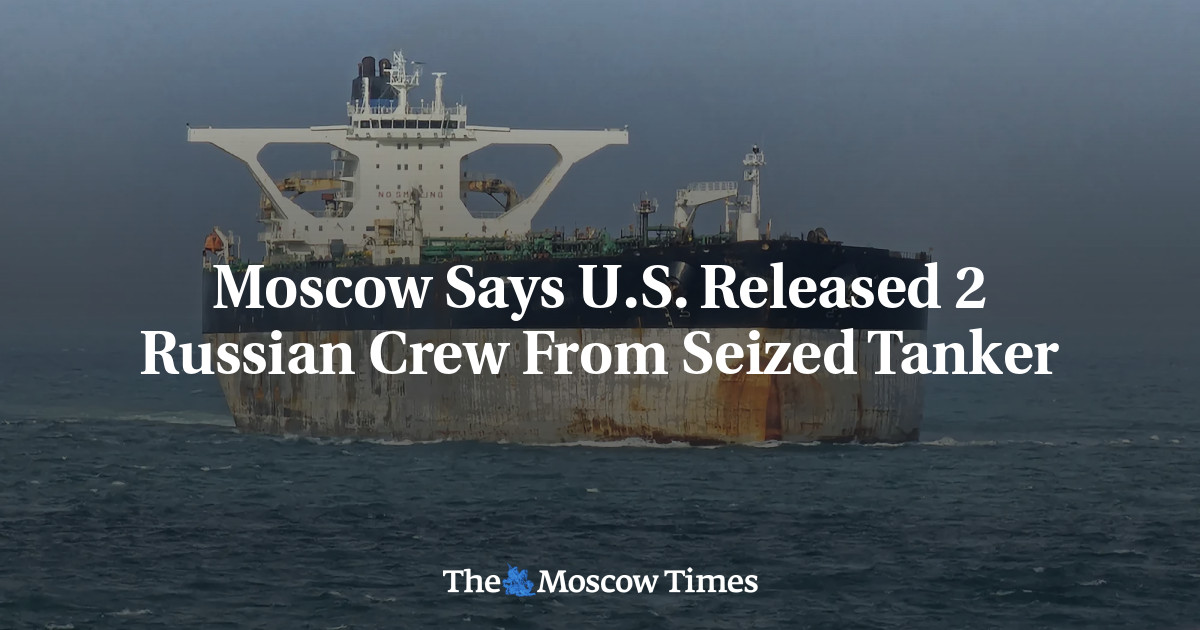
US Releases Two Russian Crew Members From Seized Tanker, Amidst Sanctions Dispute
The United States has agreed to release two Russian nationals who were part of the crew of the Marinera, a Russian-flagged oil tanker seized earlier this week in the North Atlantic. The decision, announced by the Russian Foreign Ministry on Friday, comes after a request from Moscow and represents a potential, albeit limited, de-escalation in a growing diplomatic standoff.
The seizure and US Allegations
The Marinera was seized by US authorities who allege the vessel is part of a “shadow fleet” involved in circumventing international sanctions. According to the US government, the tanker has been used to transport oil for countries including Venezuela, Russia, and Iran, effectively enabling these nations to bypass restrictions imposed by Washington. The seizure occurred despite the Marinera being escorted by vessels from the Russian Navy, a detail that significantly heightened tensions.
The US government had previously indicated that members of the Marinera’s crew could face prosecution, a prospect Russia vehemently condemned as “categorically unacceptable.” The exact charges that could have been levied remain unclear, but likely would have revolved around violations of US sanctions regulations.
Russia’s Response and Diplomatic Fallout
Moscow has strongly protested the seizure, characterizing it as an illegal act of aggression and a threat to international shipping.The Russian Foreign Ministry issued a statement on Thursday accusing Washington of deliberately escalating tensions and creating a dangerous precedent. They expressed concern over “Washington’s willingness to generate acute international crisis situations,” suggesting the seizure could provoke further instability.
Russian officials, including special envoy Kirill Dmitriev, initially claimed that all Russian nationals aboard the Marinera would be released following President Trump’s decision. However, the initial statement from the Russian Foreign Ministry, as reported by Reuters,specifies only two crew members will be released. The discrepancy in reporting highlights the ongoing sensitivity and potential for miscommunication surrounding the incident.
The “Shadow Fleet” and Sanctions Evasion
The US focus on the “shadow fleet” reflects a broader strategy to crack down on sanctions evasion. These fleets typically consist of older tankers, often with opaque ownership structures, that are used to transport sanctioned commodities like Venezuelan oil and Iranian crude. These vessels frequently employ tactics like ship-to-ship transfers at sea to disguise the origin and destination of the cargo, making it difficult to track and enforce sanctions.
The use of such fleets has become increasingly prevalent as countries targeted by US sanctions seek alternative routes to market. Experts at the Council on Foreign relations note that this practice not only undermines the effectiveness of sanctions but also poses environmental risks due to the age and frequently enough poor maintenance of these vessels.
Implications and Future Outlook
The release of the two Russian crew members, while a positive step, does not resolve the underlying tensions surrounding the seizure of the Marinera. The vessel itself remains in US custody, and the fate of the remaining crew, if any, is still uncertain. The incident underscores the complex interplay between sanctions enforcement, international law, and geopolitical competition.
Looking ahead, this situation could lead to increased Russian naval activity in the north Atlantic, perhaps escalating the risk of future confrontations. it also raises questions about the legal basis for the seizure and whether it will be challenged in international courts. The incident serves as a stark reminder of the potential for maritime disputes to quickly escalate into broader geopolitical crises.
Key Takeaways
- The US seized the Russian-flagged oil tanker Marinera, alleging it was part of a “shadow fleet” evading sanctions.
- Two Russian crew members have been released following a request from moscow.
- Russia condemns the seizure as illegal and a intentional escalation of tensions.
- The incident highlights the challenges of enforcing sanctions and the growing use of “shadow fleets” to circumvent them.
- The situation could lead to increased naval activity and potential for further confrontations in the North Atlantic.
