
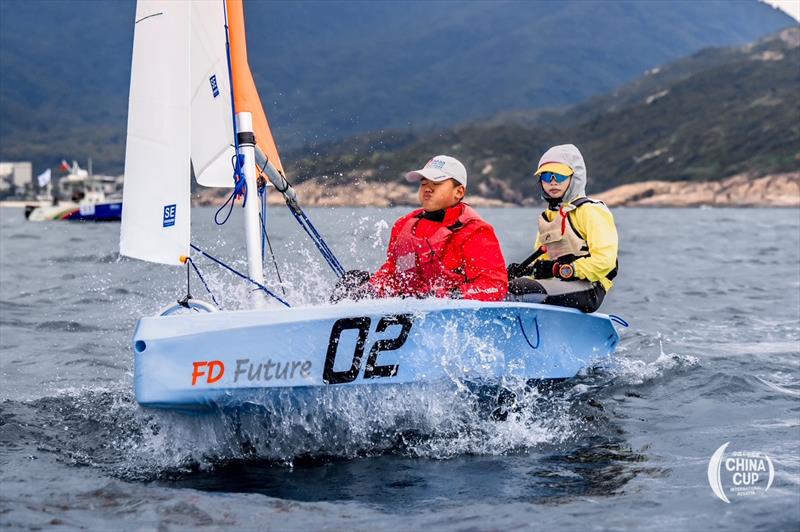
FD Future is now at the center of a structural shift involving youth sailing advancement in China. The immediate implication is an accelerated alignment of domestic sport policy, private‑sector maritime branding, and soft‑power outreach through a standardized one‑design class.
The Strategic Context
China’s rapid rise in maritime commerce and its ambition to project a blue‑water identity have been accompanied by a state‑led push to broaden participation in water sports. Over the past decade,the government has invested in coastal infrastructure,sailing schools,and international regattas to cultivate a domestic talent pipeline and to showcase organizational competence on the global stage. Concurrently, the Chinese middle class has expanded, increasing discretionary spending on leisure activities such as sailing. Within this environment, foreign boat manufacturers have sought entry points, leveraging Dutch‑Swiss design expertise to meet local demand for modern, versatile dinghies. The adoption of FD Future as the official one‑design youth class at the China Cup reflects the convergence of these structural forces: maritime ambition, consumer growth, and the search for internationally recognizable sport symbols.
Core Analysis: Incentives & Constraints
Source Signals: the regatta featured 150 youth boats across several classes, with FD Future debuting as a double‑handed boat. Youth clubs from Hong Kong, Guangzhou, and Yunnan fielded teams, citing fun, progressive learning, and retention of sailors.Club leaders highlighted the boat’s modern design, multifunctionality, and color appeal.FD Yachts’ founder expressed honor at the partnership and noted a diversified product portfolio. The China Cup organizer announced FD as the official one‑design youth class,emphasizing development goals.
WTN interpretation:
– FD Yachts seeks market penetration in a high‑growth segment, using the china Cup platform to establish brand credibility and create a foothold for future sales of higher‑end models. Their leverage lies in proprietary design and the ability to supply a ready‑made class that meets local training standards. Constraints include reliance on import channels, potential tariff exposure, and the need to sustain after‑sales support in a geographically dispersed market.
– China Cup organizers aim to elevate the event’s stature,attract sponsorship,and align with national sport policy. By endorsing a single,modern class,they simplify logistics,enhance media appeal,and signal alignment with international standards. Their leverage is the control of event programming; constraints involve budget limits and the necessity to balance domestic and foreign interests.
– Local sailing clubs pursue youth retention, talent development, and community engagement. The FD Future’s versatility offers a clear learning curve, supporting progressive skill acquisition. Their leverage is grassroots participation; constraints include funding for boat acquisition, coaching capacity, and competition from other popular sports.
– Chinese sport authorities view sailing as a vehicle for soft‑power projection and maritime culture promotion. Endorsing a foreign‑designed, locally adopted class dovetails with broader diplomatic messaging. Their leverage is policy direction and funding; constraints include competing priorities within the national sport budget and the need to demonstrate measurable outcomes.
WTN Strategic Insight
“The FD Future’s adoption is less about a single boat model and more about China’s calibrated use of foreign sport technology to accelerate a home‑grown maritime identity.”
Future Outlook: Scenario Paths & Key Indicators
Baseline Path: If the current partnership deepens, FD Future will become the de‑facto training platform for provincial youth championships, leading to increased domestic production under license, expanded sponsorship, and integration into national talent pipelines for elite sailing. This trajectory reinforces China’s soft‑power narrative and creates a sustainable market for FD Yachts in the region.
Risk Path: If economic headwinds, heightened trade frictions, or a shift in sport‑policy funding occur, clubs may defer new boat purchases, limiting FD Future’s diffusion. A slowdown could also prompt the authorities to favor domestically designed classes, curtailing the foreign‑brand foothold and reducing the class’s visibility in future regattas.
- Indicator 1: Quarterly registration data of FD Future boats with provincial sailing associations (e.g., Yunnan, Guangdong) – rising numbers signal baseline continuation.
- Indicator 2: Official statements or policy releases from the General Management of Sport regarding youth sailing curriculum updates – inclusion of FD Future indicates sustained support, omission suggests risk.
