
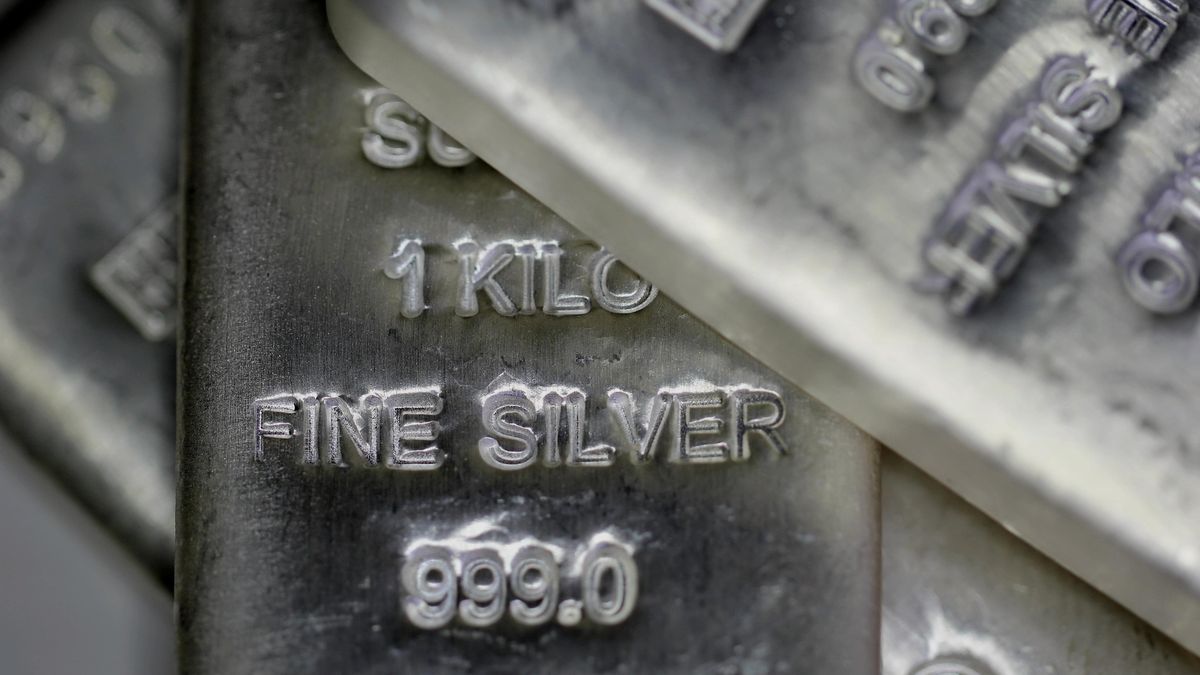
Silver is now at the center of a structural shift involving commodity‑market dynamics,monetary policy expectations,and emerging technology demand. The immediate implication is heightened price volatility that could reshape investment flows and industrial supply chains.
The Strategic Context
Silver has long occupied a dual role: a tradable precious metal used for wealth preservation and an industrial commodity essential for electronics, photovoltaics, and thermal management. over the past decade, global monetary easing expanded liquidity, supporting precious‑metal prices, while a gradual decoupling of the US dollar from safe‑haven assets introduced greater sensitivity to macro‑policy signals. The recent US designation of silver as a “critical mineral” reflects a broader strategic push to secure supply chains for data‑center and artificial‑intelligence (AI) hardware, sectors that increasingly rely on silver’s superior conductivity. This policy move aligns with a multipolar competition for advanced‑technology inputs, where the United States seeks to reduce dependence on customary mining exporters.
Core Analysis: Incentives & Constraints
Source Signals: the spot price of silver breached $65/oz and later $66/oz, driven by falling inventories and rising investment demand. US labor‑market data showed a weakening employment picture and a rise in unemployment to 4.6 %, reinforcing expectations of Fed rate cuts in the coming year. Analysts cited a “big short squeeze” and noted that supply has not responded to the critical‑minerals listing, while AI‑related demand could push prices toward $70/oz.Gold also rose modestly, and the dollar weakened.
WTN Interpretation:
- Investors are seeking a hedge against a softer dollar and anticipated lower real yields, prompting a shift into precious metals.
- Speculators who where short silver are forced to cover positions, amplifying price moves (short‑squeeze dynamics).
- US policymakers aim to signal commitment to domestic critical‑mineral security, leveraging regulatory tools to encourage domestic mining and recycling, but face constraints from limited mine growth capacity, environmental permitting, and existing production geography (Mexico, Peru, China).
- technology firms planning data‑center and AI expansions view silver as a non‑substitutable input for high‑frequency interconnects,creating a structural demand floor that is relatively inelastic to price.
- Supply‑side constraints include low inventory buffers, long lead times for new mining projects, and potential geopolitical risks in major producing regions, limiting rapid response to price spikes.
- Monetary‑policy expectations remain a key lever; a credible path toward rate cuts sustains the safe‑haven appeal, while any shift toward tighter policy would re‑price risk assets and could reverse the silver rally.
WTN Strategic Insight
“Silver’s ascent is less a speculative flare‑up than a convergence of macro‑liquidity, policy‑driven supply security, and the material’s emerging role in AI hardware – a triad that will keep the metal in focus long after the next Fed decision.”
Future Outlook: Scenario Paths & Key Indicators
Baseline Path: If US labor‑market weakness persists, the Fed maintains a dovish stance, and AI/data‑center construction continues its current growth trajectory, silver’s price pressure will remain upward. Inventory draws will stay modest, and the short‑squeeze dynamic will gradually unwind, leading to a new price equilibrium in the $68‑$72/oz band, with heightened but manageable volatility.
Risk Path: If the Fed pivots to a more aggressive tightening cycle, the dollar rebounds, or a supply shock (e.g., mining strike, export restriction from a major producer) materializes, investor sentiment could shift sharply away from precious metals. In that case, silver could experience a rapid correction, possibly falling back below $60/oz, while the short‑squeeze unwinds and speculative positions reverse.
- Indicator 1: Schedule of Federal Reserve policy meetings and the outcome of the upcoming June rate decision - a dovish outcome would reinforce the baseline, a hawkish tone would trigger the risk scenario.
- Indicator 2: COMEX and London Metal Exchange inventory reports (weekly) – continued drawdowns support the baseline, while a sudden inventory rebuild would signal weakening demand pressure.
- Indicator 3: Quarterly data‑center and AI‑hardware construction forecasts from major cloud providers – acceleration sustains industrial demand, stagnation or slowdown raises supply‑side risk.
