
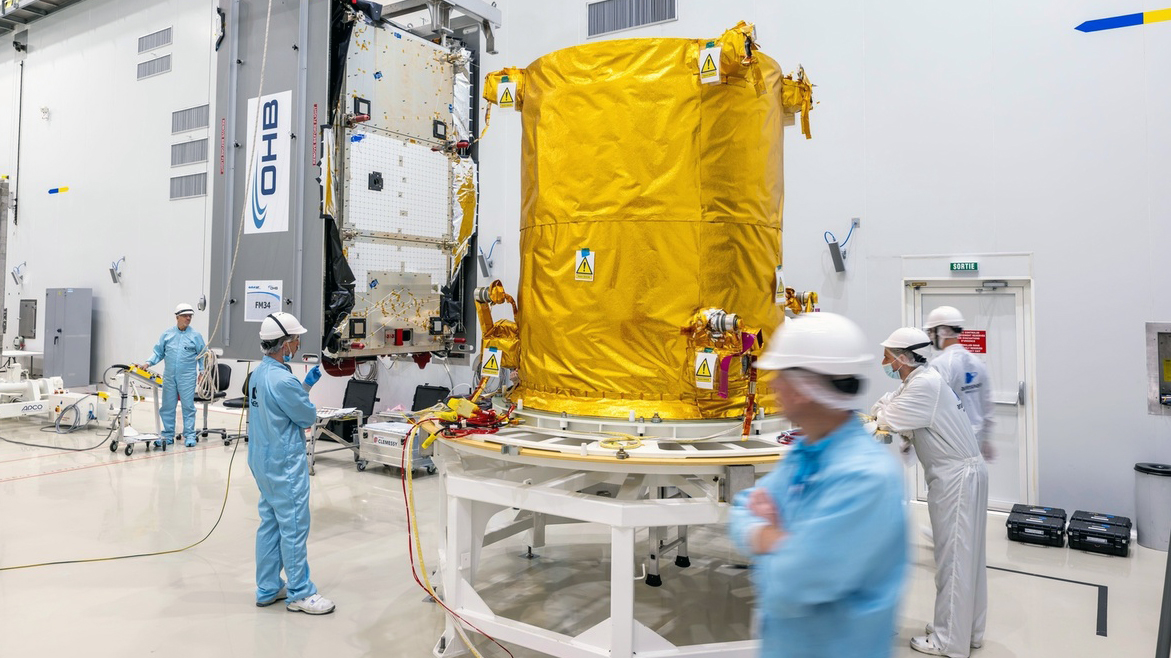
Galileo is now at the center of a structural shift involving strategic navigation sovereignty. The immediate implication is an enhanced European capability to operate independent of rival global GNSS constellations.
The Strategic Context
As the mid‑2010s the European Union has pursued a dedicated global navigation satellite system (GNSS) to counterbalance the dominance of the United States (GPS), Russia (GLONASS) and China (BeiDou). This effort reflects a broader trend of great‑power competition in space,where satellite services are increasingly viewed as critical infrastructure for both civilian economies and defense operations. The deployment of the first‑generation Galileo satellites, now entering its final launch phase, is embedded in a multipolar space habitat where resilience, anti‑jamming, and authentication capabilities are becoming decisive attributes for sovereign navigation services.
Core Analysis: Incentives & Constraints
Source Signals: The launch of Ariane 6 will place two medium‑Earth‑orbit satellites (SAT 33 and SAT 34) into the Galileo constellation, completing the last six satellites of the first generation by 2027. The mission emphasizes a medium orbit that balances coverage, precision, and energy use, and it highlights the strengthening of both the Public Regulated Service (secure, anti‑jamming) and the Open Service (civilian positioning). Recent activation of the OSNMA authentication service further secures signal integrity. The program is funded by the EU and managed by the European Global Navigation Satellite Systems Agency (GSA).
WTN Interpretation: The timing of the final first‑generation launches aligns with the EU’s need to demonstrate operational readiness before the rollout of a second‑generation, more capable satellite batch. By finalizing the baseline constellation, Europe secures a minimum level of service continuity, which is essential for critical sectors such as transport, precision agriculture, emergency response, and emerging autonomous‑vehicle ecosystems. The emphasis on anti‑jamming and authentication reflects an anticipation of contested environments where adversaries may attempt to degrade GNSS signals. Constraints include the high cost of launch and satellite production, dependence on the Ariane 6 schedule, and the need to maintain industrial base competence amid broader EU budgetary pressures.
WTN Strategic Insight
“the completion of Galileo’s first generation is less a technical milestone than a geopolitical lever, giving Europe a sovereign foothold in the contested domain of space‑based positioning.”
Future Outlook: scenario Paths & Key Indicators
Baseline Path: If the launch schedule remains intact and the EU continues to fund the second‑generation upgrades, Galileo will achieve full operational capability with robust PRS and OS services by 2027. This will solidify europe’s position as a reliable GNSS provider, encouraging deeper integration of Galileo into commercial and defense supply chains across allied nations.
Risk Path: If budgetary constraints, launch delays, or technical setbacks affect the second‑generation rollout, Europe may face a capability gap that could be exploited by rival GNSS operators.In a contested environment, reduced anti‑jamming capacity could undermine confidence in European navigation services, prompting users to revert to choice systems.
- Indicator 1: Progress reports from the European global Navigation Satellite Systems Agency on the readiness of the second‑generation satellite design (expected quarterly updates).
- Indicator 2: Schedule adherence of upcoming Ariane 6 launches, particularly any announced delays or payload changes within the next three months.
