
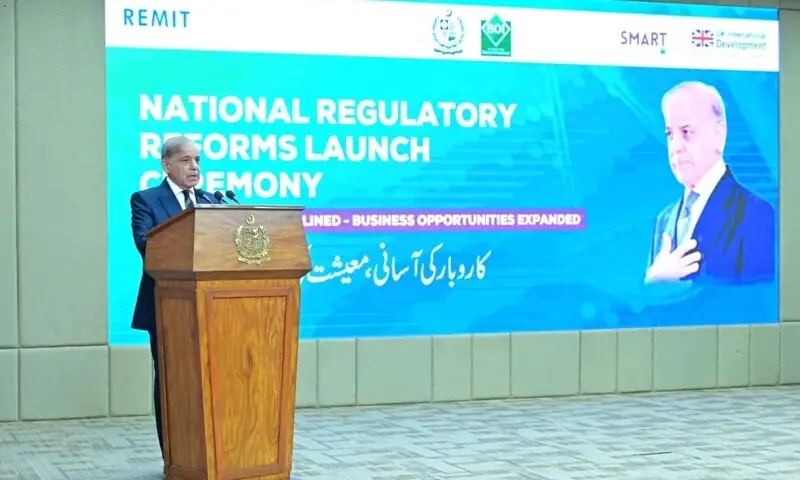
Pakistan is now at the center of a structural shift involving macro‑economic stabilization and regulatory reform. The immediate implication is a tighter fiscal trajectory that could unlock foreign investment but also heightens exposure to external financing risks.
The Strategic Context
as 2019 Pakistan has cycled through three IMF programmes, each tied to austerity measures, debt restructuring and attempts at fiscal consolidation. Persistent current‑account deficits, a heavy external debt load and volatile remittance flows have kept the economy on a narrow stabilization path. Demographically, a youthful population creates both a labor‑supply advantage and a social‑contract pressure for jobs. Regionally, pakistan sits at the nexus of china‑Pakistan Economic Corridor projects, South Asian trade dynamics, and competing strategic interests from the United States and the United Kingdom. The latest regulatory reforms aim to shift the state’s role from a gatekeeper to a development catalyst, aligning with a broader pattern among emerging markets that seek to attract private capital while remaining within IMF‑mandated frameworks.
Core Analysis: Incentives & Constraints
Source Signals: The prime minister announced that pakistan has “exited the woods,” citing “marvelous” macro indicators and a fresh $1.2 billion IMF tranche. IMF projections show growth modestly rising from 2.6 % (FY2024) to 3.2 % (FY2026). the government highlighted a “quantum jump” in regulatory reforms, tariff rationalisation, and an export‑led industrial revival, while emphasizing partnerships with the United Kingdom and the United States to attract investment in agriculture, IT and minerals.
WTN Interpretation: The government’s narrative serves three strategic purposes: (1) securing domestic political legitimacy by portraying a turnaround; (2) signaling to the IMF and international investors that policy implementation is on track, thereby preserving access to concessional financing; (3) leveraging the youth bulge to attract development‑oriented foreign capital, especially in sectors where Pakistan can offer cost‑advantageous labor and natural resources. Constraints include a high debt‑to‑GDP ratio that limits fiscal space, dependence on external financing (IMF, sovereign bonds, remittances), and the implementation capacity of new regulatory frameworks. Geopolitically, Pakistan must balance competing expectations from the United States, the United kingdom, and china, each of which can influence the flow of aid, trade, and investment.
WTN Strategic Insight
“Pakistan’s move toward a developmental state reflects a global pattern where IMF‑linked economies re‑engineer regulation to attract private capital while preserving macro‑stability.”
Future Outlook: Scenario Paths & Key indicators
Baseline Path: If IMF disbursements continue on schedule, regulatory reforms are implemented without major political disruption, and global commodity prices remain stable, pakistan can sustain modest growth (≈3 % by FY2026), gradually improve its external financing profile, and attract incremental FDI in targeted sectors. Debt service pressures ease as fiscal consolidation gains traction, and the country maintains access to international capital markets.
Risk Path: If external financing stalls-due to rising global interest rates, a slowdown in remittance flows, or a delay in the next IMF review-or if domestic political friction hampers reform rollout, Pakistan could face a fiscal squeeze, heightened sovereign bond yields, and a potential suspension of IMF support. In such a scenario, capital outflows may accelerate, inflation could resurge, and the government’s credibility would be undermined.
- Indicator 1: Outcome of the IMF staff‑level review scheduled for early 2026 (approval of next tranche, conditionality adjustments).
- Indicator 2: Net foreign direct investment inflows tracked quarterly, especially in agriculture, IT and mining sectors.
