
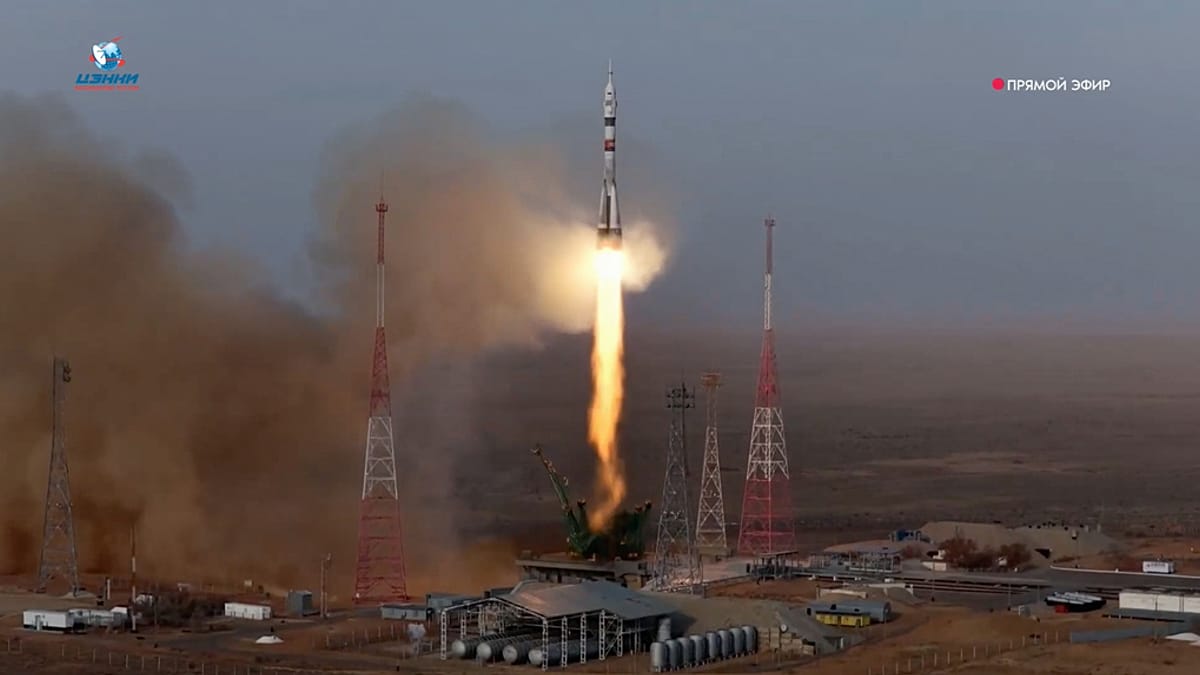
Baikonur Damage Disrupts Russian Space Launches
Following an incident at the Baikonur Cosmodrome, Russia’s ability to launch manned spacecraft to the International Space Station (ISS) has been temporarily compromised. State-owned company Roscosmos reported that “all the reserve elements necesary for repair” are available and damage elimination is underway. However, experts predict a significant disruption to the launch schedule.
Analysts estimate repairs could take anywhere from six months to two years. Rocket launch analyst Georgy Trishkin described the situation as “the worst-case scenario,” stating that spacecraft launches to the ISS are “postponed indefinitely” due to a lack of option launch sites. He attributed this to ”a series of years of short-sighted decisions and ineffective management of resources.”
While Russia possesses launch sites at the Vostochny Cosmodrome and in Plesetsk, neither is currently equipped for ISS-bound missions. Vostochny lacks the infrastructure to support Progress cargo spacecraft transport and is not prepared for manned Soyuz launches. Plesetsk’s northern location creates unfavorable ballistic conditions. Trishkin emphasized the impact, stating, “it affects the entire rotation of launches to the ISS, both manned and cargo.”
Cosmonautics publicist Vitaly Egorov noted the repairs will ”not last a week,” and will ”seriously affect the supply program for the Russian segment of the ISS.” He pointed out a missed possibility to modernize the Gagarin launch pad, which was decommissioned and transferred to Kazakhstan for a museum project.Egorov explained that a 2018 modernization plan, funded by the UAE, was abandoned in February 2022. He also noted the Soyuz rocket launch table at Vostochny is not currently adapted for spacecraft launches and its modernization was only planned.
Alexander Khokhlov, a member of the St. Petersburg institution of the Russian Cosmonautics Federation, echoed the lengthy repair timeline, suggesting up to two years. He outlined two potential repair paths: fabricating new parts (requiring the re-establishment of production previously located in Kramatorsk) or salvaging components from the decommissioned Gagarin launch pad now in Kazakhstan. Khokhlov believes a return to launches is “most likely…at least until the summer of 2026.”
The Soyuz MS-28 spacecraft, carrying a Russian-American crew, successfully docked with the ISS on November 27th, launching from Baikonur. However, the scheduled December 19th launch of the Progress cargo ship is expected to be postponed.
