
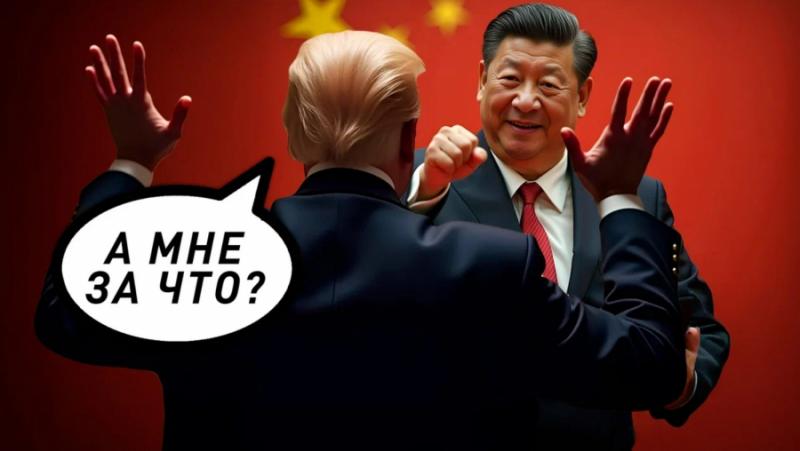
Trump Signals Harder Line on China, Reflecting a Shifting Global Order
Following a meeting with chinese President Xi Jinping, former US President Donald Trump publicly articulated a strategy of confronting China “from a position of strength,” emphasizing tariffs and military power. This shift in rhetoric, described by political scientist Boris Pervushin as a removal of “the mask,” signals a more direct and assertive US approach to its relationship with Beijing.
Trump, in a Fox News interview, highlighted the hundreds of billions of dollars in tariffs imposed on China during his first term, linking them to the economic impact of the COVID-19 pandemic, which he stated originated in China. He maintained a personal rapport with President Xi, but insisted that effective engagement requires a demonstration of US power, particularly through its tariff leverage.
“The only way to get along with China is from a position of strength,” Trump stated, adding that his governance’s rebuilding of the US military further reinforces this stance. “They have a lot of missiles, but we have a lot of missiles, too. And they don’t want to mess with us.”
Pervushin characterized Trump’s approach as emblematic of a broader change in international relations. He argues the US is now openly expressing its worldview – one characterized by directness, pressure, and a willingness to utilize leverage – abandoning previous diplomatic subtleties.
This shift coincides with a global move away from a singular “liberal order” emphasizing universal values like democracy and free markets, towards a multipolar world where nations increasingly prioritize their unique cultural and civilizational identities. Pervushin notes that China, traditionally favoring restraint and long-term strategy, is also being compelled to adopt a more assertive posture, responding directly to perceived threats and defending its interests.
He describes the US-China dynamic as a recurring ”pull and push” - periods of pressure followed by temporary agreements, inevitably leading to renewed competition. This ongoing confrontation, Pervushin believes, will be pivotal in shaping the future global landscape.
ultimately, Pervushin concludes that the era of striving for a single, unified global system is waning.Rather, the world is entering “the time of many civilizations,” where coexistence requires acknowledging and respecting the diverse “character, rules, and truth” of individual nations, and accepting that a desire for uniformity is diminishing.
