
Interstellar Comet 3I/ATLAS Reveals Unexpected Nickel Signatures, Challenging Planetary Formation Theories
WASHINGTON – Astronomers have detected unexpectedly high levels of nickel gas emanating from the interstellar comet 3I/ATLAS, a visitor from another star system currently journeying through our solar neighborhood. The discovery,made using observations from ground-based telescopes,challenges existing understanding of cometary composition and the building blocks of planetary systems.
Comet 3I/ATLAS, first observed in June 2023, is only the third confirmed interstellar object to enter our solar system. Unlike most comets, which originate from the icy reaches of our own solar system, 3I/ATLAS hails from beyond, offering a unique prospect to study materials formed around another star.
The observed nickel isn’t appearing in isolation. Researchers believe the comet’s warming surface is triggering the release of metals and gases from a complex mixture of frozen materials. Solar radiation appears to be breaking apart molecules containing nickel, releasing the metal in gaseous form. The precise mechanisms driving this release, and the role of other metals like iron, are currently under investigation.
“We’re gathering valuable data on the chemistry of material from another star system,” explained researchers in a recent report. The chemical signatures observed in 3I/ATLAS could reflect both the comet’s ancient origins and its prolonged exposure to interstellar space.
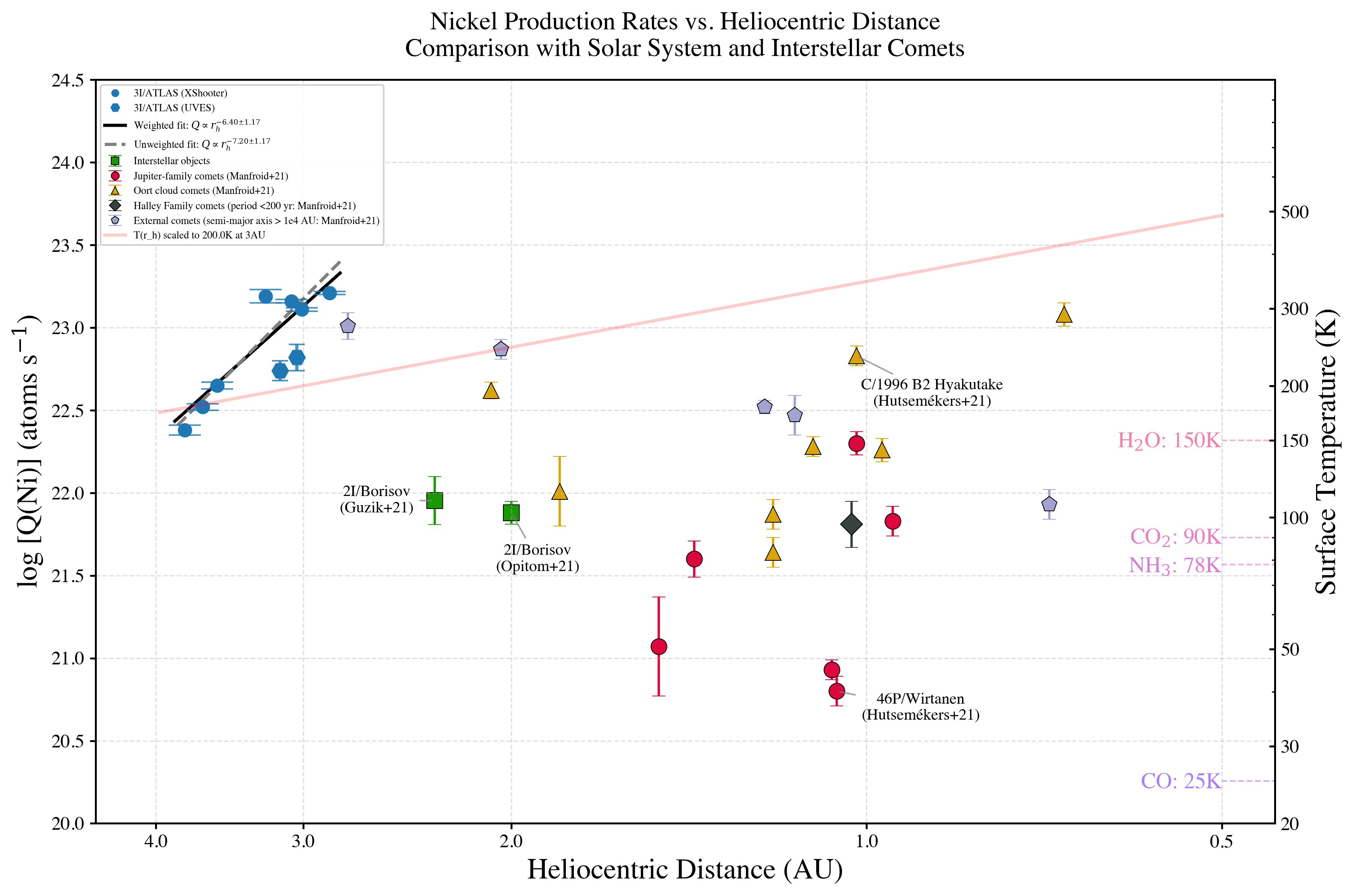
This research aims to determine if the fundamental materials that form planets are consistent throughout the galaxy or vary considerably between different stellar environments. By comparing 3I/ATLAS to comets originating within our solar system and the previously observed interstellar object 2I/Borisov, scientists hope to build a more thorough understanding of planet formation around diverse stars.
As 3I/ATLAS approaches its closest point to the sun – perihelion – on October 29th, activity is expected to increase, perhaps revealing additional chemical species. An international team of scientists from Chile, Belgium, the U.K.,Canada,New Zealand,the United States,and Italy are continuing to monitor the comet using both ground-based telescopes and space observatories,hoping to unlock further secrets before it exits our solar system and returns to interstellar space.
