
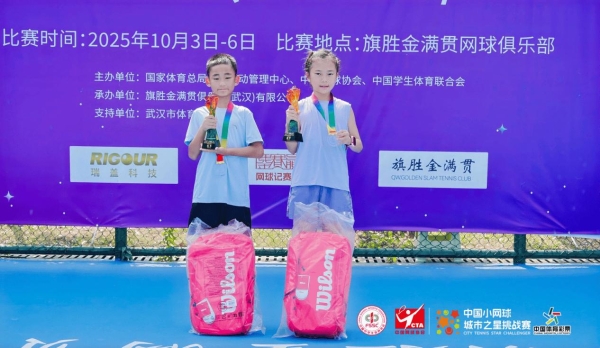
Jiangcheng Hosts Successful 2025 China Little Tennis·City Star Challenge National annual Finals
The 2025 China little Tennis·City star Challenge National Annual Finals concluded successfully in Jiangcheng, marking another significant milestone for youth tennis development in China. The event featured ten offline competitions encompassing a wide range of age and skill levels, including U10 orange ball, green ball, and standard ball groups, and also U12 men’s and women’s singles and doubles competitions.
The tournament showcased spirited competition, with young players demonstrating remarkable concentration and perseverance. Players were observed battling back from deficits with strong baseline shots, executing precise volleys in doubles play, and consistently displaying excellent sportsmanship – even extending handshakes to opponents after matches, regardless of the outcome.
Beyond the on-court action, the event incorporated online challenges – the “Serving Challenge” and ”Bowline Hitting Challenge” – utilizing the ACeye smart tennis system, officially certified by the Chinese Tennis Association. This technology allowed young players to compete in skills-based challenges remotely, highlighting the growing integration of technology into youth tennis training and demonstrating solid foundational skills.
Organizers emphasized the event’s commitment to inclusivity, structuring the competition around two major categories designed to accommodate tennis players of all ages and skill levels, ensuring “every child who loves tennis a stage.”
the china Little Tennis·City Star Challenge operates under an innovative model – “city as the main body, weekends as the nodes, and points as the link” – addressing key challenges in youth tennis development. This approach prioritizes accessibility by enabling training and competition within local cities, reducing travel costs. Furthermore, scheduling events primarily on weekends minimizes disruption to players’ academic commitments, allowing them to balance their studies with tennis training.
