
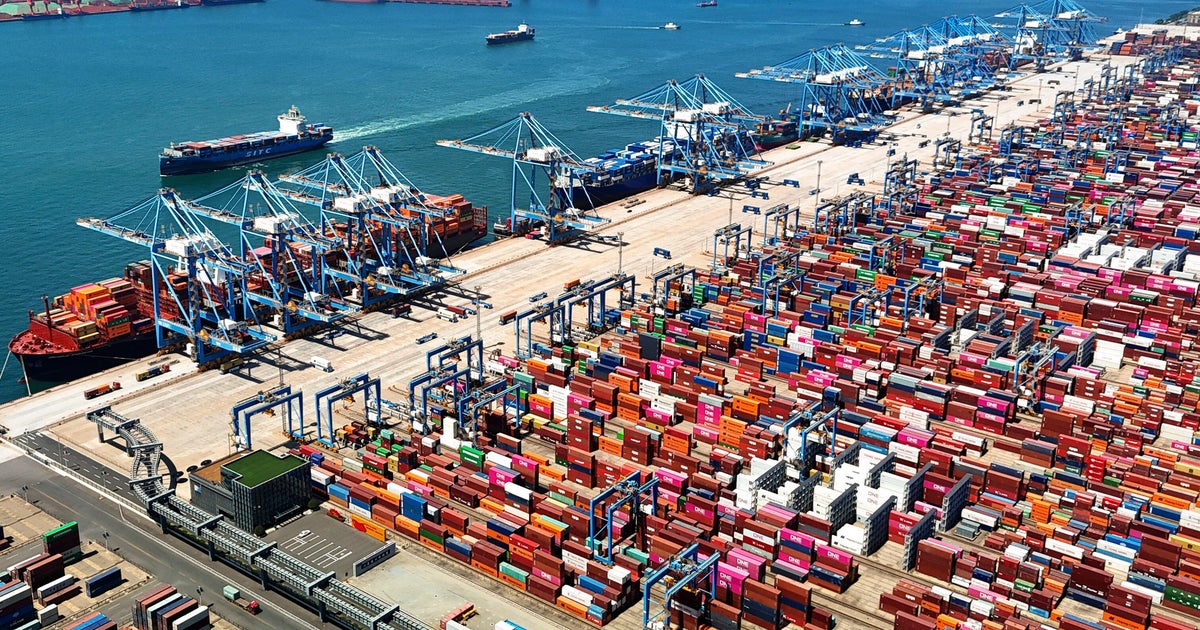
China Imposes Reciprocal Port Fees on U.S. Vessels Amidst Trade Tensions
China’s Ministry of Transport announced Friday the imposition of new port fees on vessels with U.S. ties, a move presented as a response to planned U.S.port fees targeting Chinese ships. The proclamation escalates a series of retaliatory measures ahead of anticipated trade discussions between U.S. President Donald Trump and Chinese leader Xi Jinping.
The fees will apply to vessels owned or operated by American companies or individuals, and also ships built in the U.S. or flying the American flag. The charge will be 400 yuan (approximately $56 USD) per net ton per voyage, effective October 14th – the same date the U.S. is scheduled to begin enforcing its own port fees on Chinese vessels.
China’s Ministry of Transport stated the fees are “countermeasures” against what it considers “wrongful” U.S.practices. The ministry criticized the U.S. fees as “discriminatory,” alleging they would harm China’s shipping industry and disrupt international trade.
The Chinese fees are structured to increase annually untill 2028, reaching 1,120 yuan (approximately $157 USD) per net ton. A maximum of five voyages per ship will be subject to the fee each year.
This announcement follows other recent trade measures from Beijing, including new restrictions on exports of rare earths and related technologies, as well as limitations on the export of certain lithium battery production equipment.
the structure of china’s port fee closely mirrors the U.S. plan, which levies a $50 per net ton fee on Chinese-owned or operated ships docking in American ports, escalating by $30 per ton annually until 2028, with a five-voyage annual limit.
According to Kun cao, deputy chief executive at consulting firm Reddal, the Chinese fee is significant as it targets vessels with any substantial U.S. connection – ownership, operation, flag, or construction - and scales with vessel size. While North America represents roughly 5% of global fleet beneficial ownership, Reddal notes this remains a considerable portion.
Reddal also points out that the U.S.commercial shipbuilding market currently holds less than 0.1% of global market share, with fewer than 10 commercial ships built in the U.S. last year.
Despite some shipping companies possibly adjusting routes to avoid the fees, shipping data provider Alphaliner cautioned in a report last month that the U.S. port fees could still cost the world’s top 10 carriers up to $3.2 billion next year.
Correction: This article has been updated to reflect that the Alphaliner report was published last month, not this month.
