
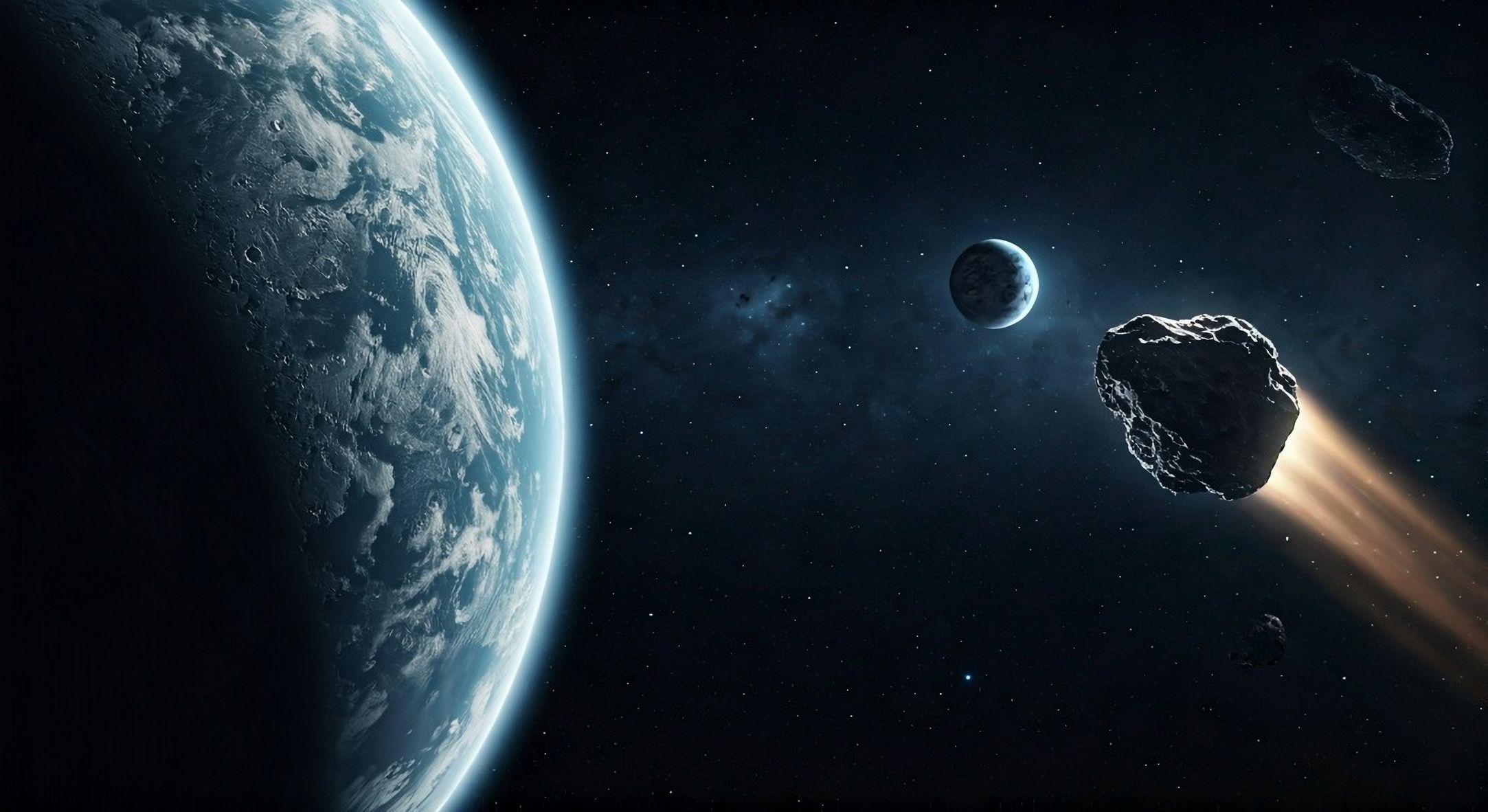
Scientists Weigh Nuclear Option as Asteroid 2024 YR4 Poses Ongoing Threat
Prague,Czech Republic – Astronomers are considering the drastic measure of detonating a nuclear device to deflect or destroy asteroid 2024 YR4,recently discovered in December 2024,though current calculations suggest it will not impact Earth. While the probability of a direct hit has decreased, the asteroid still presents a potential hazard to satellites and future lunar missions, prompting exploration of all possible mitigation strategies.
Initially assessed with a 3% chance of impacting Earth – earning it the nickname “City killer” due to the potential scale of destruction – asteroid 2024 YR4’s trajectory is now better understood, but remains under close observation. A definitive determination of whether the asteroid will encounter Earth will require further observations, with a refined track expected in 2028.
One proposed, though risky, solution mirrors the plot of the film Armageddon: detonating a one-megaton nuclear device either on the asteroid’s surface or nearby to break it into smaller pieces. However, experts caution this approach is fraught with uncertainty.
“If the explosion was not enough, a field of debris could be created that would endanger the Earth even more,” warns Julie Brisset of the Florida Space Institute.
The primary challenge lies in the unknown characteristics of the asteroid itself. Its weight is currently estimated between 51 and 711 million kilograms, dependent on its density – a figure difficult to ascertain from a distance. An inaccurate weight calculation could render the nuclear deflection ineffective, or even worsen the situation by creating a wider spread of possibly hazardous fragments.
Dušan majer, editor-in-chief of the Czech astronautics website Kosmonautix.cz, highlights the complexities.”The explosion fragments would be small, so they could mostly burn in the atmosphere, but on the other hand, they could be radioactive. Exactly predict the behavior of such an object after the explosion is extremely demanding as we don’t know its physical properties.” Majer also points to the risks associated with launching and maneuvering the nuclear device into space, requiring precise timing and trajectory.
Even if 2024 YR4 avoids Earth, a collision with the Moon could generate a debris cloud up to a thousand times denser than the normal flow of micrometeoroids. A study indicates such an impact could release up to 109 kilograms of lunar material, with some particles potentially reaching Earth within days, posing a significant threat to orbiting satellites and astronauts – equivalent to a ten-year dose of interfering meteoroids.
Asteroid 2024 YR4 remains a focus of planetary defense efforts, with ongoing observations crucial to refining its trajectory and informing potential mitigation strategies.
