
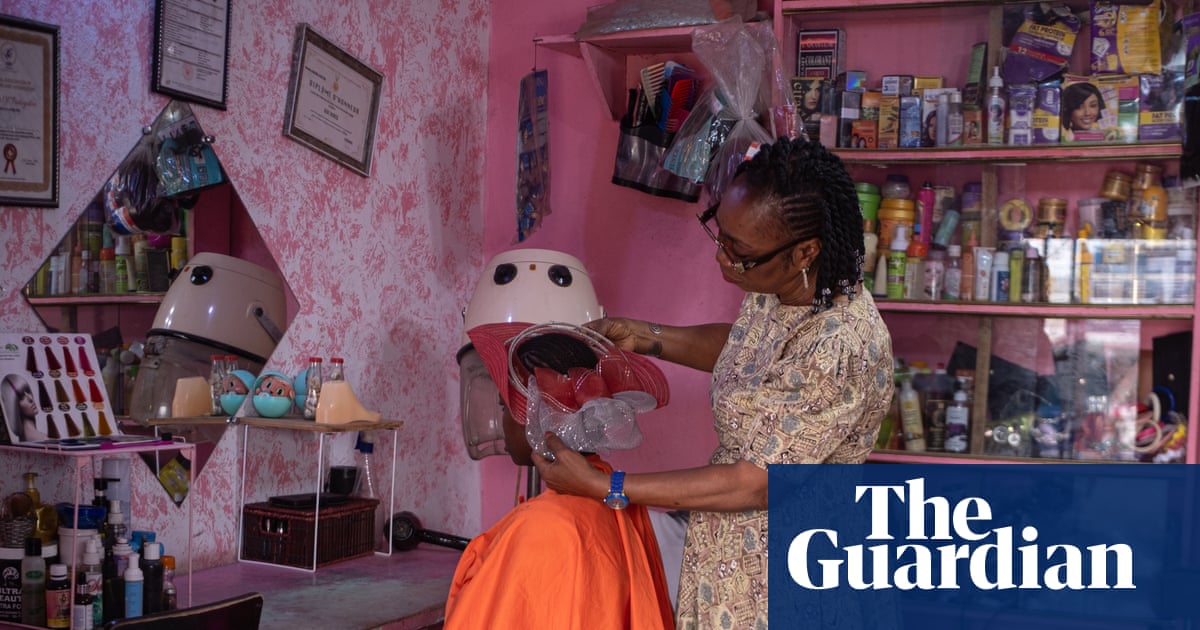
Abobo, Côte d’Ivoire – hairdressers in Côte d’Ivoire are increasingly becoming frontline mental health advocates, offering a safe space for clients to discuss personal struggles and connecting them with professional support, a program reveals. The initiative, spearheaded by the foundation ‘Silence Speaks,’ is challenging deep-rooted stigma surrounding mental health in West Africa, where access to psychological services is limited and societal barriers often prevent individuals from seeking help.
The program trains hairdressers to recognise signs of distress, provide empathetic listening, and appropriately refer clients to psychologists or, in cases of domestic violence, to the police. Launched initially with funding from founder Lisette de Putter’s personal savings, the project now receives support from private donors and organizations like France’s Growth Innovation Fund, though resources remain stretched for the foundation’s team of 17 paid staff and approximately 100 volunteers.
Thérèse Gueu,a hairdresser in the Abobo neighborhood,exemplifies this shift. “The training went very well… I got my diploma and this,” she said,gesturing to a psychology textbook in her salon. “When people come to explain their problems to me, it’s a pride for me too because I know that I am an ear for someone.I tell myself that we all need someone.”
The program operates over six months, providing trainees with peer support and access to a psychological referral system. Despite the positive impact, challenges remain. Many clients, and even hairdressers themselves, hesitate to seek professional help due to financial constraints and societal norms in a region where roughly one in three people live in extreme poverty.
However, success stories are emerging. In neighboring Togo, a trainee employed an individual previously hospitalized for mental illness, offering a path to social rehabilitation. “Often when you’ve been sick and you’ve been hospitalised, people say you’re crazy,” de Putter explained. “So if you have a job and someone who accepts to train you, you get out of the taboo.”
The initiative is also witnessing a broadening reach, with some reports of men beginning to seek counsel from hairdressers. De Putter notes the profound impact on the hairdressers themselves: “For many of these women,it’s their first recognition as a leader in their community and a protector. These women are saying to us: ‘Before I was just doing hair, now I do healing.'”
