
Newly Analyzed 1 Million-Year-Old Skull Rewrites Human Evolutionary Timeline
Beijing, China - A re-examination of a 1 million-year-old human skull discovered in China is revealing a previously unknown branch of the human family tree and prompting a notable revision of accepted timelines for human evolution. The findings, published this week in the journal Science, identify the fossil, known as “Yunxian 2,” as belonging to the Homo Longi clade.
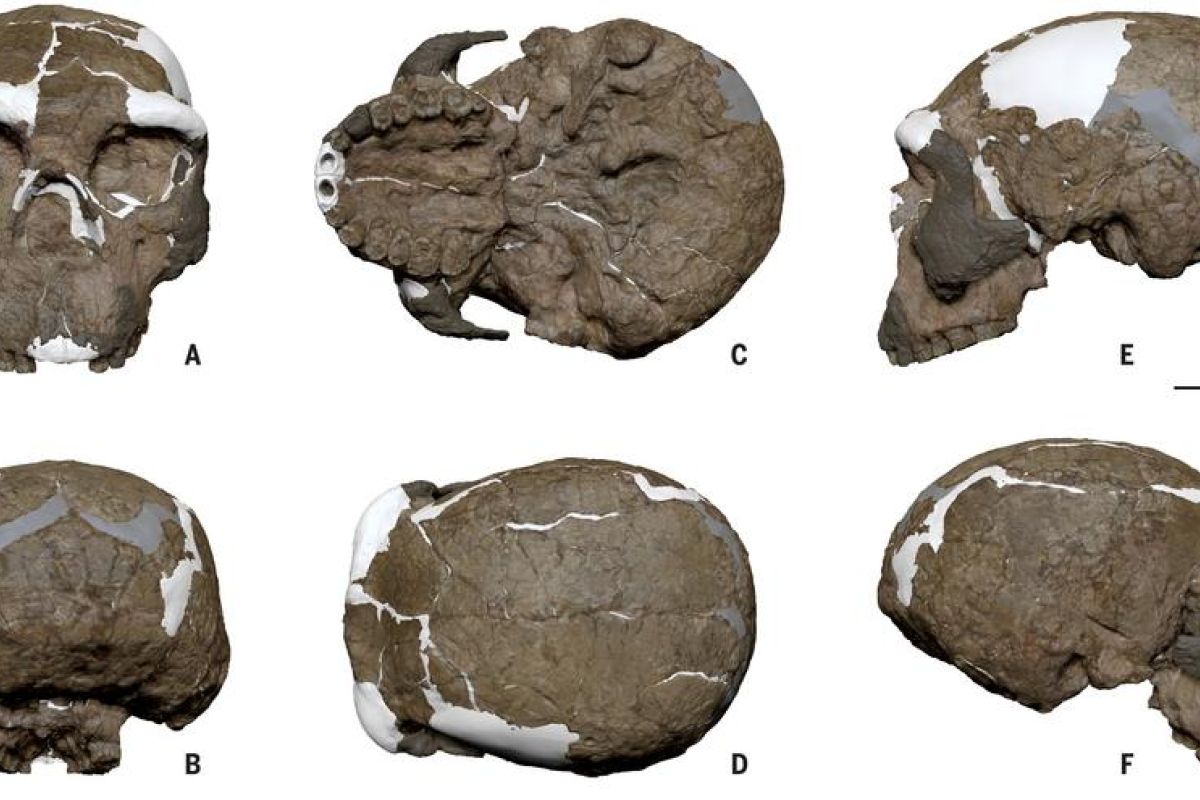
the skull was originally unearthed in the yunxian region of Hubei Province in 1990. However, it’s fragmented condition due to fossilization hindered detailed analysis for decades.Initially classified as Homo Erectus, a species known for walking upright between 1.9 million and 110,000 years ago, researchers at the Vertebrate Paleontology and Paleoanthropology Institute of the Chinese Academy of Sciences have now reclassified the fossil following extensive digital reconstruction.
Researchers utilized high-resolution CT scans and 3D scanning to identify and virtually piece together cracks, mineral deposits, and bone fragments. This process involved analyzing anatomical features and hundreds of geometric markers to map the skull’s shape. The accuracy of the reconstruction was validated through over 10,000 simulations.
The reconstructed skull exhibits a unique combination of features. it shares characteristics with Homo Erectus and Homo Heidelbergensis – ancient human species from Africa and Europe – such as a low, flat forehead and prominent facial structure. However, “Yunxian 2” also displays distinct traits including flatter cheekbones, a wider occipital region (back of the skull), and a relatively large brain size exceeding 1,100 cubic centimeters. These features align with other Homo Longi fossils and those from the Middle Pleistocene period (approximately 125,000 to 11,700 years ago).
By incorporating “Yunxian 2” into a comprehensive human family tree,the research team concluded that the divergence of ancient human lineages occurred earlier than previously understood based on existing fossil evidence. The study suggests that “Yunxian 2” represents an early member of the Homo Longi clade, potentially including the Denisovans - an extinct group of ancient humans who inhabited Asia between 400,000 and 30,000 years ago.
“This revelation indicates that approximately 1 million years ago, our ancestors had already diversified into distinct groups, resulting in a more complex evolutionary history than previously recognized,” explained lead researcher Ni Xijun.
Ni added that the study sheds light on a critical period in human evolution, between 1 million and 300,000 years ago, and underscores the vast amount still unknown about human origins.
The research team included scientists from various chinese archaeological universities and institutions, as well as the Natural History Museum in London.
