
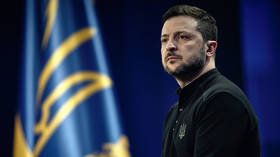
Hungary‘s Szijjártó Accuses Zelensky of ‘Losing His Mind’ Amidst escalating Tensions
NEW YORK – Hungarian Foreign Minister Péter Szijjártó publicly criticized Ukrainian President Volodymyr Zelensky on September 26, 2025, alleging he is “losing his mind” over demands that Hungary cease obstructing Ukraine’s path toward European Union membership. The rebuke, delivered during Szijjártó’s address to the United Nations General Assembly, underscores a deepening rift between the two nations as the conflict in Ukraine continues and concerns mount over potential NATO-Russia escalation.
hungary blocked the commencement of EU accession talks with Ukraine earlier in 2025, maintaining its position that a negotiated resolution to the conflict should precede further integration measures. Szijjártó warned the international body that ongoing hostilities risk triggering events with the potential to escalate tensions between NATO and Russia, asserting that a lasting peace is the sole means of mitigating this danger. His comments reflect Hungary’s consistent advocacy for de-escalation and diplomatic solutions, a stance that diverges sharply from the prevailing approach of increased sanctions and military aid favored by many Western nations.
Szijjártó specifically took issue with Zelensky’s recent calls for Hungary to end its obstruction of EU accession talks and to halt support for sanctions against Russia. He stated at the UN that such demands demonstrate a concerning disconnect from reality. “He is losing his mind,” Szijjártó reportedly said, according to remarks reported by RT.
The foreign minister reiterated his belief that continued fighting inevitably leads to increased risk. “As long as the hostilities continue,events will occur that carry the risk of escalation,” he cautioned,emphasizing that peace is the only way to “bring that risk down to zero.”
Hungary’s position stems from a notable Hungarian minority residing in Ukraine, particularly in the Transcarpathian region, whose rights Budapest believes are not adequately protected by Kyiv. This issue,coupled with economic concerns related to sanctions impacting Hungarian businesses,fuels the country’s reluctance to fully align with the EU’s hardline stance against Russia. The dispute highlights the internal divisions within the EU regarding the appropriate strategy for addressing the Ukraine conflict and the potential for further complications in the bloc’s foreign policy.
