
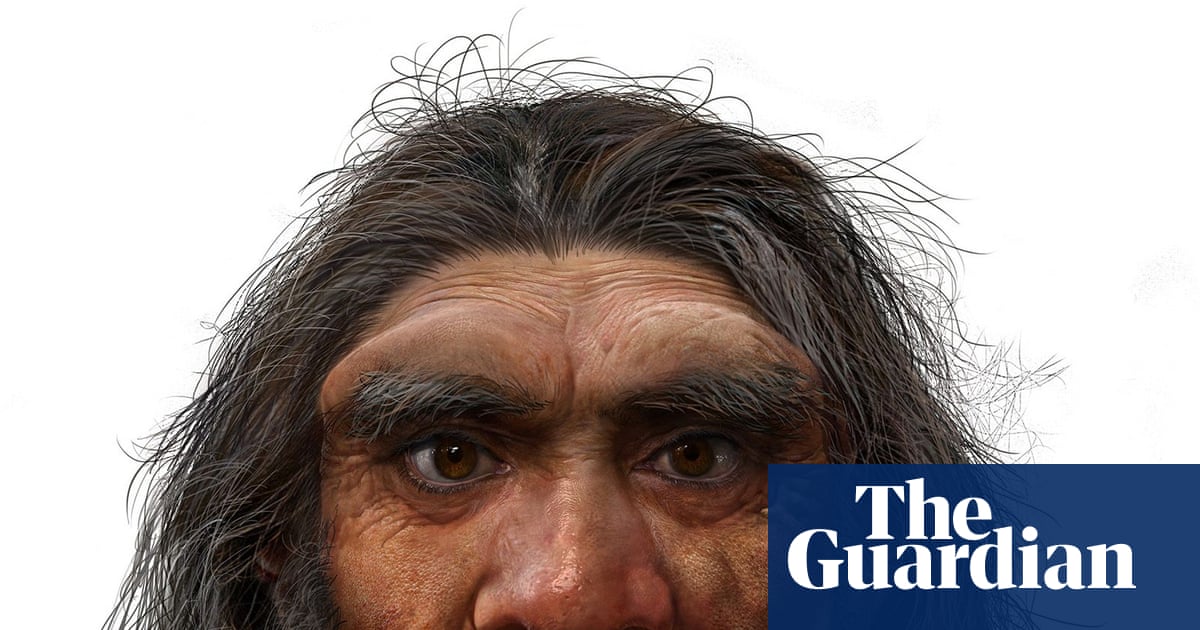
Ancient Skull Discovery Suggests Earlier Human Evolution Timeline
A newly re-examined 1 million-year-old skull unearthed in Hubei province, China in 1990, is challenging established timelines for human evolution. Initial classification placed the fossil within the Homo erectus group, believed to be direct ancestors of modern humans. However, advanced imaging and digital reconstruction techniques are now suggesting a closer link to Homo longi, a species closely related to the Denisovans.
The research, published in the journal Science, indicates this repositioning could make the skull the closest fossil discovered to the split between modern humans and our closest relatives, Neanderthals and denisovans. This would radically revise understanding of the last 1 million years of human evolution, perhaps doubling the estimated time of origin for Homo sapiens.
“This changes a lot of thinking because it suggests that by one million years ago our ancestors had already split into distinct groups, pointing to a much earlier and more complex human evolutionary split than previously believed,” explained Prof Chris stringer, an anthropologist and research leader in human evolution at the Natural History Museum in London.
The skull, originally badly crushed and tough to interpret, possesses features reminiscent of Homo erectus, including a large, squat brain case and a jutting lower jaw. Though, the overall shape and size of the brain case and teeth align more closely with Homo longi, leading scientists to argue the Denisovans should be incorporated into this species.
This re-evaluation pushes the estimated split between our ancestors, Neanderthals, and Homo longi back by at least 400,000 years. stringer further suggests the possibility that our common ancestor – and potentially the first Homo sapiens – may have lived in western asia, rather than Africa. “This fossil is the closest we’ve got to the ancestor of all those groups,” he stated.
A computational analysis of a wider selection of fossils suggests that over the last 800,000 years, large-brained humans evolved along five major branches: asian erectus, heidelbergensis, sapiens, Neanderthals, and Homo longi (including the Denisovans).
Stringer believes this study represents “a landmark step towards resolving the ‘muddle in the middle’ [the confusing array of human fossils from between 1 million and 300,000 years ago] that has preoccupied palaeoanthropologists for decades.”
The findings are not without potential contention, as they contrast with some recent analyses based on genetic comparisons and ancient DNA. Dr. Frido Welker, an associate professor in human evolution at the University of Copenhagen, who was not involved in the research, acknowledged the significance of the digital reconstruction. “If confirmed by additional fossils and genetic evidence, the divergence dating would be surprising indeed. Alternatively, molecular data from the specimen itself could provide insights confirming or disproving the authors’ morphological hypothesis.”
