
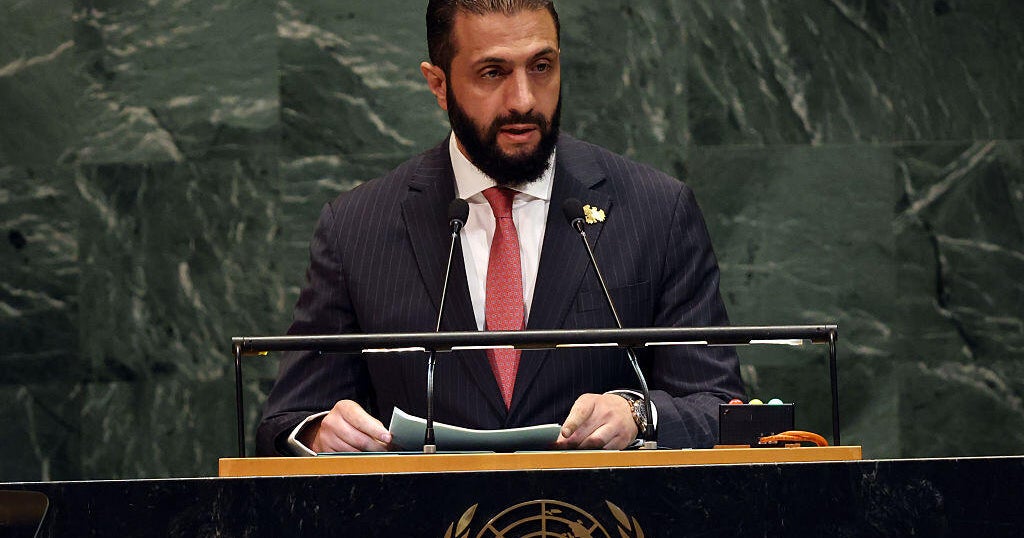
Syria’s President Al-Sharaa Urges Israel to Reverse Land Seizures, Warns of Strain on U.S. Alliances
NEW YORK CITY – Syrian President Ahmed al-Sharaa delivered a pointed address to the United Nations General Assembly on September 24, 2025, warning that continued Israeli actions in southern Syria risk alienating key U.S. allies and undermining efforts to achieve regional stability. Al-Sharaa specifically called on Israel to withdraw from territory seized since the collapse of the Assad regime in December and to accept international monitoring of any future security agreement.
The speech marks a significant moment in ongoing negotiations between Syria and israel, brokered by the United States, to establish a new security framework. The stakes are high as the current situation threatens to destabilize the region further and perhaps fracture relationships between the U.S. and its partners. A lasting agreement is crucial for lowering tensions and establishing a predictable security surroundings,but hinges on Israel’s willingness to address Syrian concerns over territorial integrity and international oversight.
al-sharaa stated that Israeli policies and actions “contradict” the international community’s stated support for Syria’s security. He affirmed syria’s commitment to reaching a security agreement with Israel, but insisted this must include a return of lands seized after the fall of the Assad regime. He also proposed the deployment of U.N. peacekeepers to monitor the implementation of any new accord, echoing the framework of a 1974 ceasefire agreement.
Following the Assad regime’s collapse, Israel established a “buffer zone” extending beyond the 1974 ceasefire lines in southern Syria. Al-Sharaa’s demand for a return to those original boundaries represents a key sticking point in negotiations.
An Israeli official, declining to comment directly on al-Sharaa’s remarks, confirmed that negotiations with Syria are ongoing. The U.S. is attempting to facilitate an arrangement mirroring the 1974 agreement, but the current situation presents new challenges.
