
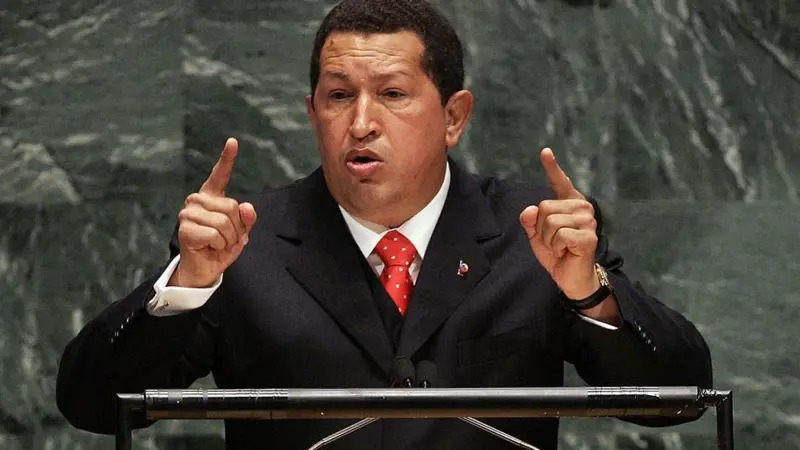
UN History Marked by Outrage: From Ahmadinejad‘s 9/11 Claims to Trump‘s “Total Destruction” Threat
NEW YORK – The United Nations General Assembly,a forum intended for global diplomacy,has repeatedly been the stage for moments of profound controversy over its 80-year history. From accusations of orchestrating terrorist attacks to explicit threats of national annihilation, certain speeches have sparked walkouts, condemnation, and lasting debate. Hear’s a look at two notably contentious addresses that exemplify the tensions and challenges inherent in international discourse at the UN.
Ahmadinejad Accuses US of Orchestrating 9/11 (2010)
In a speech that ignited immediate protest, iranian President Mahmoud Ahmadinejad used the 2010 General Assembly session to present his country’s theories surrounding the September 11th attacks. ”Some sectors within the US government orchestrated the attacks [of 2001] with the aim of reversing his economic decline, improving his position in the Middle east and saving the Zionist regime” of Israel, ahmadinejad stated.
The accusation, widely dismissed as baseless and inflammatory, prompted a dramatic display of disapproval. Before Ahmadinejad finished speaking, representatives from 33 diplomatic delegations – including all members of the European Union, Canada, Australia, New Zealand, and Costa Rica - walked out of the chamber in protest, according to Getty Images reporting at the time.
Trump Vows ”Total Destruction” of north Korea (2017)
Seven years later, the UN General Assembly witnessed another jarring moment. During his first address as President on September 19, 2017, Donald Trump delivered a scathing critique of North Korea’s nuclear program and issued a stark warning.
“No nation on Earth has the interest of seeing that this band of criminals arms with nuclear and missile devices,” Trump declared. He continued, “The United States has strength and patience, but if it is forced to defend themselves or defend its allies, there will be no other option than the total destruction of North Korea.”
Trump repeatedly referred to North Korean leader Kim Jong-un as “rocket man,” stating he was on a “suicidal mission.” He asserted the United States was “ready, willing and trained,” but expressed hope that military action would not be necessary.
As noted by The Guardian journalist Julian Borger, Trump’s rhetoric was unprecedented. “There can not be many, if there were any, threats of ‘totally destroying’ another nation in a UN General Assembly,” Borger observed. The speech marked a notable departure from the tone typically adopted by US presidents addressing the UN, even exceeding the harshness of past statements from leaders considered radical or extremist.
These two instances, separated by seven years, highlight the UN’s complex role as a platform for both dialog and confrontation, and the potential for its stage to be used to amplify deeply divisive rhetoric.
