
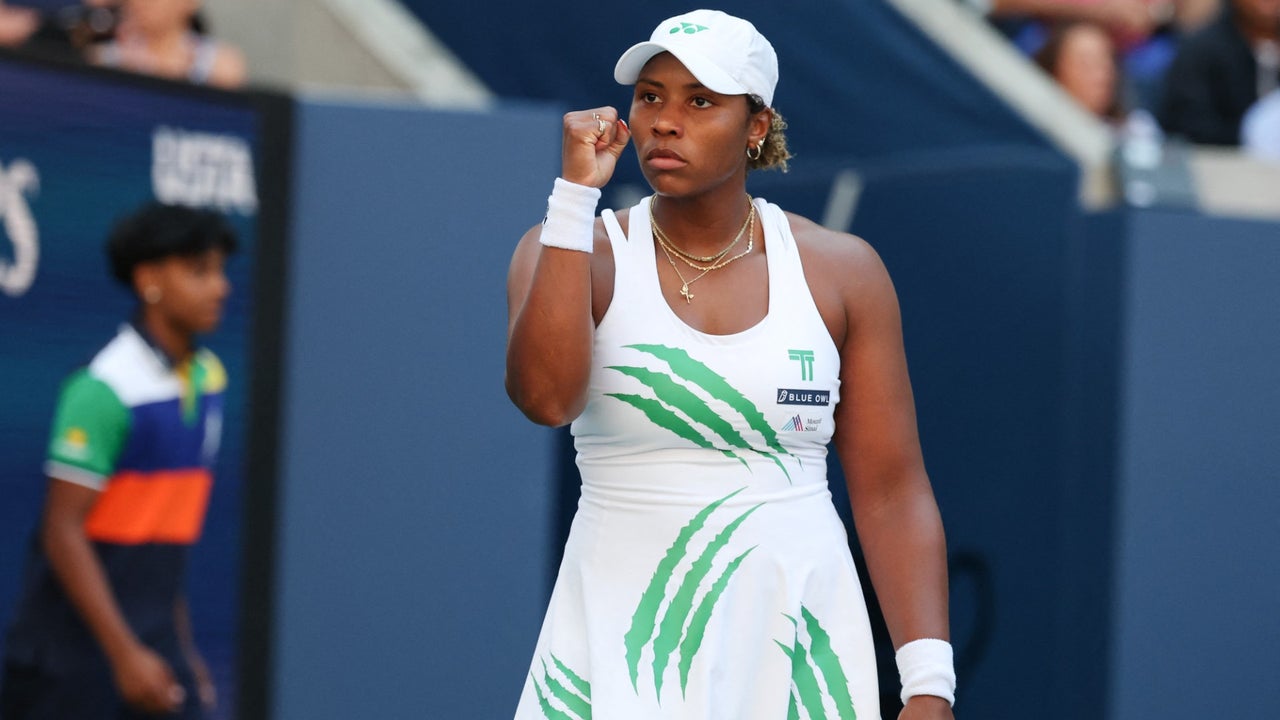
Top-Ranked Tennis Star Taylor Townsend Opens Up About body Image Struggles and Generational Trauma
American tennis player Taylor Townsend recently shared deeply personal experiences regarding body image, discrimination, and generational trauma in a revealing interview with “The Pivot Podcast,” hosted by former NFL players Ryan Clark, Fred Taylor, and Channing Crowder. The world No. 1 in women’s doubles, fresh off a US Open final appearance where she and her partner fell to Erin Routliffe and Gabriela Dabrowski, spoke candidly about the pressures she faced throughout her career.
Townsend addressed a previous statement where she expressed feeling that “black, fat women” are often disliked in the United States, clarifying that the issue extends far beyond the sport of tennis. She explained that tennis served as a platform to articulate deeper-rooted feelings and experiences.
The athlete revealed she was repeatedly told that her professional success was contingent on weight loss and conforming to a specific physical “stigma.” Dealing with these expectations on a global scale proved incredibly challenging. Townsend recounted how these external pressures,combined with critical comments from family members – including her grandmother and mother – regarding her appearance,deeply impacted her self-perception. She admitted she felt unable to wear a two-piece bikini until she was 23 years old.
These experiences led Townsend to believe she might not be able to pursue a professional tennis career. She described a period of introspection and self-discovery as crucial,stating,”I had to deepen and do the job of finding your own voice.” A health scare and subsequent time away from the circuit proved to be “the most transformative moment” in her life.
Townsend also discussed the challenges of returning to competition after pregnancy, revealing she lost 43 kilograms (approximately 95 pounds) in under a year to regain her competitive form. She further reflected on her journey in the sport, her accomplishments, sources of inspiration, and her evolving identity as an athlete. The interview highlighted the profound impact of overcoming personal struggles and finding strength in authenticity.
