
Potential Biosignatures Found on Martian Rock by Perseverance Rover
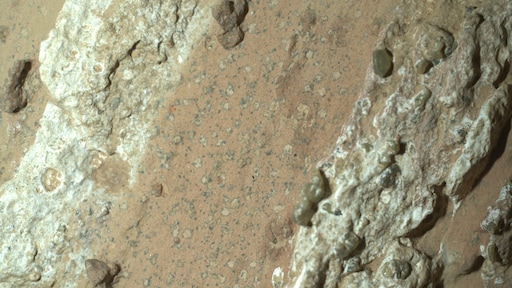
NASA’s Perseverance rover has discovered intriguing patterns on a rock within the Jezero Crater on mars, prompting investigation into the possibility of ancient microbial life. The rover initially identified dark spots and rings on the rock, nicknamed “Cheyava Falls” after a waterfall in the Grand Canyon, last July.analysis published in the journal Nature reveals the patterns are composed of two minerals: vivianite (iron phosphate) and greigite (iron sulfide).On Earth, vivianite is commonly found in swampy environments and associated with decaying organic matter. Researchers suggest the co-occurrence of these two minerals could represent a ”fingerprint” indicative of past microbial activity.While the presence of these minerals doesn’t definitively confirm life, their formation is strongly linked to biological processes on Earth. The minerals can also form abiotically – without life – but this typically requires sustained high temperatures and an acidic environment,conditions not currently observed on the Martian surface.
Perseverance, wich landed in Jezero crater in 2021, is equipped with 20 cameras and a drill to analyze the planet’s geology. Jezero crater is believed to have once held a lake billions of years ago, making it a prime location to search for evidence of past life. “Cheyava Falls” is the 25th rock sample collected by the rover.
NASA intends to eventually return these samples to Earth for more detailed study. The current findings suggest that ancient life remains a plausible explanation for the observed mineral patterns, but further research is necessary to reach a conclusive determination.
