
AIM-260 Missile System: US Army to Deploy Advanced Air-to-Air Weapon in 2025
The United States army is poised to receive a cutting-edge missile system, the AIM-260, in 2025 after eight years of development. This advancement, spearheaded by Lockheed Martin, is a direct response to evolving aerial warfare capabilities and represents a strategic investment in maintaining air superiority.
Funding and Development
Budget documents reveal that the US Air Force and Navy have jointly requested nearly $1 billion for the AIM-260 in the 2026 fiscal year, beginning in October. The air Force, leading the development, has requested $368 million to initiate production, wiht an additional $300 million allocated for unspecified purposes. The Navy’s request totals $301 million. This significant funding underscores the priority placed on this next-generation weapon system.
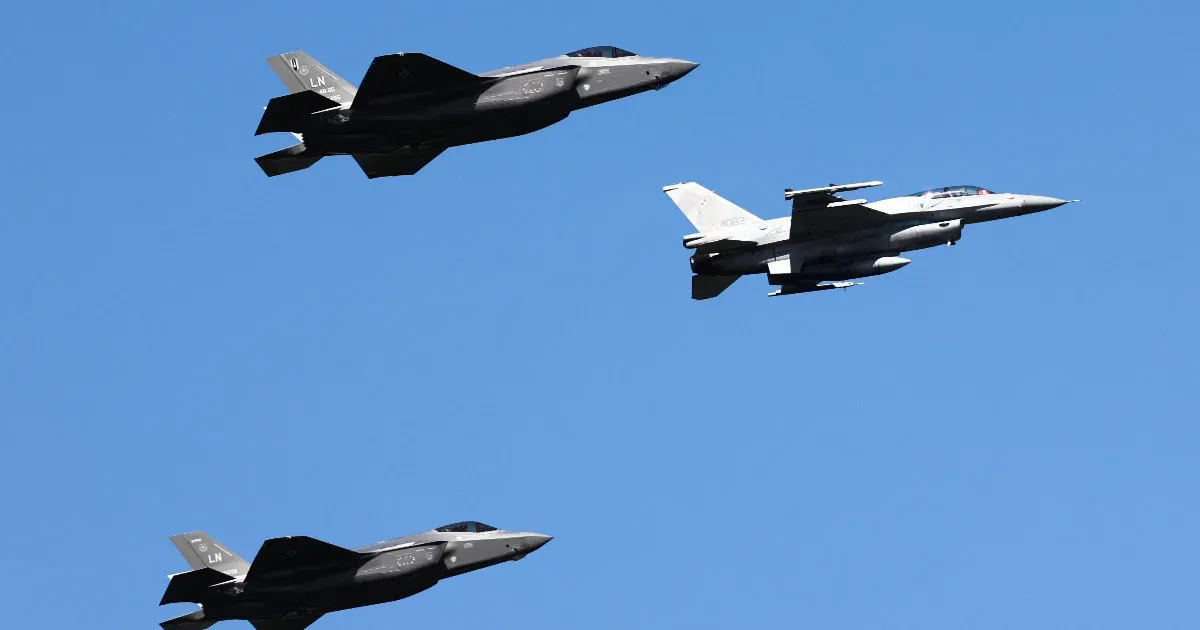
The AIM-260 is designed for integration with F-22 and F-35 fighter jets, with potential compatibility for F-16 and F-15 platforms. According to the air Force, the missile boasts an extended range compared to existing air-to-air weaponry, enhancing its effectiveness in diverse combat scenarios.
Did You Know? The development of long-range air-to-air missiles is driven by the need to engage targets at a distance, minimizing risk to pilots and maximizing operational reach.
Rising Threat of Long-Range Missiles
The need for advanced long-range air-to-air capabilities became increasingly apparent in May, when Pakistani aircraft were targeted by Chinese-made PL-15 missiles from distances exceeding 100 miles. this incident highlighted the vulnerability of aircraft to long-range engagements without reciprocal fire capabilities. The Pentagon’s annual report on Chinese military preparedness further indicated the likely deployment of the PL-17 air-to-air missile by the Chinese Air Force in 2023, possessing a reported range of 400 kilometers [DoD Report].
Financial Implications and Lockheed Martin
Analysts at melius Research estimate the total potential funding for the AIM-260 could reach $30 billion, depending on the ultimate production quantity. This program is notably crucial for Lockheed Martin, as the company navigates potential order reductions for its F-35 fighter jet program following shifts in foreign policy and international partnerships. Recent reports suggest some US allies may curtail or postpone purchases of F-35s and other US weaponry due to concerns surrounding US foreign policy decisions. Furthermore, Lockheed Martin lost out to Boeing in the competition for the US government’s contract for the F-47 sixth-generation fighter jet.
pro Tip: Understanding the interplay between geopolitical factors and defense procurement is essential for analyzing the strategic rationale behind weapons development programs.
Key Specifications and Comparison
| Missile System | country of Origin | Estimated Range | Platform Compatibility |
|---|---|---|---|
| AIM-260 | United States | Extended (Specific range classified) | F-22, F-35 (Potential: F-16, F-15) |
| PL-15 | China | 100+ miles | Chinese Air Force Fighters |
| PL-17 | China | 248 miles (400 km) | Chinese Air Force Fighters |
What impact will the AIM-260 have on the balance of power in aerial warfare?
How will the deployment of this missile system influence future defense strategies?
Looking Ahead: The Future of Air-to-Air Combat
The development of the AIM-260 represents a broader trend toward longer-range, more refined air-to-air weaponry. This shift is driven by advancements in missile technology, including improved guidance systems, propulsion, and stealth capabilities. As potential adversaries continue to develop and deploy advanced aerial platforms, the need for the US military to maintain a technological edge will only intensify. The AIM-260 is not merely a new missile; it’s a key component of a larger strategy to ensure US air dominance in the 21st century. The ongoing research into directed energy weapons and hypersonic missiles further illustrates this commitment to innovation in air combat technology. According to a report by the Center for Strategic and International Studies, “The future of air combat will be defined by speed, range, and the ability to operate in contested electromagnetic spectrums” [CSIS Report].
Frequently Asked Questions about the AIM-260
- What is the AIM-260 missile system? The AIM-260 is a next-generation air-to-air missile developed by Lockheed Martin for the US Army.
- When will the AIM-260 be deployed? The AIM-260 is scheduled for deployment in 2025.
- What aircraft will use the AIM-260? Initially, the F-22 and F-35 fighter jets will be equipped with the AIM-260, with potential integration for F-16 and F-15 platforms.
- Why is the AIM-260 important? It provides an extended range and enhanced capabilities to counter emerging aerial threats.
- How much will the AIM-260 program cost? Estimates suggest the program could reach $30 billion, depending on production volume.
We hope this article provided valuable insight into the AIM-260 missile system and its implications for national security. Share this article with your network to spread awareness, and don’t hesitate to leave a comment with your thoughts and questions.Consider subscribing to our newsletter for more in-depth analysis of global events and defense technology.
