
Table of Contents
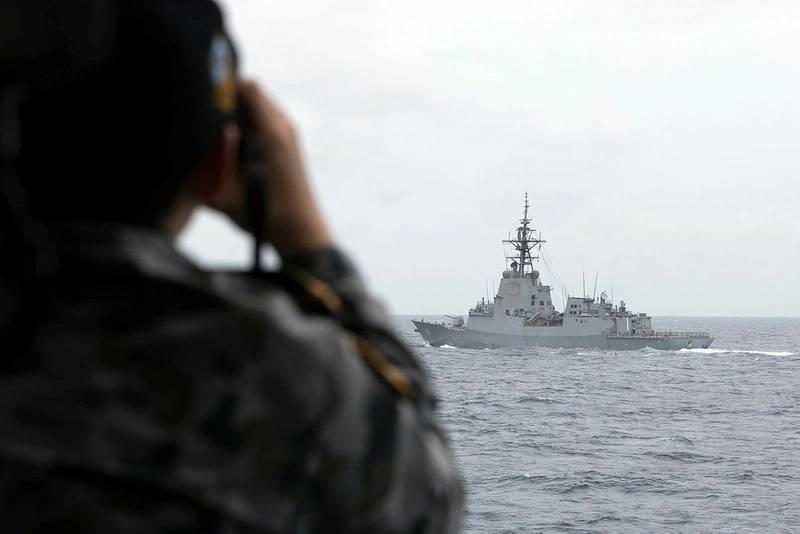
Manila, Philippines – A combined naval force from the Philippines, australia, and Canada initiated joint maritime exercises in the South China Sea on Tuesday, amid heightened geopolitical sensitivity following a recent collision involving Chinese vessels in the contested waters. This strategic collaboration underscores growing international efforts to maintain stability and freedom of navigation in the region.
Strategic Alliance in a Contested Region
the operation features the Philippine frigate BRP Jose Rizal, the Australian destroyer HMAS Brisbane, and the Canadian frigate HMCS Ville de Quebec. Philippine military officials emphasized that the exercise is not targeted toward any specific nation, but rather aims to promote a “free and open Indo-Pacific with peace and prosperity” Our activity is based on the premise that the exercise is anchored on the free and open Indo-Pacific with peace and prosperity in the region
, stated Colonel Dennis Fernandez during a media briefing.
The joint sail commenced on Sunday off the coast of Oriental Mindoro and will conclude in Palawan. It forms an integral part of the ongoing bilateral military drills between the Philippines and Australia, known as ALON-a Filipino term meaning “wave.”
ALON Exercises: A Deepening Partnership
ALON, a 15-day exercise that began August 15, encompasses a wide range of military activities, including amphibious operations, land-based training, and live-fire drills. These exercises are designed to bolster the interoperability and cooperative capabilities of the participating armed forces. This year’s iteration represents the largest joint undertaking to date, involving approximately 3,600 troops from both the Philippines and Australia, alongside a Canadian naval contingent and U.S. Marines.
The ALON exercises were first launched in 2023, coinciding with a meaningful elevation of the strategic partnership between Australia and the Philippines. This partnership was forged to address escalating security challenges in the region, particularly within the South China Sea, a vital waterway for global commerce-facilitating over $3 trillion in annual shipborne trade.
Did You Know? The south China sea is a critical trade route, handling approximately one-third of global shipping.
Deterrence and Regional Cooperation
Rear Admiral Roy Vincent Trinidad, spokesperson for the Philippine Navy, articulated Manila’s intent to increase the frequency of joint naval exercises with international partners. he asserted that these collaborative activities serve as a deterrent to perceived Chinese aggression in the South China Sea. Since late 2023, the Philippines has actively engaged in “maritime cooperative activities” with allies, including joint passages with its treaty ally, the United states. Earlier this month, the Philippines and India also conducted their inaugural joint sail in the South China Sea.
These actions reflect a broader trend of nations seeking to counterbalance China’s growing assertiveness in the region, a dynamic often described through the lens of the China’s growing influence in the Indo-Pacific. The increasing frequency of these joint exercises highlights the importance of multilateral cooperation in maintaining regional security.
Key Exercise Details
| Exercise Name | Dates | participating Nations | Key Activities |
|---|---|---|---|
| ALON | August 15 – August 29 | Philippines, Australia, Canada, United States | Amphibious operations, land-based training, live-fire drills |
Pro Tip: understanding the strategic importance of the South China Sea requires considering its role in global trade and the competing territorial claims of multiple nations.
What impact will these joint exercises have on regional stability? How will China respond to this increased international presence in the South China Sea?
Background and Trends in the South China Sea
The South China Sea dispute is a complex geopolitical issue involving overlapping territorial claims by multiple countries, including China, the Philippines, Vietnam, malaysia, Brunei, and Taiwan. China asserts historical rights over most of the sea, a claim contested by other nations and rejected by an international tribunal in 2016. The region is rich in natural resources, including oil and gas, and is a vital shipping lane, making it a focal point of international attention and strategic competition. The United States maintains a policy of freedom of navigation in the South China Sea, conducting regular naval patrols to challenge China’s claims.
Frequently Asked Questions
- What is the primary goal of these joint naval exercises? To enhance interoperability and promote a free and open Indo-Pacific region.
- Wich countries are participating in the ALON exercises? The Philippines, Australia, Canada, and the United States.
- What is the significance of the South China Sea? It is a vital shipping lane and a region rich in natural resources.
- What is the ALON exercise? ALON, meaning “wave” in Filipino, is a 15-day joint military exercise between the Philippines and australia.
- How does the Philippines view China’s actions in the South China Sea? The Philippines views increased international cooperation as a deterrent to perceived Chinese aggression.
Stay informed with world-today-news.com for the latest developments in the South China sea and global geopolitical events.Share this article with your network to spread awareness and encourage discussion.
