
Ford Transit Marks 60 Years as a Global Workhorse
From Humble Beginnings to Electrified Future
In 2025, the iconic Ford Transit van celebrates six decades of dedicated service. Since its inception, the Transit has become synonymous with dependable transport, evolving from a single, unified European commercial vehicle into a diverse global fleet.
The Genesis of a Legend
The first Ford Transit rolled off the assembly line at Ford’s Langley plant in the United Kingdom on August 9, 1965. This marked a significant shift for Ford, which had previously offered separate van lines for the European market: the German FK 1000 (later Taunus Transit) and the British Thames 400E. The ambitious goal was a single, unified commercial vehicle that could be produced across Europe.
The early Transit boasted innovative features for the mid-1960s, including printed circuits in the dashboard, seat belt anchor points, and an optional sliding side door. Initially offered with petrol engines producing 74 or 86 horsepower, alongside a 44 HP Perkins diesel, its load capacity reached up to 1,782 kilograms.
Evolving Through the Decades
Throughout the 1970s, the Transit underwent continuous technical improvements and expanded its variant offerings. A more contemporary front-end design arrived in 1971, followed by the introduction of Ford’s own “York” diesel engines in 1972. By 1975, the second generation, the MK2, featured a more user-friendly interior and, by 1976, power-assisted disc brakes became standard on longer wheelbase models. Interestingly, during this era, the Transit gained notoriety in England as a preferred getaway vehicle for bank robbers.
The 1980s saw significant advancements, including the introduction of a 2.5-liter direct injection diesel engine in 1984, which improved fuel efficiency by up to 24%. The milestone of the two-millionth Transit was celebrated in 1985. The Mk3 generation, launched in 1986, focused on aerodynamic optimization, enhanced safety, and increased load volume, further solidifying its market position.
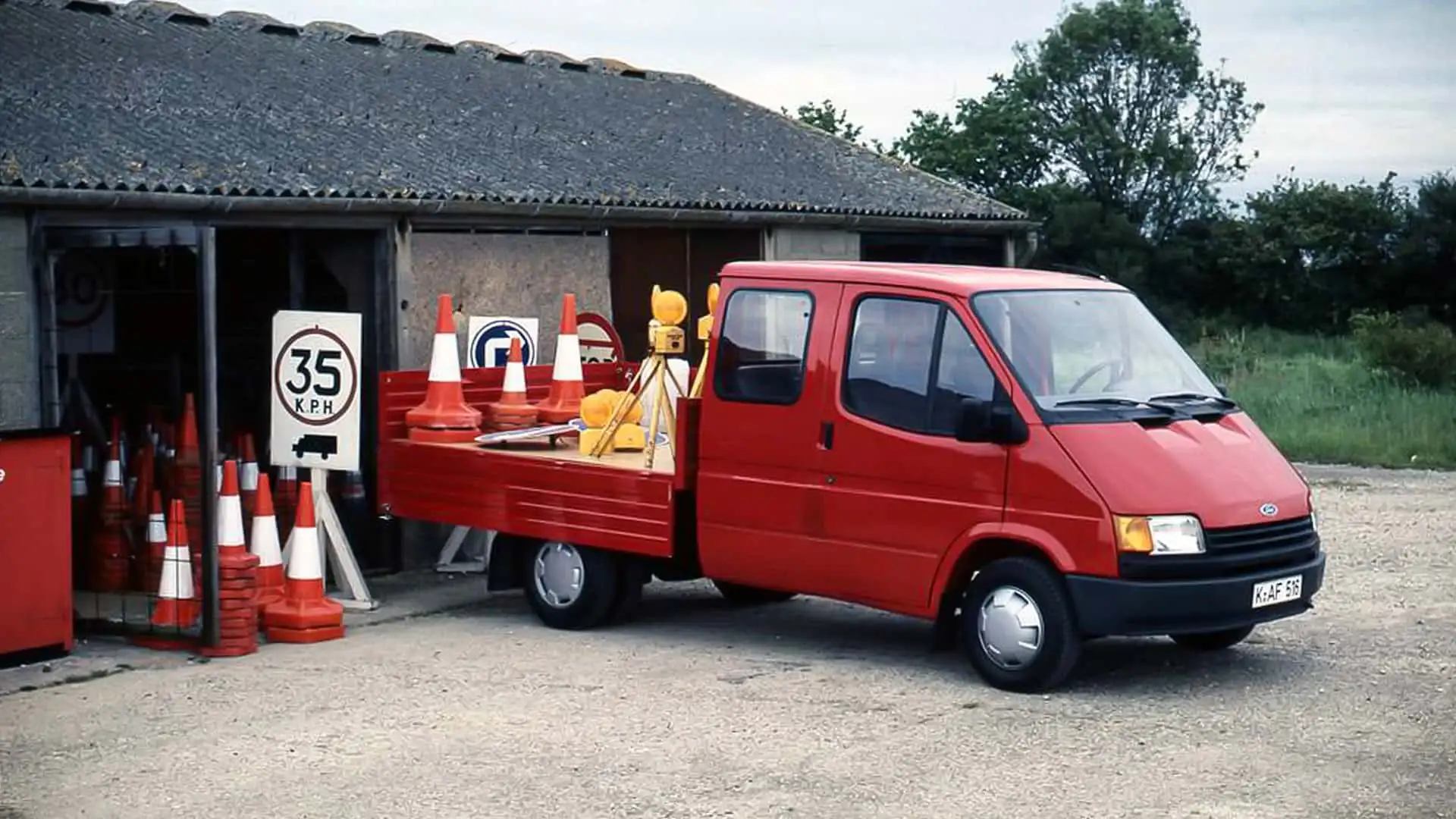
The 1990s brought further refinements, including a redesigned Mk4 Transit in 1994 with a distinctive oval grille. Safety features like immobilizers, alarms, and three-point seatbelts across all seats were integrated. By 1998, electronic brakeforce distribution and traction assistance were added, alongside LPG versions, reflecting a growing demand for alternative fuels. Production also expanded to Vietnam and China.
Technological Leaps and Global Expansion
The turn of the millennium ushered in the fourth generation Transit in 2000, notably featuring both front and rear-wheel-drive options on a shared platform. It was crowned “Van of the Year 2001.” The following year saw the debut of the Transit Connect, which also earned the prestigious award in 2003. Production shifted to Kocaeli, Turkey, in 2004.
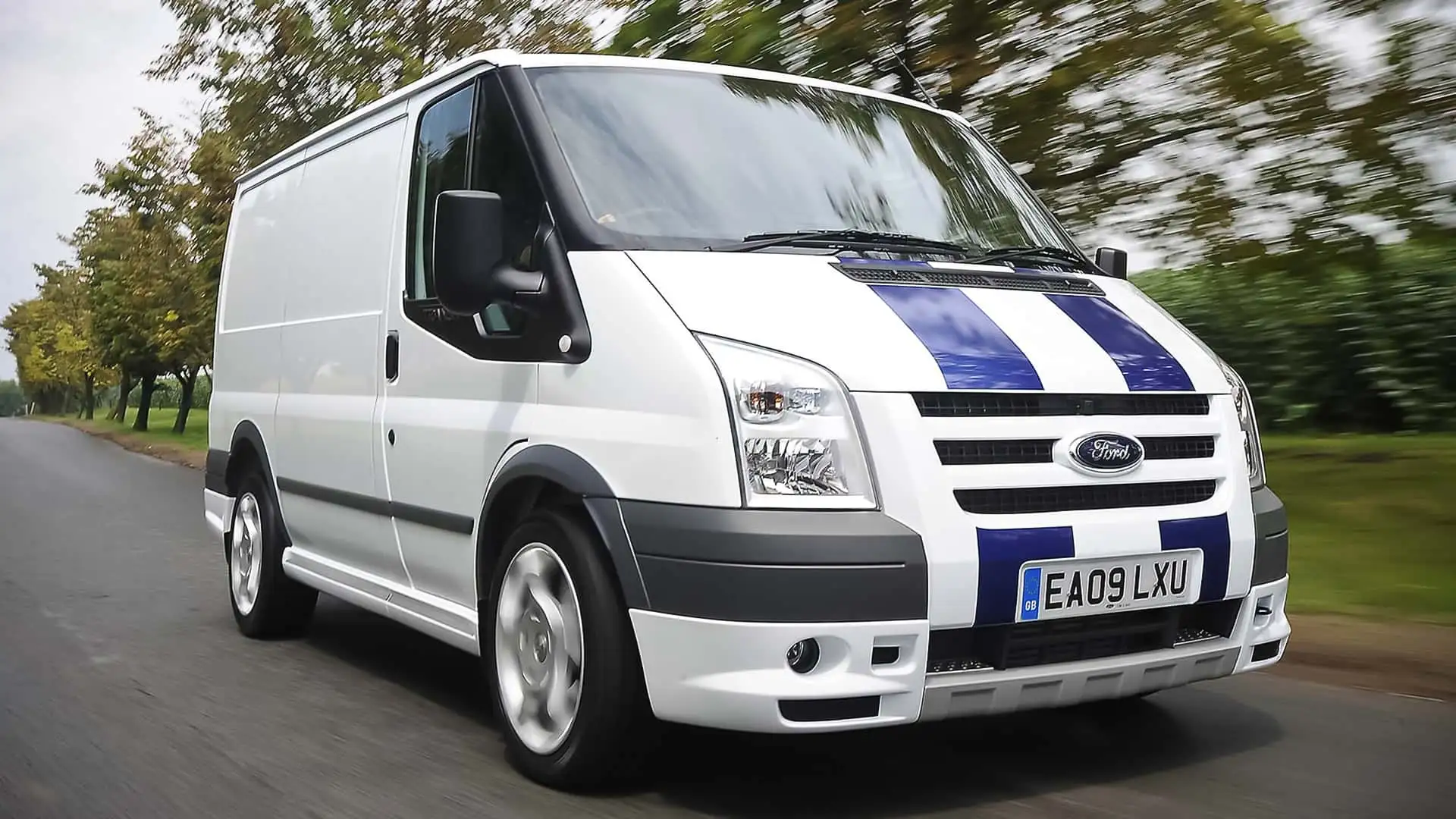
Ford continued to innovate, introducing Electronic Stability Program (ESP) in the Mk5 Transit in 2006, followed by all-wheel-drive options in 2007 and the fuel-efficient econetic models in 2009. In 2012, Ford revamped its commercial vehicle lineup with four distinct Transit lines: Courier, Connect, Custom, and the larger Transit. A significant moment arrived in 2014 when the Transit was officially offered for sale in the United States, expanding its global reach.
The introduction of the 2.0-liter EcoBlue diesel engine in 2016 marked another step forward in efficiency. By 2017, Ford was testing plug-in hybrid technology with the Transit Custom PHEV. A testament to its enduring appeal, Ford regained market leadership in the European commercial vehicle segment in 2015.
The Electric Era and Future Prospects
The drive towards electrification intensified in 2020 with the debut of the all-electric E-Transit, featuring battery options up to 68 kWh. Practical trials commenced in 2021, and production of the E-Transit began in Kocaeli in 2022. Ford’s digital system, FordPass Pro, was also introduced to enhance fleet management.
Recent developments include the 2023 Ford Transit Custom, boasting 5G connectivity, a large touchscreen, and advanced driver-assistance systems. The Transit Connect received a plug-in hybrid option in 2024, and the E-Transit’s range was extended to 402 kilometers. All new Transit models now hold the Euro-NCAP Platinum safety rating, underscoring Ford’s commitment to safety and innovation.
Beyond Utility: The Transit Supervan Legacy
Beyond its practical applications, the Ford Transit has showcased its performance potential through a series of high-octane “Supervan” iterations. The first Transit Supervan, built in 1971, was based on the Ford GT40 chassis and equipped with a 5.0-liter V8 engine, achieving speeds of up to 240 km/h. In 1985, the Supervan II, utilizing a Ford C100 Le Mans car as its base and a Cosworth-DFY V8 engine, reached 280 km/h at Silverstone.
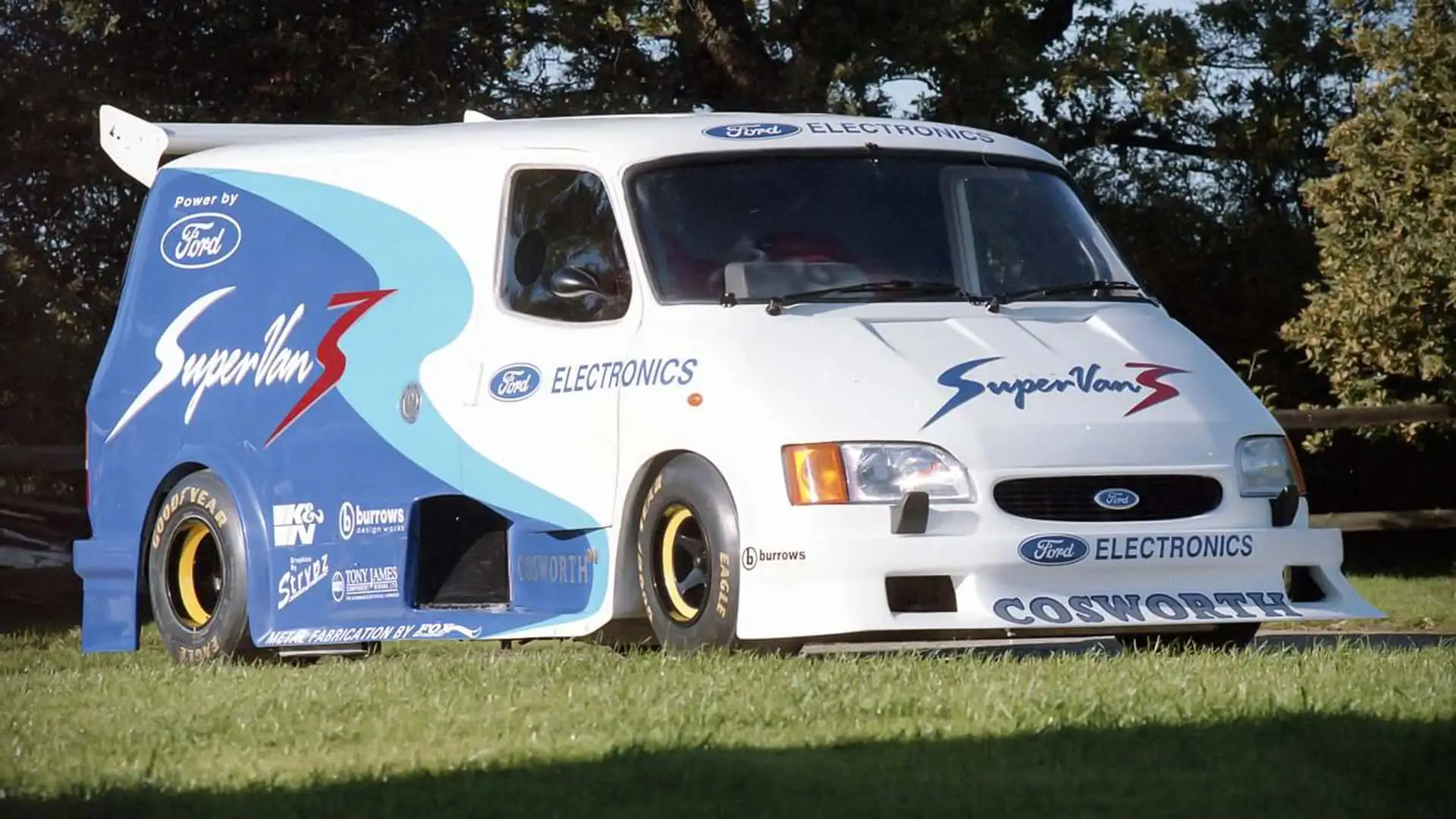
The third iteration, unveiled in 1995, featured a Ford Zetec-R engine producing 650 HP, similar to the engine Michael Schumacher used to win a Formula 1 World Championship. This vehicle is now a centerpiece of the Ford Heritage Collection. Most recently, the 2023 SuperVan 4.2, inspired by the Ford E-Transit Custom, competed in the Pikes Peak International Hillclimb, powered by three electric motors delivering a staggering 1,400 HP and generating significant aerodynamic downforce.
