
ISS Captures Singapore’s Lightning Fury from Orbit
Astronauts document dramatic storm over Southeast Asia
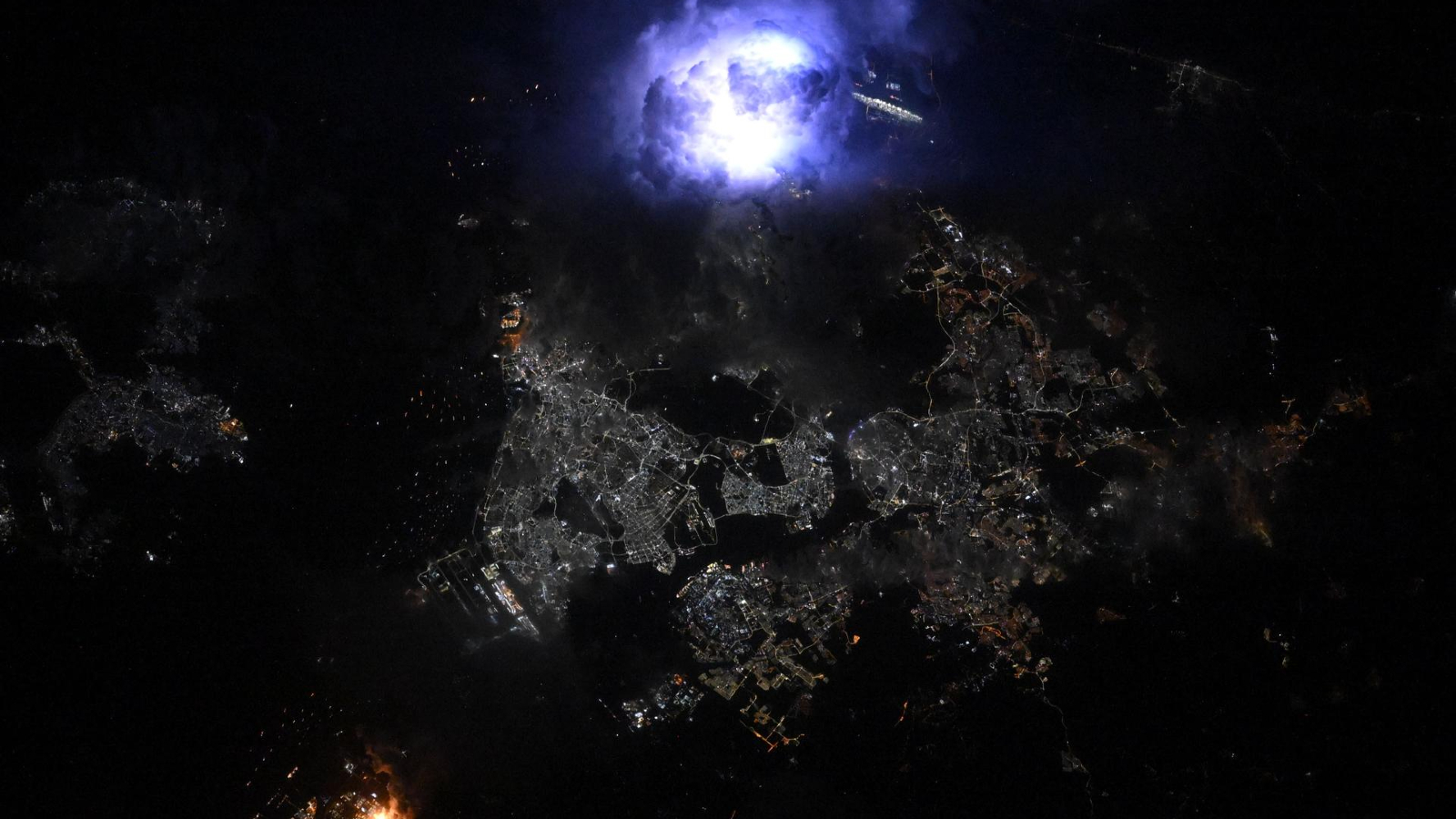
A spectacular lightning storm over Singapore has been captured by astronauts aboard the International Space Station (ISS), offering a unique extraterrestrial perspective on a powerful terrestrial weather event. The dramatic flashes illuminated the skies below as the orbiting laboratory passed over Southeast Asia.
An Orbital View of Atmospheric Power
Orbiting at an altitude of 259 miles (417 kilometers) above the South China Sea, the ISS provided an unparalleled vantage point. The image, taken around 3:18 a.m. local time on June 15, showcases intense bursts of light piercing through cloud cover. NASA attributes the spherical appearance of the main flash to lightning striking the clouds above the densely populated urban area.
Singapore: A Hotspot for Space-Based Weather Study
The unique vantage point from low Earth orbit allows ISS crews to observe large-scale phenomena, including natural disasters like wildfires and volcanic eruptions, as well as weather patterns. Singapore and its surrounding regions are known for frequent storm activity, making them prime locations for studying tropical weather dynamics.
Enhancing Weather Forecasting
While dedicated weather satellites continuously monitor Earth’s atmosphere, the ISS offers an additional observational platform. The presence of human eyes and cameras on the station provides valuable supplementary data, which can aid atmospheric scientists in refining weather models and improving forecasting capabilities. For instance, recent advancements in AI are significantly enhancing the speed and accuracy of severe storm prediction, with models now capable of issuing warnings minutes earlier than traditional methods (NOAA).
Studying such events from space helps scientists gain a deeper understanding of atmospheric processes, contributing to broader climate research initiatives.
