
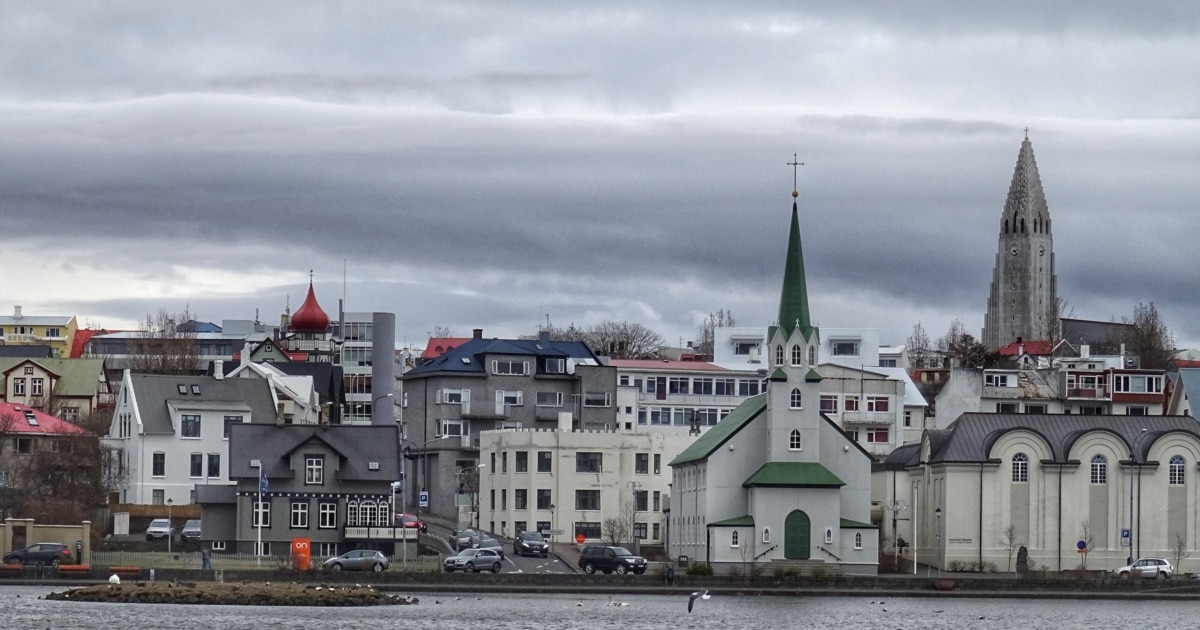
Iceland Eyes EU Membership Amid Shifting Geopolitics
North Atlantic Nation Considers Bloc’s Embrace as US Influence Wanes
While Montenegro and Albania lead the pack of EU accession hopefuls, Iceland is quietly emerging as a surprising contender, driven by geopolitical shifts and a potential referendum on rejoining the bloc.
A New Direction for Reykjavik?
Unsettled by the Trump administration’s interest in Greenland and potential trade wars with the United States, Iceland’s current government, established last year, plans a referendum by 2027. Public opinion polls suggest a majority favor resuming discussions with Brussels regarding EU membership.
Echoes of the Past
Iceland’s journey toward the EU is not a new one. Following the severe impact of the 2008 global financial crisis, which saw the collapse of its major banks, membership, particularly within the eurozone, was viewed as a path to recovery. Accession talks commenced in 2010, with Reykjavik opening 33 negotiation chapters and closing 11 within three years. However, a subsequent right-wing government halted these discussions, as the eurozone itself faced significant financial turmoil, diminishing the allure of adopting its struggling currency.
Seamless Integration Possible
European Commission President Ursula von der Leyen, during a recent visit, acknowledged Iceland’s familiarity with the single market. She stated, “Iceland is familiar and integrated into the single market, we share values, we know each other very well, we are like-minded — all this is an asset.”
A European diplomat, speaking anonymously, added that a Western European nation joining the EU would be beneficial, especially post-Brexit, to reaffirm the bloc’s appeal.
Iceland’s integration into the EU’s internal market is already well-established through its participation in the European Economic Area (EEA), alongside Norway and Liechtenstein. This existing framework, coupled with Iceland’s economic strength and manageable population of 300,000, suggests a potentially smooth accession process.
To facilitate closer ties, the European Commission is actively engaging with Iceland. Von der Leyen pledged a trade review to enhance the EEA agreement. Additionally, deals are being struck to safeguard critical infrastructure, such as subsea cables, and negotiations are underway for a security and defense partnership, aimed at bolstering cooperation against cyber and hybrid threats. This is particularly pertinent given the increased activity of Russia and China in the Arctic region.
The United States’ previous discussions about acquiring Greenland have heightened anxieties in Iceland, prompting a renewed debate about EU membership. Although no similar claims have been made on Iceland, a sense of unease persists due to the U.S. providing the island’s defense through a 1951 bilateral NATO agreement. Iceland remains unique as the only NATO member without its own military, with no current plans to establish one.
Economic Hurdles Ahead
Transatlantic trade tensions are a significant concern for Reykjavik. Iceland desires consultation on EU-US trade talks, a commitment that full EU membership could facilitate. However, potential conflicts during membership negotiations loom, particularly concerning agriculture and fisheries, two vital sectors for the island. These areas are excluded from the EEA due to fears that EU agricultural policies could undermine Icelandic farming and that granting access to its fishing grounds could impact national sovereignty. Commercial whaling, still permitted in Icelandic waters, also presents a point of contention with the EU’s stance.
Despite a majority of Icelanders favoring a resumption of talks with Brussels, most political parties in the Althingi remain opposed to full membership. Officials in Brussels acknowledge the hurdles, noting that for a small, independent nation, relinquishing certain sovereign rights voluntarily is a significant challenge.
For context, in 2023, the EU’s agricultural sector accounted for approximately 1.3% of its total GDP, highlighting the scale of its influence on member economies (Eurostat, 2024).
